
Air quality monitors are not a single product category, and the right one depends on what you are trying to see and where. A device built to watch carbon dioxide in a conference room might not be the device you mount on a pole at the edge of a construction site, and treating them as interchangeable is how monitoring programs end up with the wrong data for the question they actually need to answer.
The category really comes down to three: indoor monitors, outdoor or ambient monitors, and the combined deployments that use both. Each one measures different things, belongs in a different place, and answers a different question, and matching the type to the question is the whole point.
What an Air Quality Monitor Actually Does
Every air quality monitor does the same basic job. It turns invisible environmental conditions into data you can act on. Sensors inside the device detect the gases, particulates, and physical conditions present in the air, and the monitor records those readings continuously, so you end up with a record over time rather than a single snapshot.
The parameters are largely shared across types. Most monitors track some mix of particulate matter, carbon dioxide (CO₂), volatile organic compounds (VOCs, gases given off by many materials and processes), and comfort conditions like temperature and humidity. Particulates are measured as PM1, PM2.5, and PM10, the size fractions of airborne particles (opens in a new tab) defined by the EPA. Outdoor monitors usually add gases such as ozone, nitrogen dioxide (NO₂), and carbon monoxide (CO), along with weather data.
There is one caveat that runs underneath all of it: a reading is only as trustworthy as the instrument behind it. The EPA's testing of lower-cost air sensors (opens in a new tab) against reference-grade monitors shows how much accuracy can vary between devices, which is why calibration and a clear record of where each number came from matter as much as the list of parameters a monitor claims to cover.
So the thing that separates one type from another is less the sensor and more the placement and purpose. A monitor for an occupied office and a monitor for a fenceline face different conditions, answer different questions, and are built to different standards. That distinction is what the rest of this breakdown is built around.
Indoor Air Quality Monitors
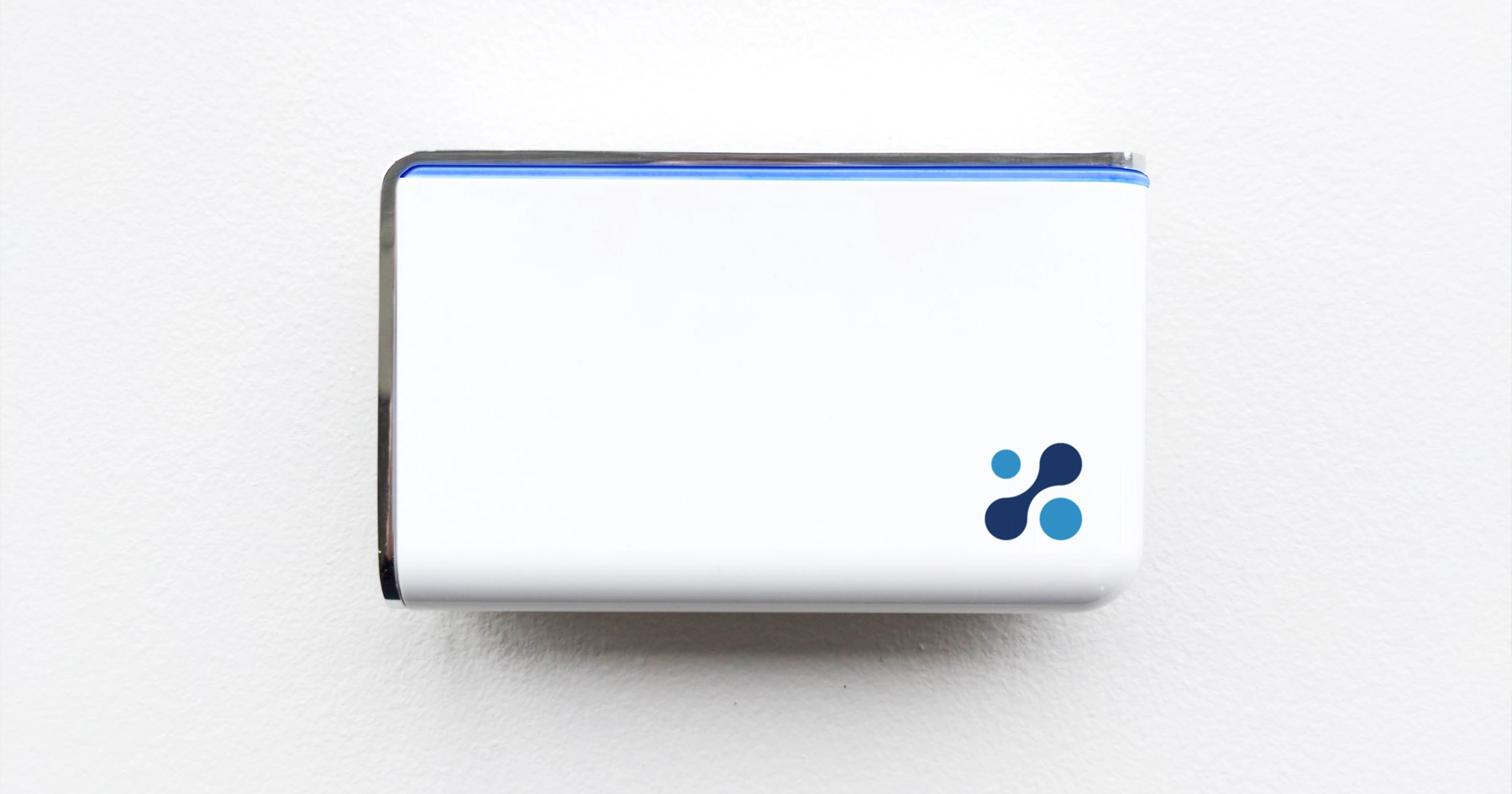
Indoor air quality monitors measure the conditions people are exposed to inside a building. They focus on the handful of parameters that drive health, comfort, and compliance in occupied spaces. CO₂ is a proxy for ventilation, which is how standards like ASHRAE Standard 62.1 (opens in a new tab) use it. VOCs come from furnishings, finishes, and cleaning products. Fine particulates, temperature, and humidity round out the set. A related type, the in-duct monitor, sits inside HVAC ductwork rather than in the occupied space itself.
These monitors go where people spend their time. Offices, schools, healthcare facilities, laboratories, and commercial buildings all run indoor monitoring, often to support workplace health, tenant experience, or a building certification such as the WELL Building Standard (opens in a new tab), whose Air concept sets thresholds for PM2.5, CO₂, and VOCs and accepts continuous monitoring as a verification path. The driver is usually a mix of duty of care and documentation: knowing the air is acceptable, and being able to show it.
Continuous measurement is what makes that possible. Indoor conditions move throughout the day with occupancy, weather, and HVAC cycles, and a quarterly walk-through with a handheld meter captures none of that. A continuous monitor catches the afternoon CO₂ climb in a packed meeting room, the VOC spike after a floor is refinished over a weekend, the slow drift that a spot check would never see.
Outdoor Air Quality Monitors
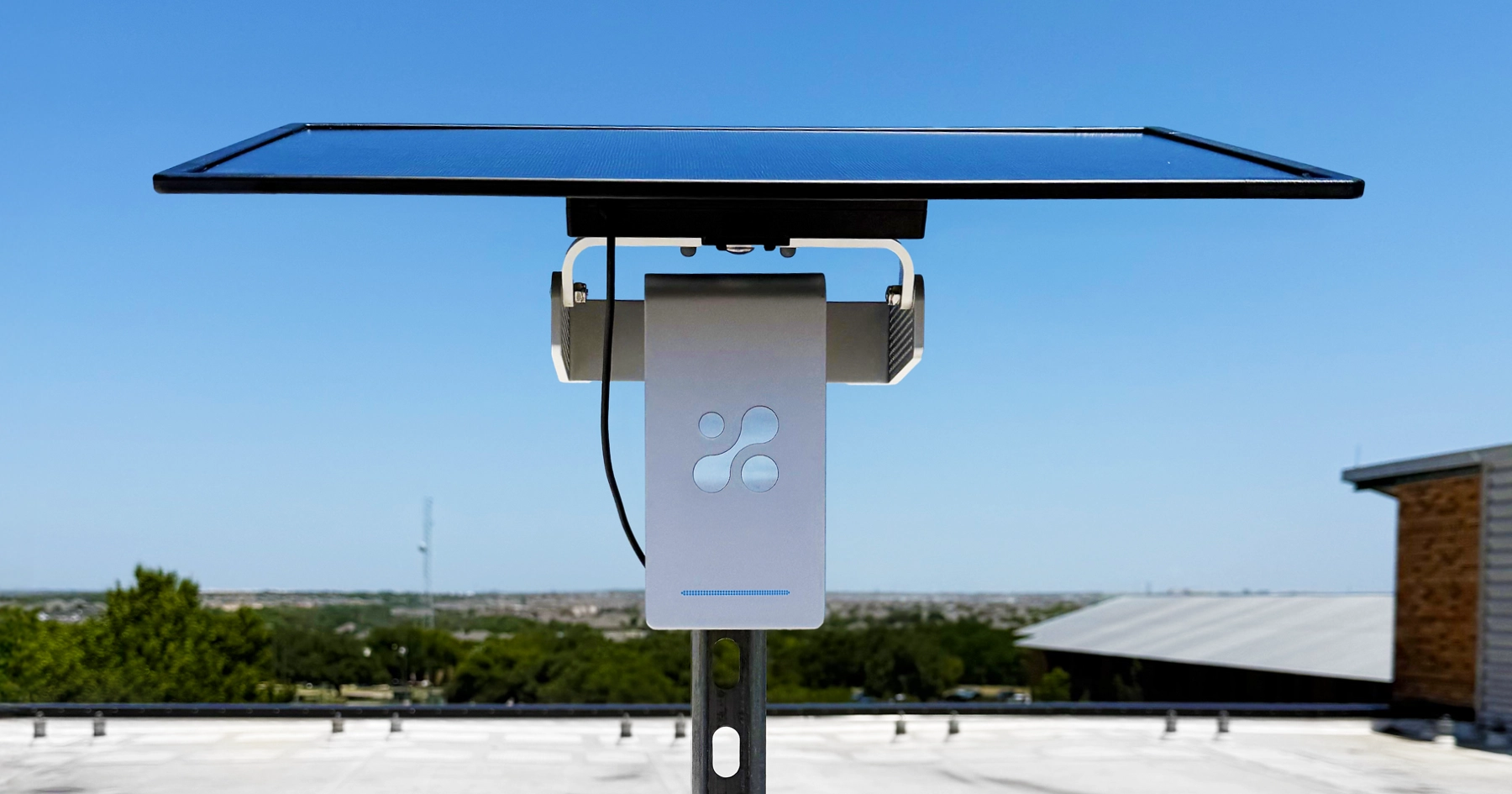
Outdoor air quality monitors, often called ambient air quality monitors, measure the open air around a site, facility, or community. Alongside particulates, they commonly track gases such as ozone and NO₂ (two of the EPA's criteria air pollutants (opens in a new tab)) and pair the readings with wind speed, wind direction, and other weather data, because outdoors the weather largely determines how pollutants move and disperse.
The hardware is built for the conditions. Weather-resistant enclosures, and in many cases independent power, let the device run continuously through sun, rain, and wind, conditions in which a sensor designed for a lobby wall would not last a season. That ruggedness is part of what defines the type.
What an ambient monitor is really for is context. It establishes a baseline for the air in an area, shows what is entering or leaving a site, and supports awareness at the edge of a property or across a community. It is the same kind of data behind the Air Quality Index (opens in a new tab), the EPA's 0-to-500 scale that turns ambient readings for ozone, particulates, CO, NO₂, and SO₂ into a daily public-health signal. Those readings feed real decisions: when a building should pull in outside air or recirculate, whether a school moves activities indoors, how a worksite is affecting the neighborhood around it.
Outdoor monitoring also has an industrial subset focused tightly on the boundary of a site, such as construction dust and fenceline compliance. For the broader category, the Aethair outdoor and ambient monitoring solution covers how continuous outdoor data is captured and used.
Combined Indoor and Outdoor Monitoring
The third type is less a different device than a different approach: running indoor and outdoor monitoring together, so each gives the other meaning. On its own, an indoor reading tells you what the air is like inside. It does not tell you why. Combined data supplies the missing half.
Take a PM2.5 spike inside a building. During a wildfire smoke event, that spike most likely means outside air is getting in, and the response is to tighten filtration and limit intake. On an ordinary day with clean air outside, the same indoor number points to an indoor source, and the fix is something else entirely. Without the outdoor reading next to it, you cannot tell the two apart, and you can spend a lot of effort solving the wrong problem.
The same logic governs ventilation. Bringing in outside air only helps when the outside air is actually cleaner, so the indoor-versus-outdoor difference is what should drive economizer and HVAC decisions, not a fixed schedule. This is where unified data and a single platform earn their place, because the value lives in reading both data sets against each other rather than toggling between two tools.
Matching the Monitor Type to Your Goal
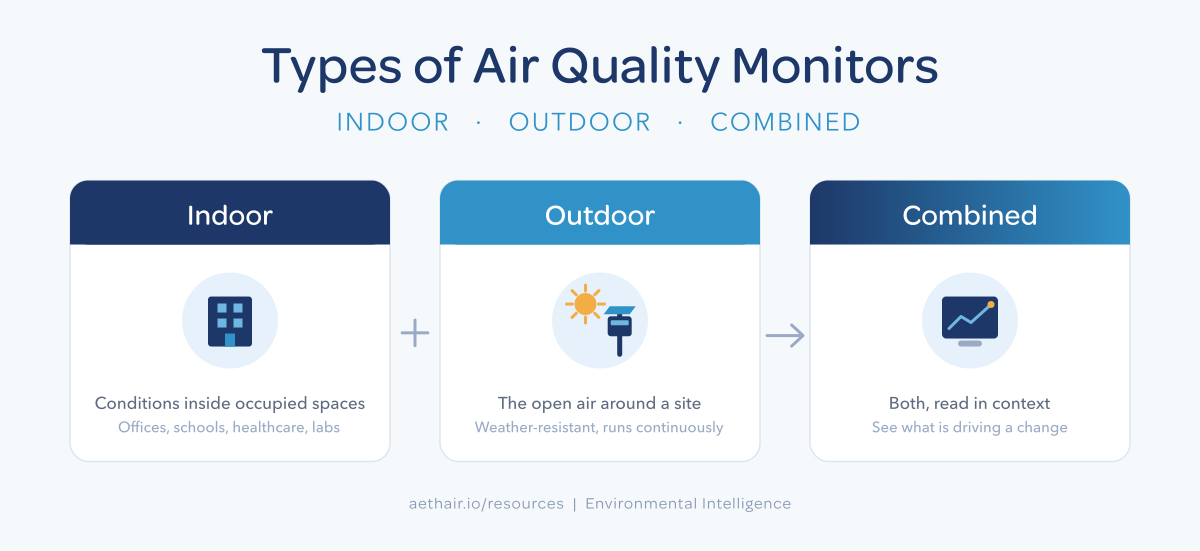
Start from what you need to understand, then work back to the type that answers it.
| If you need to understand... | The relevant monitor type | Typical parameters |
|---|---|---|
| Conditions inside occupied spaces | Indoor | CO₂, VOCs, PM2.5, temperature, humidity |
| Air entering or surrounding a site | Outdoor / ambient | PM, ozone, NO₂, other gases, weather |
| Indoor conditions in context | Combined indoor + outdoor | Both, on one platform |
How Aethair Brings Indoor and Outdoor Data Together
Aethair covers all three approaches within one environmental intelligence platform. Aethair IAQ, a commercial indoor air quality monitor, handles indoor and occupied spaces, measuring CO₂, VOCs, particulates, and comfort conditions where people spend their time. Aethair PRO is built for outdoor and combined deployments, with weather-resistant hardware and hot-swappable gas sensors for particulate, gas, and environmental monitoring in the field. Where a site already runs existing or specialized instruments, Thiamis brings those sensors into the same system.
Where it comes together is Environet, the web-based platform the hardware reports into and the cornerstone of Aethair's environmental intelligence approach. Environet stores both live and historical readings, so indoor and outdoor data sit side by side rather than in separate tools, and the same view is available on a desktop or a phone. Teams can watch conditions in real time, work back through historical trends, manage their devices from one console, and set Intelligent Alerts against custom thresholds, so the right person hears about an exceedance as it happens rather than after the fact.
From there, the platform turns that data into decisions and documentation. Noesis, Aethair's AI analysis tool, lets teams query their environmental data in plain language, summarize it, and surface trends across sites and seasons, while Aethair Reports compiles it into compliance-ready documentation on demand or on a set schedule. Because every figure traces back to a calibrated reading, the output stays defensible, and the interpretation and sign-off stay with the team. The result is one view of the air your organization manages, indoors and out, with the context to see what is driving a change and the record to prove it.
Indoor, Outdoor, and Combined Monitoring on One Platform
Aethair connects indoor and outdoor air quality data in a single platform, so you can see conditions in context and document them with confidence.
Find the Right Monitor for Your Site (opens in a new tab)See Aethair's Monitoring Solutions →
Types of Air Quality Monitors: Frequently Asked Questions
What are the main types of air quality monitors?
The main types of air quality monitors are indoor monitors, outdoor or ambient monitors, and combined deployments that use both. Indoor monitors track conditions inside occupied spaces such as offices, schools, and healthcare facilities. Outdoor or ambient monitors track the air entering a site or surrounding a community, in weather-resistant hardware built for the field. Combined deployments run both, so indoor readings can be read against outdoor conditions and you can see what is actually driving a change.
What is the difference between indoor and outdoor air quality monitors?
The difference comes down to where they sit and what they are built to measure. Indoor air quality monitors focus on the conditions people are exposed to inside a building, including carbon dioxide as a ventilation proxy, volatile organic compounds, fine particulates, temperature, and humidity. Outdoor or ambient monitors measure the open air around a site, often adding ozone, nitrogen dioxide, and meteorological context, in hardware that withstands sun, rain, and wind. The placement and the purpose, not just the sensor, define the type.
Do I need both indoor and outdoor monitoring?
Not every organization does, but combined monitoring is worth it when indoor readings only make sense in the context of outdoor conditions. A particulate spike indoors means something very different on a wildfire day than on a clear one, and only paired data tells you whether the source is outside air getting in or something happening inside. Facilities making ventilation and HVAC decisions, or documenting conditions for compliance, tend to benefit most from seeing both at once.
What is an ambient air quality monitor?
An ambient air quality monitor measures the quality of the open, outdoor air around a site, facility, or community. It typically tracks particulate matter, gases such as ozone and nitrogen dioxide, and weather conditions, and it is built into weather-resistant hardware so it can run continuously outdoors. Ambient monitors establish a baseline for the air entering or surrounding a location, which supports compliance, public health awareness, and decisions about when to bring outside air into a building.
What parameters do air quality monitors measure?
Most air quality monitors measure some combination of particulate matter (PM1, PM2.5, and PM10), carbon dioxide, volatile organic compounds, and comfort parameters like temperature and humidity. Outdoor and ambient monitors often add gases such as ozone, nitrogen dioxide, sulfur dioxide, and carbon monoxide, along with wind and other weather data. The exact set depends on the monitor type and what the deployment needs to see, which is why placement and purpose shape the configuration as much as the hardware does.