
Aethair solutions
Agriculture & Irrigation
Soil moisture, microclimate, and frost warning
Why it matters
Why Farms Monitor Soil and Weather for Irrigation
Farming is a continuous negotiation with the weather and the soil, and small margins in water, temperature, and disease pressure decide yield, quality, and cost. Irrigating by the calendar wastes water and energy and can drown or stress a crop, whereas irrigating to the actual moisture in the root zone applies just what the plants need. Frost can destroy a crop in a single night, many fungal diseases follow predictable temperature-and-wetness patterns, and evapotranspiration (the water a crop loses to the air) sets the real irrigation demand. Field monitoring gives growers the data to irrigate precisely, protect against frost, time disease sprays, and schedule field operations.
The payoff is efficiency and resilience: less water and input used for the same or better yield, and earlier warning of the conditions that threaten a crop.
What to measure
What to Measure
The core panel covers the main program. Other parameters are added for a specific site or requirement.
Soil moisture at one or more depths is the core measurement for irrigation, showing how much water is actually available in the root zone. Soil temperature governs germination, root activity, and nutrient uptake, and guides planting timing. Above ground, air temperature and humidity feed frost warning and the disease models that predict infection risk, while leaf wetness (how long a canopy stays wet) is a direct input to many of those models. Rainfall offsets irrigation need and records what the crop received naturally. Wind and solar radiation, combined with temperature and humidity, allow evapotranspiration to be calculated, which converts weather into an irrigation requirement.
Soil moisture is the parameter that tells growers when and how much to irrigate, balancing crop water needs against waste and runoff. Continuous soil-moisture monitoring at the root zone, with buried capacitance or TDR sensors on a logger, is the core of precision irrigation scheduling and protects both yield and water resources.
Soil Moisture: sensors, units, and every standardSoil temperature governs seed germination, root growth, and microbial activity, so it is a key parameter for planting decisions and crop management. Continuous soil-temperature monitoring at the root zone, alongside soil moisture, helps growers time planting, anticipate frost at ground level, and understand the conditions driving crop development.
Soil Temperature: sensors, units, and every standardAir temperature underlies the frost warnings, growing-degree-day models, and disease-risk forecasts that modern crop management depends on. Continuous temperature monitoring in the field or orchard, combined with humidity and other weather parameters, drives frost alerts and the phenology and pest models that guide spraying and harvest timing.
Air Temperature: sensors, units, and every standardRelative humidity is central to plant-disease and frost forecasting, since fungal pathogens and dew formation depend on it. Continuous humidity monitoring in the crop canopy, alongside temperature and leaf wetness, feeds the disease-risk models that tell growers when to protect their crop and helps anticipate frost and evapotranspiration.
Relative Humidity: sensors, units, and every standardRainfall measurement anchors irrigation scheduling and crop-water accounting, telling growers how much water the crop has already received before deciding what to add. Continuous on-site precipitation monitoring, alongside soil moisture and evapotranspiration inputs, sharpens irrigation decisions and records the rainfall that field-scale weather forecasts often miss.
Precipitation: sensors, units, and every standardLeaf wetness (disease/irrigation indicator).
Leaf Wetness: sensors, units, and every standardLeaf temperature (agricultural microclimate).
Leaf Temperature: sensors, units, and every standardGlobal (solar) radiation / irradiance.
Solar / Global Radiation: sensors, units, and every standardHorizontal wind speed.
Wind Speed: sensors, units, and every standardHorizontal wind direction (0–360°).
Wind Direction: sensors, units, and every standard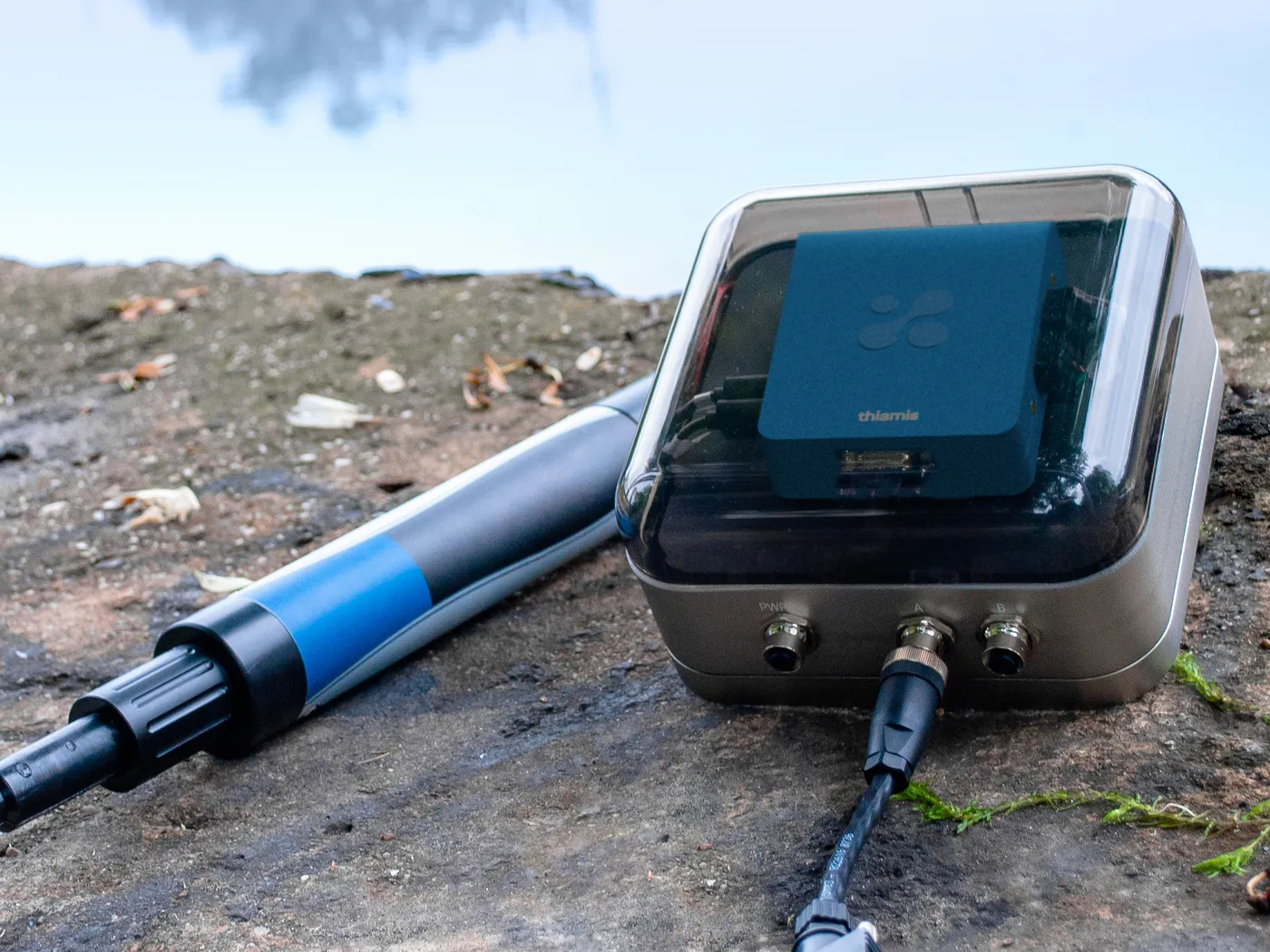
The setup
How a Monitoring Setup Works
Agricultural monitoring uses a Thiamis gateway connected to field sensors: soil-moisture and soil-temperature probes buried at representative depths in the root zone, plus a compact weather station carrying air temperature, humidity, rainfall, wind, and solar radiation, and a leaf-wetness sensor in the canopy. The logger records continuously and telemeters data back so that soil moisture drives irrigation scheduling, weather feeds evapotranspiration and disease models, and temperature triggers frost alerts overnight. Placement matters (probes in the crop's active root zone and representative soil, the weather station clear of obstructions), and one station typically represents a management zone or field. The recommended configuration below combines soil sensors with a field weather station. Use the configurator to add depths, leaf wetness, or other parameters for your crop.
Recommended
best match-

Thiamis connects 1 instrument
A gateway that connects the third-party instruments you choose to the Aethair Platform.
-
 Relative HumidityPrecipitationSoil MoistureSoil TemperatureAir Temperature
Davis Instruments weather stations.
Also measures 7 more
Leaf TemperatureLeaf WetnessPrecipitation IntensitySolar / Global RadiationUV IndexWind DirectionWind Speed -
Which monitor
The Instruments in This Configuration
A Thiamis gateway logs these instruments continuously and sends their readings to Environet over 4G LTE (cellular data included) or the site's Wi-Fi. There they get the same alerts, reports, dashboards, and API as any Aethair monitor, in one account with every other device on the site, instead of a separate vendor app for each instrument. Thiamis runs on mains power, a solar panel, or an external battery.
Davis Weather Stations
Davis Instruments weather stations.
What you get
Readings, Alerts, and the Report That Proves It
Every reading goes to the Aethair platform. Here is what a monitoring program gets from it.
Live data and alerts
Every reading in Environet as it happens, with alerts by email, SMS, or webhook at the thresholds you set.
Compliance reports
Scheduled or on-demand reports against the standards above or your own limits, as PDF or a secure link.
Dashboards and AI analysis
Live displays for a site or the public, and Noesis answering questions about the data in plain language.
Your data, through the API
Live and historical readings as JSON or CSV through the Environet API (OpenAPI 3.2), for a building management system, an ERP, or your own applications. The data is yours.
Related solutions
Related Solutions
Weather Stations & Meteorology
Professional multi-parameter weather monitoring
Cabin Air Quality
Respirable dust, gases, and blast monitoring
Hydrology, Level & Flow
Flood warning, stream gauging, and groundwater
Questions
Agriculture & Irrigation FAQ
How does soil moisture monitoring save water?
Measuring the water actually present in the root zone lets a grower irrigate to the crop's real need rather than to a fixed schedule, avoiding both over-watering and stress. Probes at more than one depth show how far water has penetrated and when the root zone is refilled, which turns irrigation from guesswork into a measured decision.
What weather data drives evapotranspiration?
Evapotranspiration, the water a crop loses to the atmosphere, is calculated from air temperature, humidity, wind, and solar radiation together. Combining those parameters converts raw weather into an estimate of how much water the crop has used, which is the basis for precise irrigation scheduling.
How does monitoring help with frost and disease?
Air temperature logged overnight triggers frost alerts in time to run protection measures, while temperature, humidity, and leaf wetness feed the disease models that predict when fungal infection is likely. Acting on those warnings lets growers protect crops and time sprays instead of applying them routinely.
What is the best monitoring setup for agriculture and irrigation?
A Thiamis gateway with soil-moisture and soil-temperature probes in the root zone plus a field weather station for temperature, humidity, rainfall, wind, and solar radiation, and a leaf-wetness sensor where disease is a concern. Use the configurator to set the depths and parameters your crop and irrigation system need.
Put Your Monitoring on the Record
Schedule a callBuild a Configuration All solutions
A 30-minute call: you tell us about your application, then we demo the solution for it.