
Aethair solutions
Smart City and City-Wide Air Quality Monitoring
Real-Time Air Quality Networks for Municipalities
Why it matters
Air Quality at the Community Scale
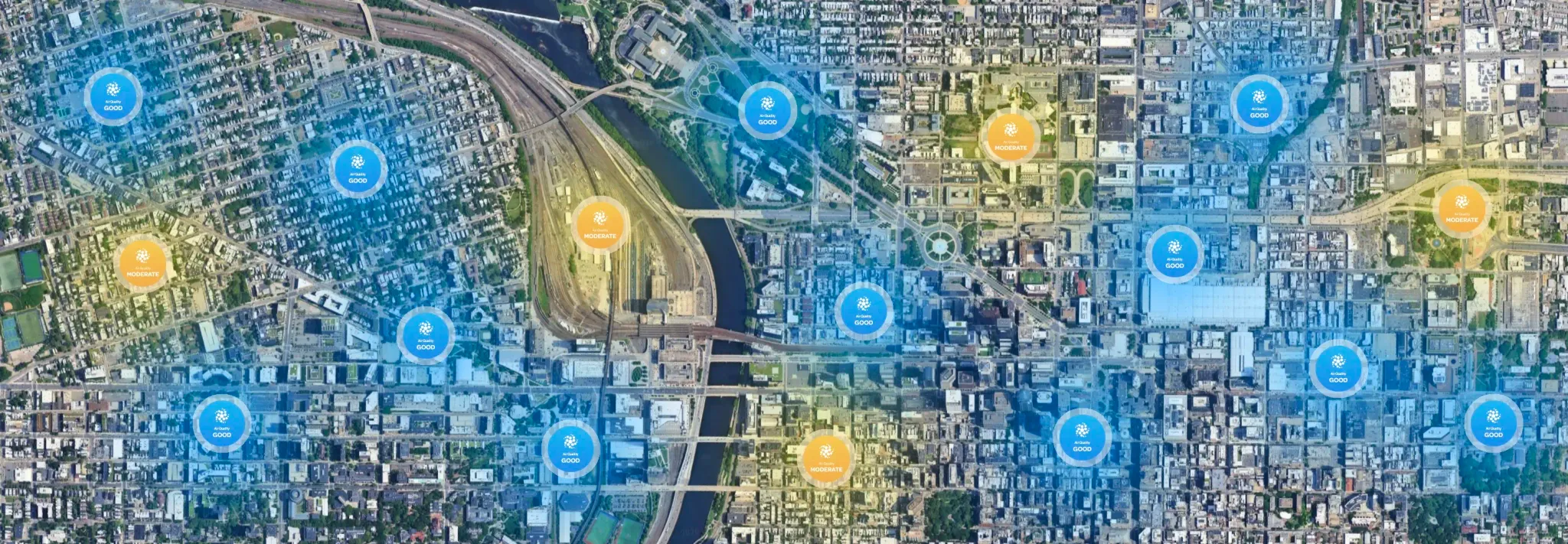
Environmental conditions change block by block. Traffic, construction, industry, and the seasons create local exposure that a few central monitoring stations cannot see. A city-wide network lets a municipality:
- Monitor neighborhoods and districts
- Track pollution near schools and public facilities
- Measure traffic-corridor emissions
- Watch industrial perimeters
- Support environmental justice programs
What to measure
The City Panel, and the Limits It Is Read Against
Particulates and the traffic and combustion gases carry a city network; the rest is added for a corridor, a work site, or a public display. The limits below are the published ambient values a network's readings are compared with.
Core:
Often added:
Parameter notes (on outdoor monitoring):
Formal attainment decisions under these standards rest on reference (FRM/FEM) monitors; a sensor network fills in the map between them.
The setup
One Monitor per Site, Added District by District
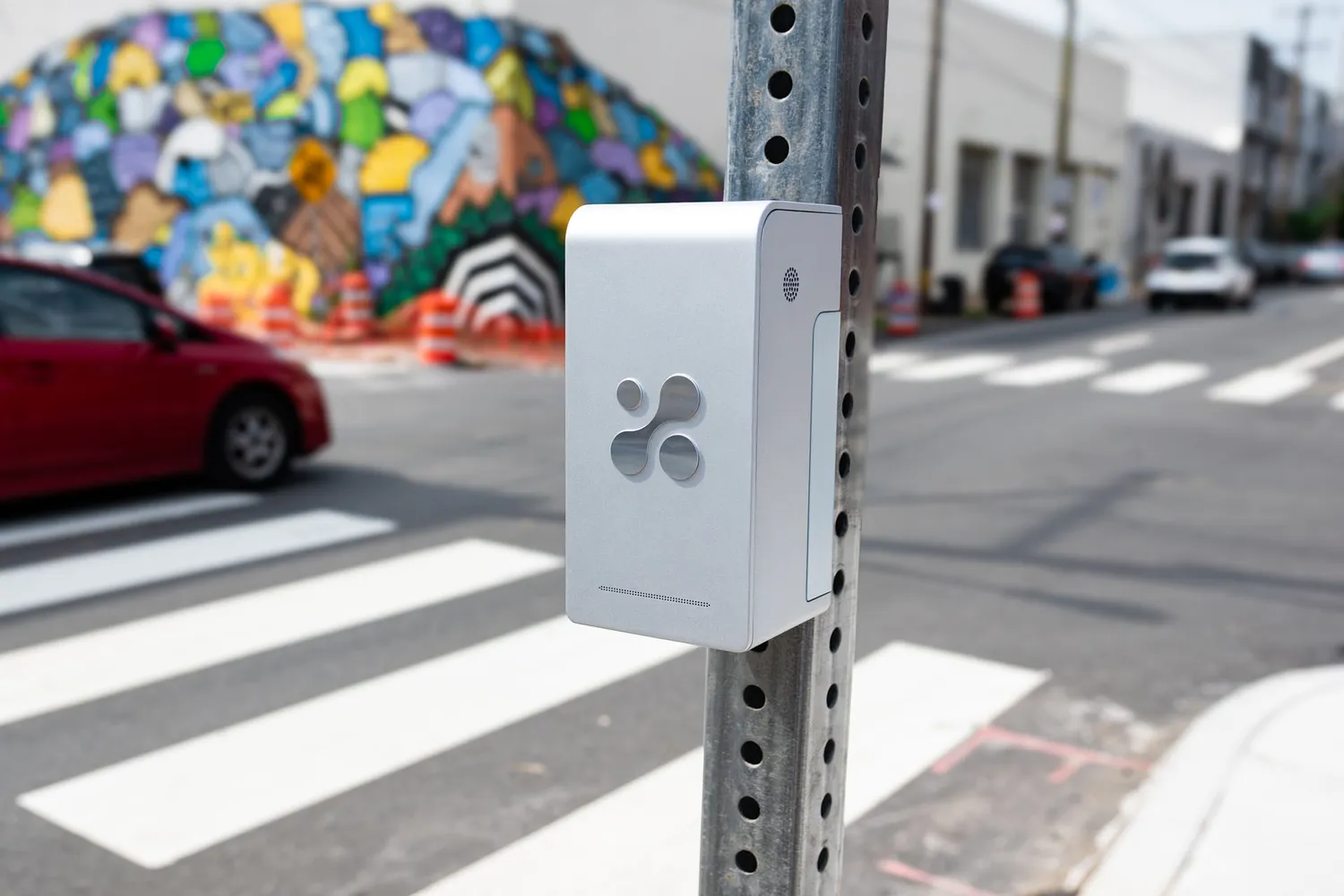
Each site is one weatherproof monitor on a pole or a wall. It reports over its own 4G LTE connection and runs on grid power or the Solar Panel Bracket, so the network can grow one site at a time.
Recommended
best match-

Industrial monitor for indoor and outdoor sites. Built-in sensors cover the essentials, and hot-swappable gas sensor cartridges and a differential-pressure option add more.
Built-inPM1PM10PM2.5Gas 1

Aethair O₃+NO₂
Nitrogen Dioxide (NO₂)Ozone (O₃)Four-electrode electrochemical sensing measures oxidizing gases (ozone plus nitrogen dioxide) and reports one…
Gas 2

Aethair CO (electrochemical)
Carbon Monoxide (CO)An amperometric electrochemical CO cell with a solid, non-aqueous electrolyte (the long-life, low-power…
Also fits: Aethair MultiGas+, Aethair CO (ppb, four-electrode)
MultiSense

Aethair MultiSense
Sulfur Dioxide (SO₂)Simultaneous electrochemical detection of sulfur dioxide, nitrogen dioxide, and formaldehyde at…
Expansion
Free: differential pressure
Also measures 11 more
Dew PointHeat IndexRelative HumidityIlluminance / LightParticle Count (by size)Total PM / Mass Conc.Barometric PressureEquivalent Continuous Level (Leq)Sound Pressure Level (SPL)Air TemperatureFormaldehyde (CH₂O)
Which monitor
Aethair PRO on the Street, Thiamis for Instruments You Own
Aethair PRO is the industrial monitor built for outdoor deployment: built-in PM1, PM2.5, PM10, temperature, humidity, pressure, sound, and light, plus 2 hot-swappable gas sensor cartridge sockets, a MultiSense socket, and an expansion socket. The cartridges cover Carbon Monoxide (CO), Carbon Dioxide (CO₂), VOC (Total), Nitrogen Dioxide (NO₂), Methane (CH₄), Oxygen (O₂), Nitric Oxide (NO), Ozone (O₃), Sulfur Dioxide (SO₂), Hydrogen Sulfide (H₂S), Hydrogen Chloride (HCl), Hydrogen Fluoride (HF), and come calibrated. Thiamis brings a city's existing instruments into the same account.
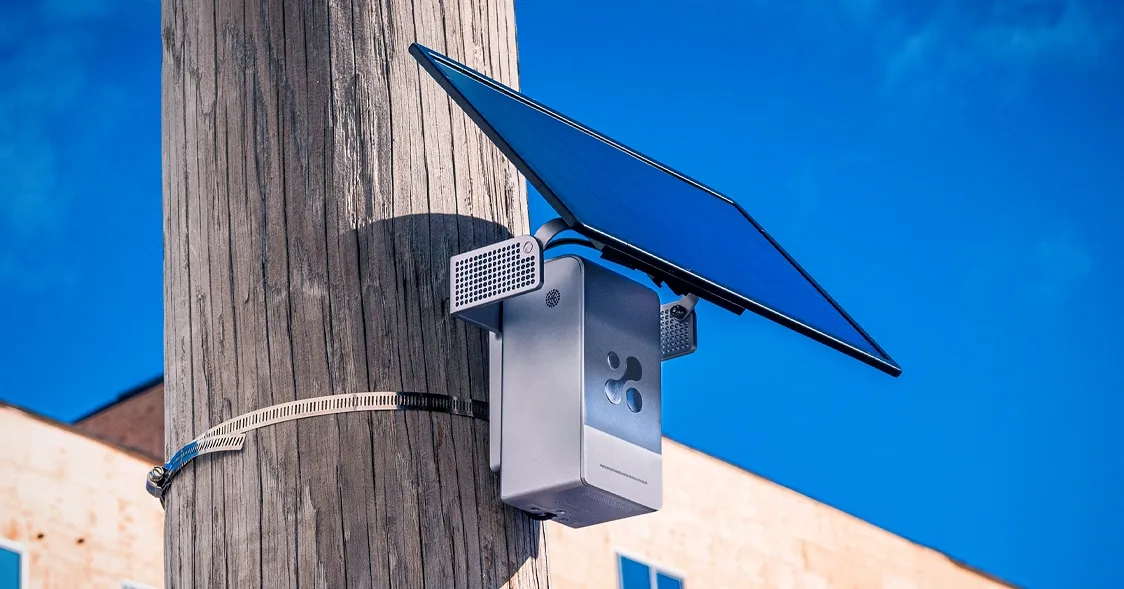
Aethair PRO
Industrial monitor for indoor and outdoor sites. Built-in sensors cover the essentials, and hot-swappable gas sensor cartridges and a differential-pressure option add more.
13 built-in parameters (PM2.5, PM10, noise, temperature …), plus 19 swappable cartridges (H₂S, SO₂, NO₂, CO, O₃, CH₄ and more) in 2 gas sockets, 1 MultiSense socket, and 1 expansion socket
See Aethair PRO
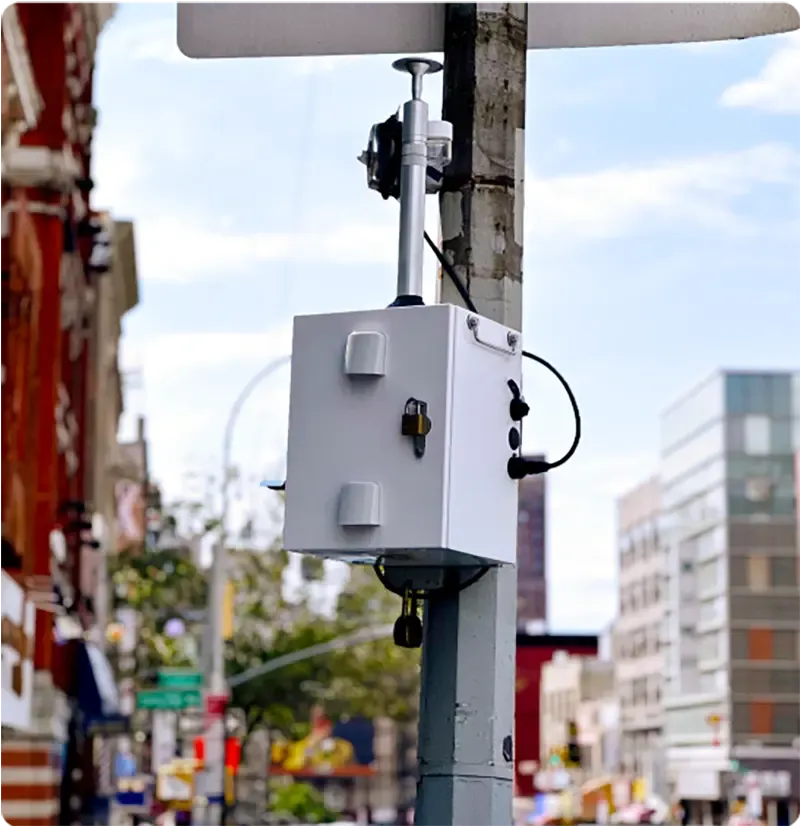
Thiamis
A gateway that connects the third-party instruments you choose to the Aethair Platform.
RS-232, RS-485, SDI-12, and USB · 224 device models from 35 integrations
See Thiamis
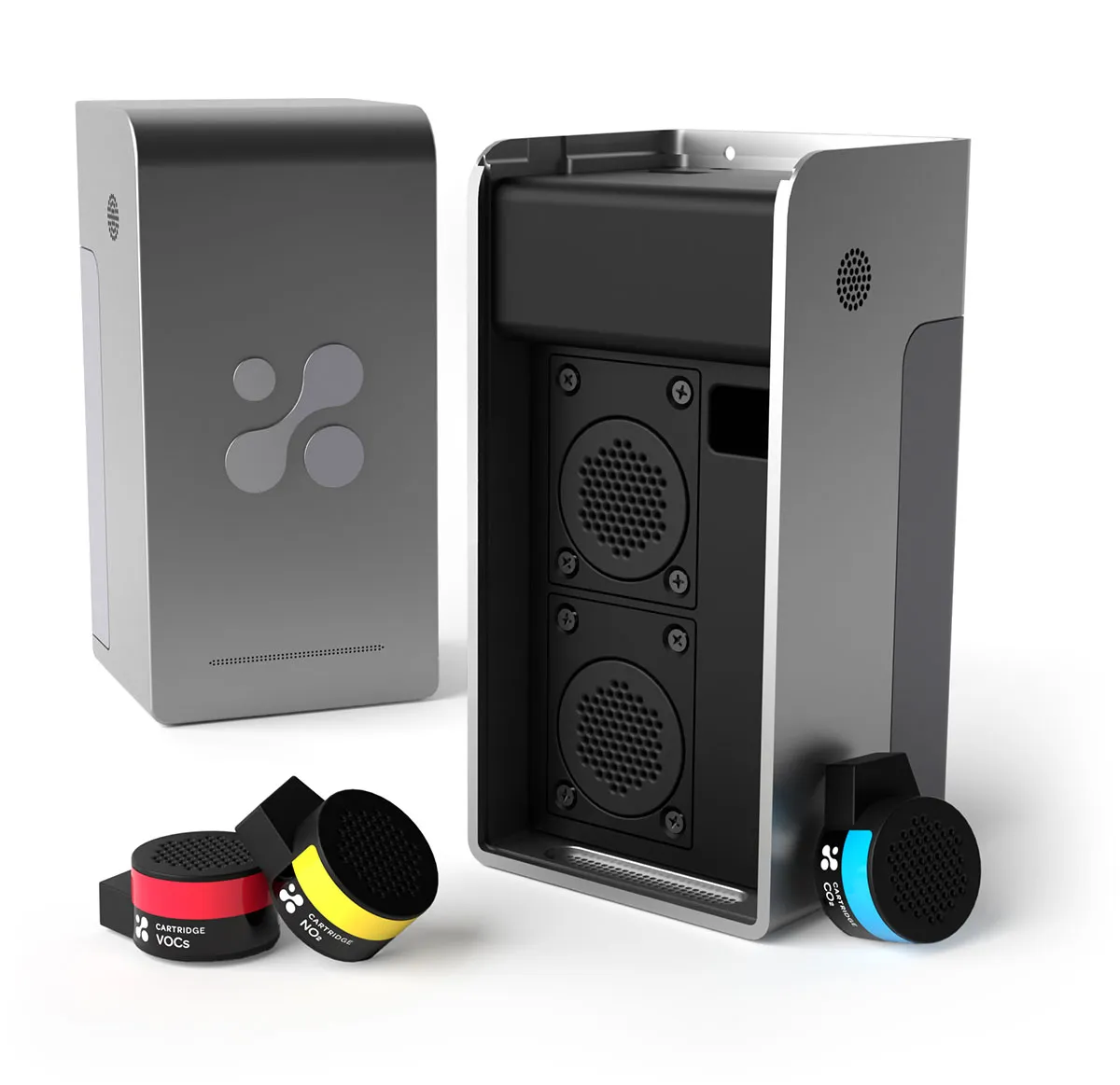
Inside Aethair PRO
Swap the Gases, Keep the Monitor
Every gas sensor is a pre-calibrated cartridge that swaps without tools, so a corridor site can run NO₂ and ozone while a site by the port runs SO₂, and either can change when the question does. The sensors are designed for continuous, low-maintenance operation.
What you get
Reports in Seconds, Not Spreadsheets
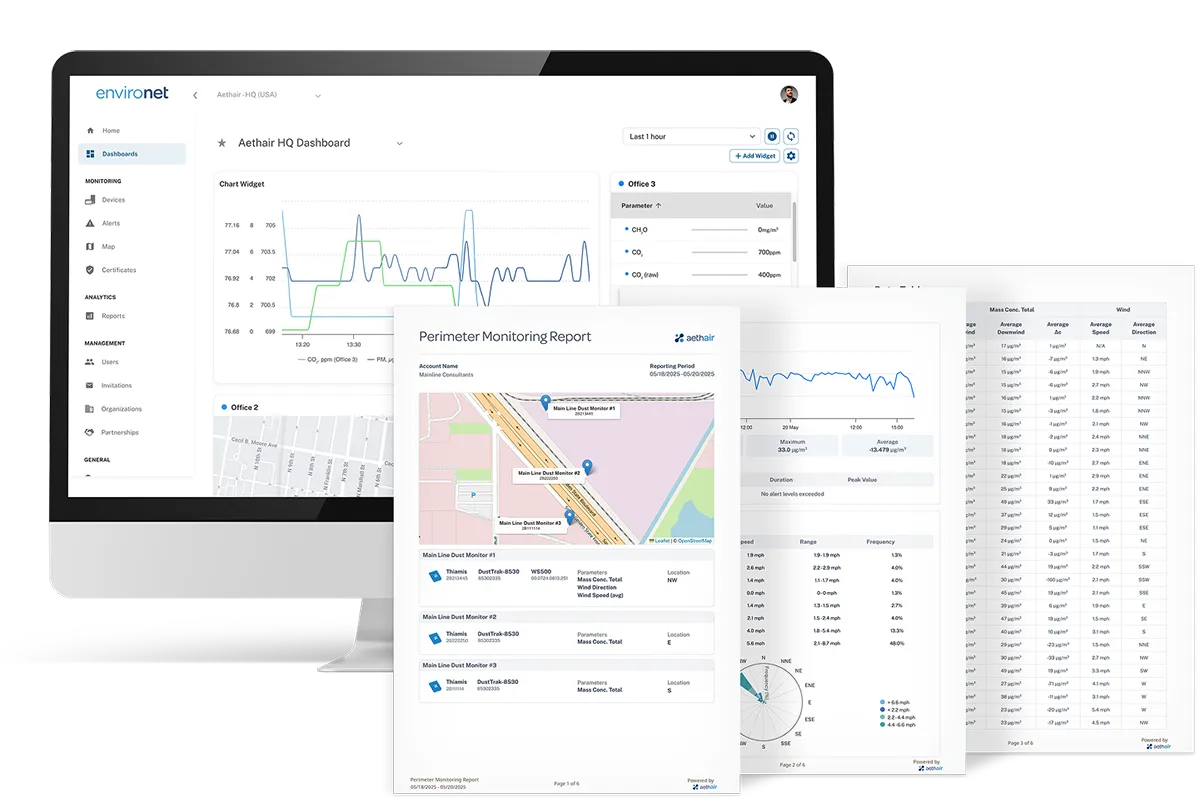
Every reading lands in Environet: a live device map, continuous data, and threshold alerts, so departments see conditions as they happen. Aethair Reports generates customizable reports from the same readings for compliance, regulatory submissions, and community health records, organized to show the trends without manual review.
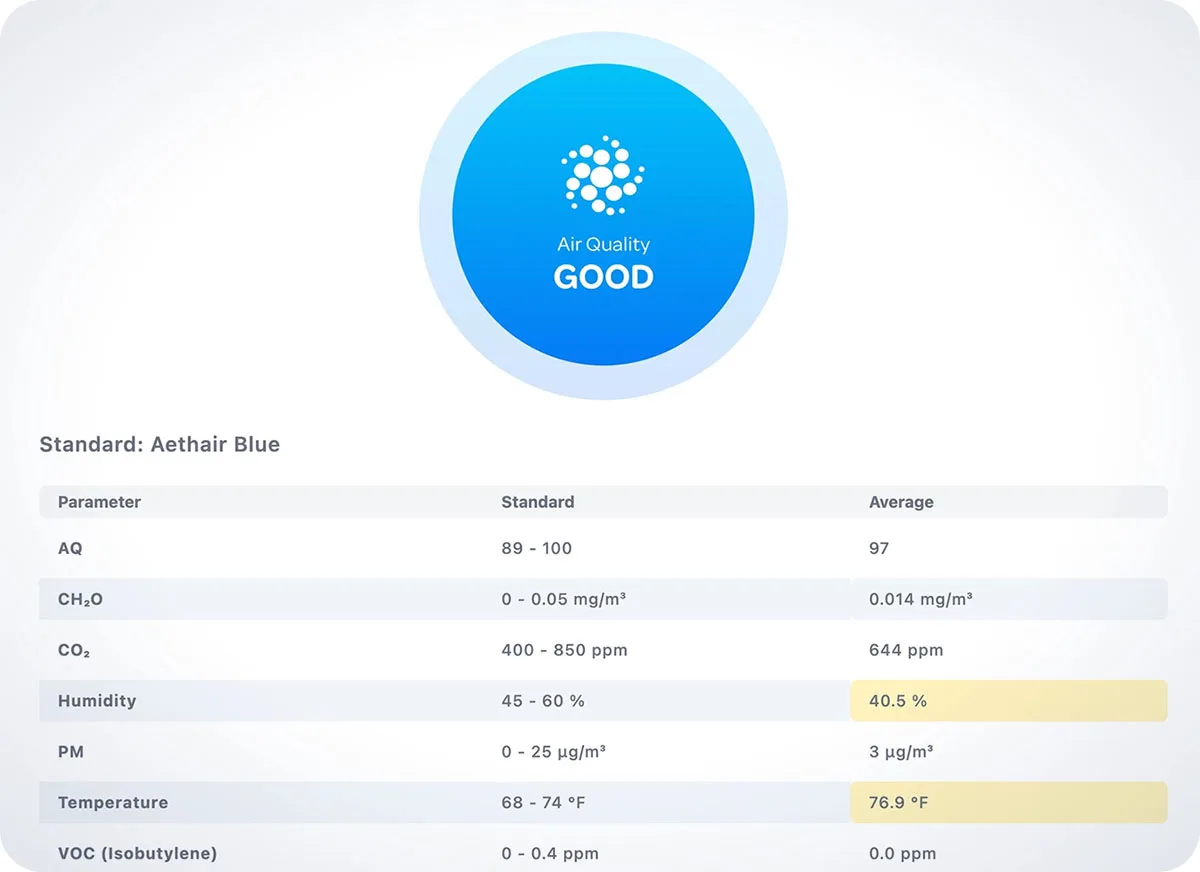
Air quality overview
The period at a glance: an aggregate status and every parameter's average against the standard's range.
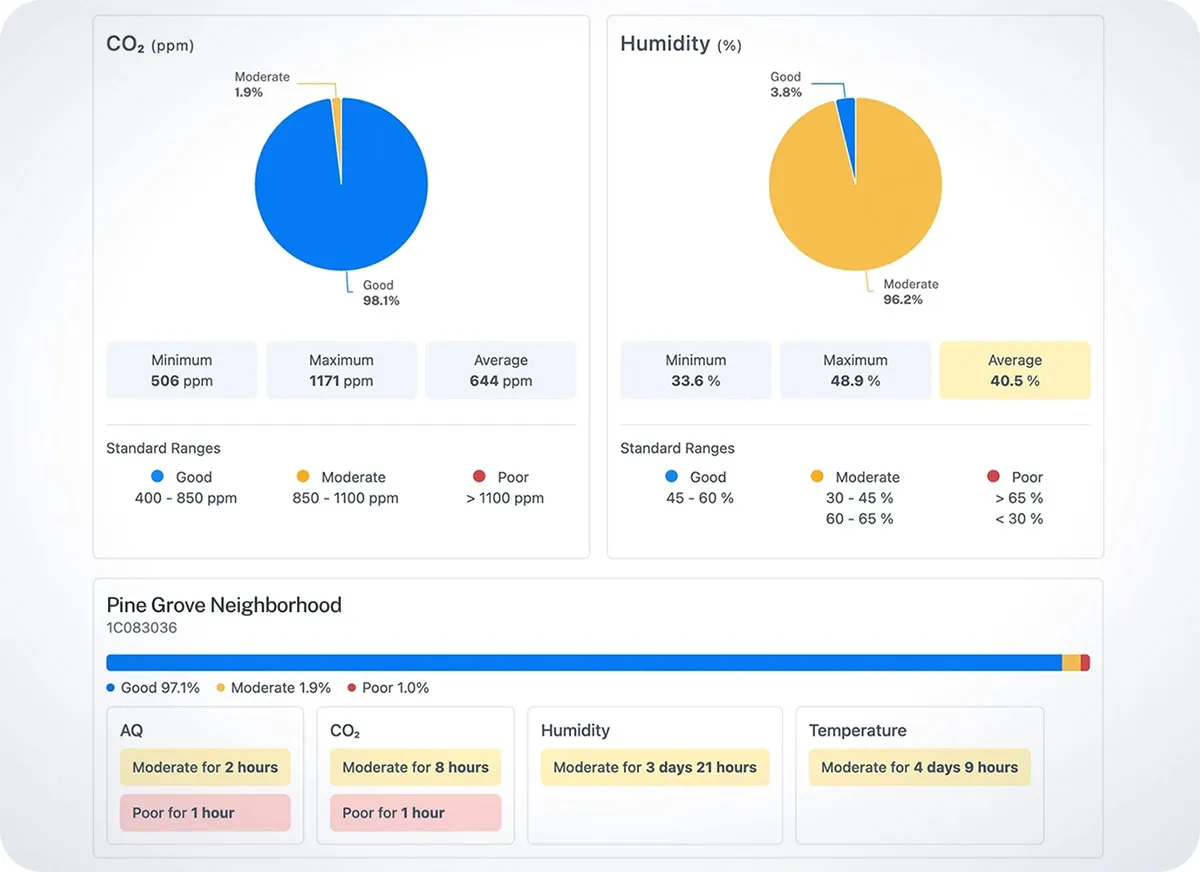
Parameter and location summaries
Each parameter's share of time in range with minimum, maximum, and average, then each location with its status timeline and alerts.
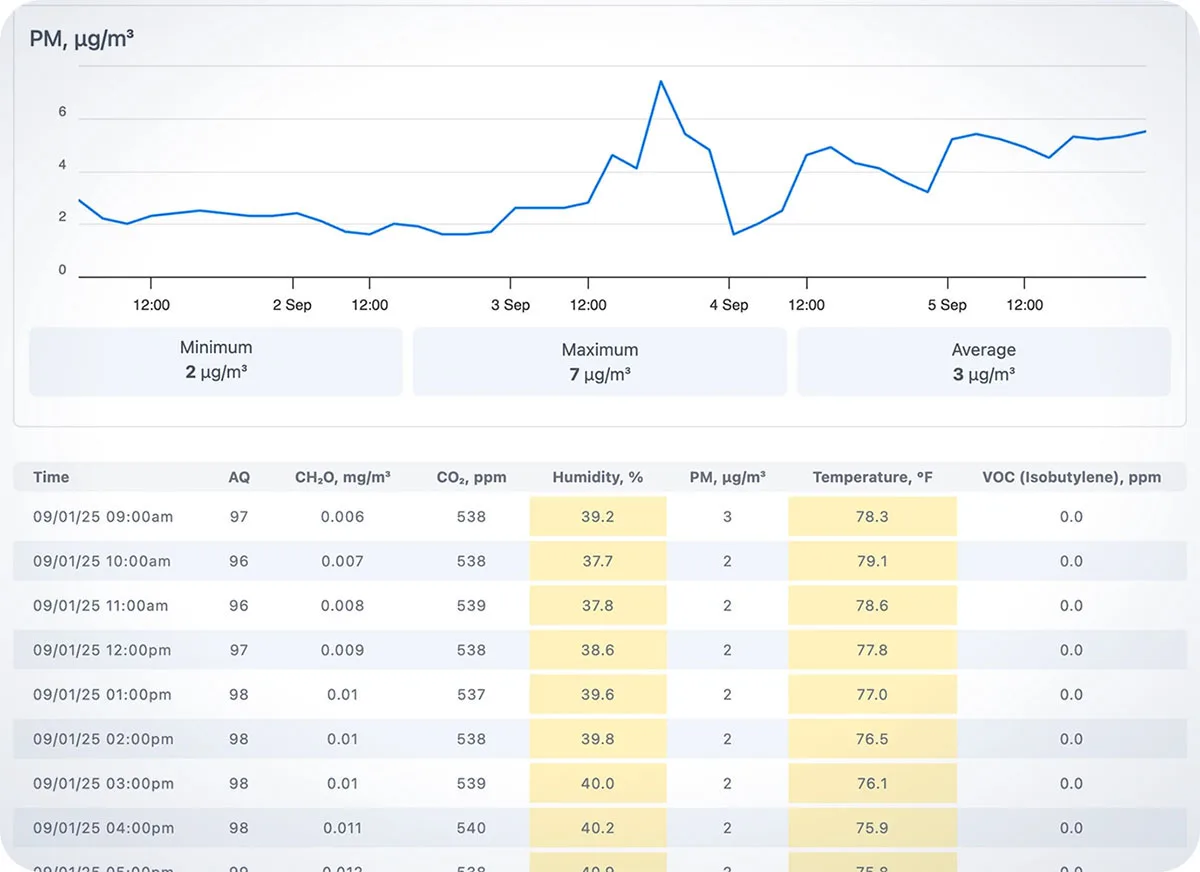
Extended analysis
Per-device parameter graphs and the time-stamped data table behind them, for submissions and records.
Why Aethair
Why Cities Choose Aethair
A city network needs more than devices: a reliable system that turns measurements into clear operational decisions. Aethair covers all of it: deployment, management, analysis, and reporting.
- Complete monitoring infrastructure: Field-grade devices, secure cloud data management, real-time dashboards, AI analysis, and report generation in one system, instead of separate tools in separate departments.
- Scalable by district: Start with the areas that matter most and expand across the city without replacing equipment, as budget, community needs, or identified risk areas allow.
- Calibrated devices: Monitors ship calibrated and tested, so the readings hold up for planning, public reporting, and screening against the regulatory limits.
- Secure, transparent data: Data is encrypted in transit and stored in the Aethair Cloud. Every record is time-stamped and yours, available live and historical as JSON or CSV through the Environet API for reports, audits, public views, and open-data portals.
Ask the data
Noesis Finds the Pattern Across the Network
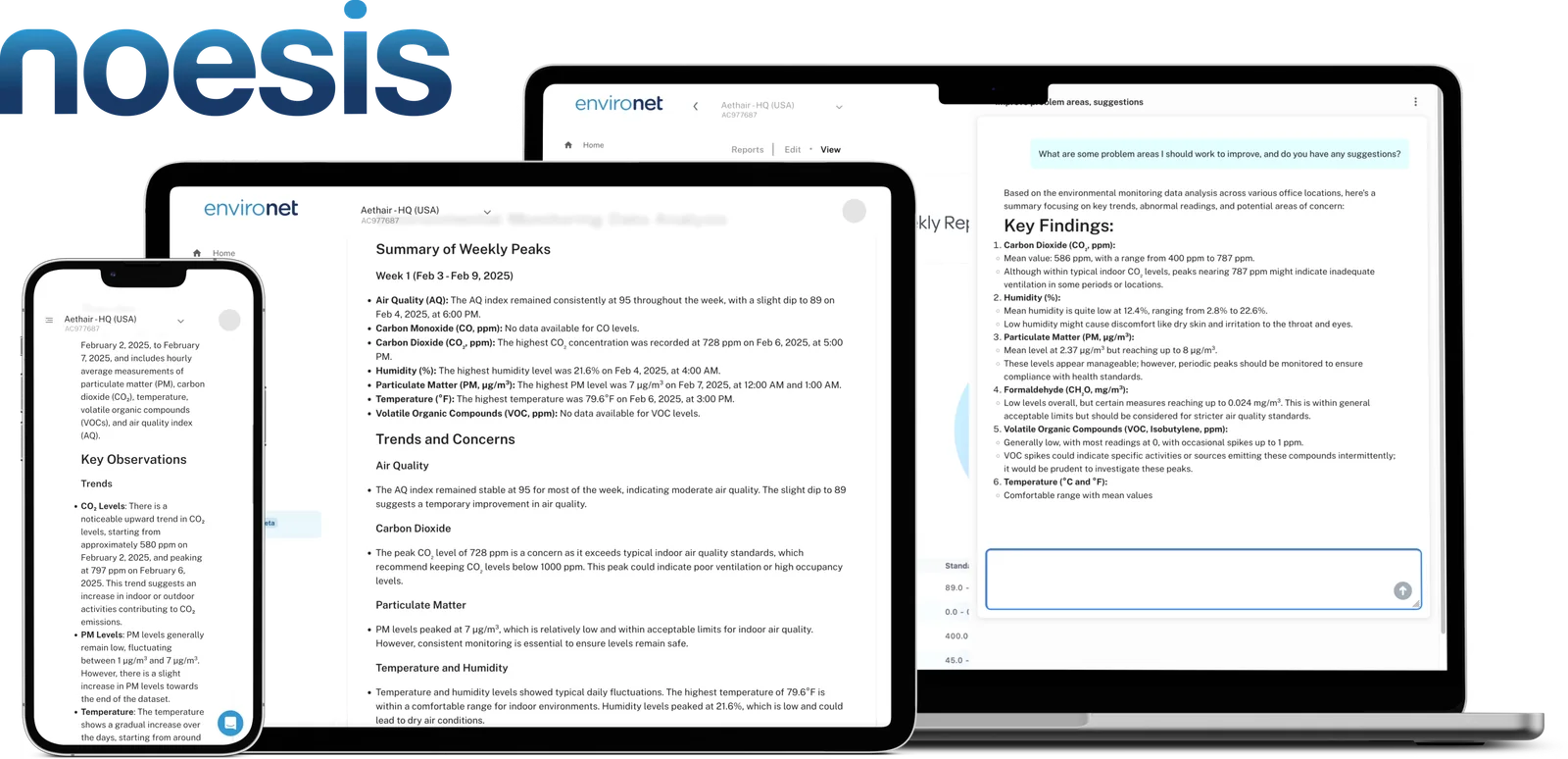
Noesis analyzes live or historical data, drafts compliance reports, and reviews any report made in Environet. With a few clicks or a plain question, officials can surface pollution patterns, compare exposure between neighborhoods, and check whether an intervention worked.
Applications
Where a City Network Earns Its Keep
City leaders, regulators, and facility managers use the same network to understand urban air pollution, act early, and tell the community what the air is doing.
Traffic and transportation corridors
Find particulate spikes and recurring emission patterns, see how vehicle flow drives air quality, and plan traffic and infrastructure changes on the data.
Construction zones
Dust and emissions tracked in real time, so contractors meet their environmental conditions and the city can respond to an exceedance quickly. In New York, remediation and many construction projects work under a Community Air Monitoring Plan (CAMP, NYSDEC DER-10), which calls for real-time total VOCs and PM10 at the upwind and downwind perimeter of the work area. Aethair PRO measures PM10 with its built-in sensor and VOCs with a PID cartridge, and Thiamis connects the dust monitors and PIDs contractors already own. See perimeter monitoring.
Schools and public facilities
Localized monitoring around schools, hospitals, and community buildings, where the most sensitive people spend their day. See schools.
Residential neighborhoods
Neighborhood-level visibility, including the impact of nearby ports or industrial operations, and the areas that need targeted intervention.
What it supports
What Distributed Monitoring Supports
Without a distributed network, a city relies on limited sampling and delayed reporting. With one, departments respond without delay, keep time-stamped historical records, and share public views of current conditions.
- Public health protection: exposure seen where people live, walk, and go to school.
- Regulatory programs: readings screened against the NAAQS, EU, and WHO values, and perimeter data for work sites under a Community Air Monitoring Plan.
- Environmental justice: block-level evidence of who breathes what.
- Infrastructure planning: the before and after of a traffic project, a bus lane, or a construction phase.
- Community transparency: public views of current conditions.
Article Library
Reading for City Networks
Guides to the standards and practices behind outdoor air quality networks.
Air Quality Near Data Centers: What Communities Should Know
Air quality near data centers: construction dust, diesel generator emissions, and noise, and how communities get independent monitoring data.
Ambient Air Quality Monitoring: What Nonattainment Changes
Ambient air quality monitoring explained: how PM2.5 attainment is measured, what a nonattainment designation triggers, and what site-level monitoring adds.
Ozone Exposure Limits and Monitoring: OSHA and NAAQS
OSHA's ozone PEL is 0.1 ppm as an 8-hour TWA. How NIOSH, ACGIH, and the 70 ppb NAAQS compare, and why ozone needs short-interval monitoring.
Fenceline Air Quality Monitoring: Equipment and Approaches
Compare fenceline air quality monitoring approaches: standalone stations, pelican-case kits, and connected 4G sensor networks.
Wildfire Smoke Air Quality Monitoring: Detection & Response
Wildfire smoke monitoring for EHS and public health teams: real-time PM2.5, the AQI 151 respirator trigger, and how to alert workers before smoke arrives.
How to Choose an Air Quality Monitor: PRO, IAQ, or Thiamis
Compare Aethair PRO, IAQ, and Thiamis to match the right device to your site, from commercial interiors to industrial and fenceline monitoring.
Questions
City-Wide Air Quality Monitoring FAQ
What is smart city air quality monitoring?
It is a distributed network of environmental sensors across a city, giving continuous, real-time air quality at the neighborhood and corridor level. Unlike a handful of regulatory stations, the network captures block-by-block variation, which is what targeted public health response, infrastructure planning, and community transparency need.
How does a city-wide network differ from a regulatory station?
Regulatory monitoring relies on a small number of reference-grade stations, each covering a broad area; those FRM/FEM monitors are what formal attainment decisions rest on. A city-wide network puts many calibrated sensors across neighborhoods, traffic corridors, schools, and industrial perimeters. The result is far higher spatial resolution: where pollution is actually elevated, and when it changes. The two work together.
Can Aethair support a Community Air Monitoring Plan (CAMP)?
Yes, at the work sites that need one. A CAMP calls for real-time total VOCs and PM10 at the upwind and downwind perimeter of the work area: Aethair PRO measures PM10 on board and VOCs with a PID cartridge, and Thiamis connects the dust monitors and PIDs contractors already own. Aethair Reports produces the documentation from the same readings.
How many sensors does a city network need?
It depends on the city's size, traffic patterns, industrial footprint, and the uses the network serves. Most deployments start with priority zones (schools, industrial perimeters, traffic corridors) and grow over time. Aethair PRO scales one site at a time, without replacing equipment as the network grows.
Does city monitoring data support environmental justice programs?
Yes. Documenting differences in exposure between neighborhoods is one of the strongest uses of a distributed network. Block-level data helps a city find the gaps, support equitable policy, and show accountability to the communities affected.
How does AI help with city-wide monitoring?
Noesis analyzes live or historical data and writes compliance reports without manual review. Officials can ask plain-language questions of their own data to surface pollution patterns, compare exposure between neighborhoods, and check whether an intervention worked.
Build Your City's Monitoring Network
Schedule a MeetingAethair PRO Outdoor monitoring See a sample report Build a Configuration
A 30-minute call: you tell us about your application, then we demo the solution for it.
Used by teams at