
Aethair solutions
Hospital & Healthcare Air Quality Monitoring
Real-Time Air Quality Monitoring for Patient Safety
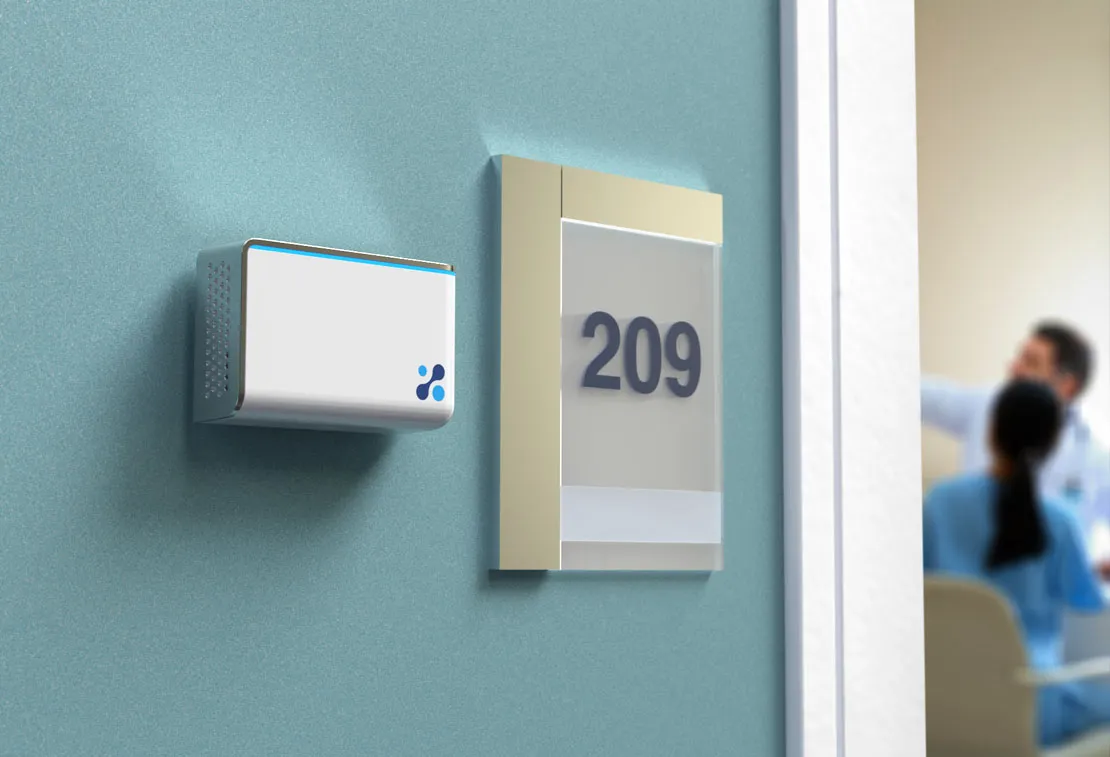
Why it matters
Why Hospital Air Quality Monitoring Matters for Patient Safety
Small changes in the air can compromise patient safety, surgical sterility, pharmaceutical integrity, and sensitive laboratory work. A pressure reversal on a busy shift or a humidity excursion overnight can come and go between spot checks and leave no record. Continuous monitoring watches every critical room and keeps the history.
- Patient and staff health: airborne risks seen in real time for vulnerable patients and the people caring for them.
- IVF laboratories: VOCs, pressure shifts, and environmental drift caught before they reach a culture.
- Cleanrooms and operating rooms: pressurization and particulates watched continuously, not between certifications.
- The survey record: temperature, humidity, and pressure histories for ASHRAE 170 and accreditation.
- Trust: an optional live dashboard in the waiting room that shows patients the air is being watched.
What to measure
The Clinical Panel and the Limits That Apply
Five parameters form the core of a clinical program, and others are added for specific rooms. Every limit below is the published value from the standard that sets it, and no single standard covers the whole panel. ASHRAE 170 sets design conditions for each space type, including pressure relationships, air changes, temperature, humidity, and filtration, rather than indoor concentration limits, so it covers the pressure, temperature, and humidity rows. For most spaces, it specifies only the direction of pressurization. For operating rooms, airborne infection isolation rooms (negative), and protective environment rooms (positive), it sets a minimum differential of 0.01 inches of water column (about 2.5 Pa). It also caps relative humidity at 60 percent in most clinical spaces. USP <797> sets a minimum differential of 0.020 inches of water column for sterile compounding. The particle, CO₂, VOC, and formaldehyde limits come from other standards: WELL v2, ISO 14644-1, OSHA, and the WHO indoor guidelines.
The clinical core is PM2.5 (a marker of filtration performance and infection-control air quality), CO₂ (the proxy for ventilation adequacy in occupied wards, waiting rooms, and consulting rooms), temperature and relative humidity (held to the ranges clinical ventilation guidance sets for each room type), and room-to-room differential pressure (the positive- and negative-pressure relationships that protect operating rooms, isolation rooms, and pharmacy cleanrooms). Laboratories and controlled environments extend this with total VOCs and formaldehyde (the contaminants IVF and culture rooms are most sensitive to) and with airborne particle counts where ISO cleanroom classification applies. The right set depends on the space: a general ward needs the indoor parameters, while a surgical suite or fertility laboratory adds pressurization, particle counting, and the contaminant parameters.
In clinical settings, PM2.5 is a marker of both infection-control performance and the effectiveness of the high-grade filtration that hospital ventilation relies on. Continuous PM2.5 monitoring in wards, operating rooms, and pharmacy cleanrooms verifies that filtered supply air is keeping fine particles low where vulnerable patients and sterile procedures demand it, and flags a filter or ventilation fault before it becomes a contamination event.
PM2.5: sensors, units, and every standardCO₂ is the clearest proxy for ventilation adequacy in a hospital's densely occupied, infection-sensitive spaces (waiting rooms, patient rooms, and exam rooms), where poor air exchange raises the risk of airborne transmission. Continuous CO₂ monitoring shows which clinical spaces are being ventilated in step with their occupancy and where fresh-air delivery has drifted below the design intent.
- WELL v2 900 ppm: or no more than 500 ppm above outdoor; one of four ways to meet the precondition
- WELL v2 750 ppm: or no more than 350 ppm above outdoor
Clinical ventilation guidance sets defined temperature ranges for operating rooms, recovery, pharmacy, and storage, because temperature governs both patient and staff comfort during procedures and the stability of medicines and specimens. Continuous temperature monitoring documents that each clinical space is held within its specified band and provides the time-stamped record that accreditation and audits require.
- ASHRAE 170 20–24 °C: 68 to 75 °F
Relative humidity is tightly controlled in healthcare because too little raises static and infection risk in operating rooms, while too much promotes mold and microbial growth in patient rooms and storage areas. Continuous humidity monitoring keeps each clinical space inside the range its ventilation standard specifies and evidences it for infection-control and accreditation reviews.
Relative Humidity: sensors, units, and every standardRoom-to-room pressure relationships keep contaminants where they belong in a hospital: positive pressure protects operating rooms and immunocompromised patients, while negative pressure contains airborne infection in isolation rooms. Continuous differential-pressure monitoring confirms each critical room is holding its designed pressure cascade and alarms the moment a door, fan, or filter fault reverses it.
- ASHRAE 170 2.5 Pa: 0.01 in. w.g.
- ASHRAE 170 2.5 Pa: 0.01 in. w.g.
- ASHRAE 170 2.5 Pa: 0.01 in. w.g.
- USP 797 5 Pa: 0.020 in. w.c. relative to adjacent less clean areas
- USP 800 2.5–7.5 Pa: 0.01 to 0.03 in. w.c. negative relative to all adjacent areas, at all times
Fine particulate matter ≤1 µm aerodynamic diameter, the finest fraction, which reaches the deep alveolar regions of the lung.
PM1: sensors, units, and every standardInhalable ('thoracic') particulate ≤10 µm; includes coarse dust that deposits in the upper airways.
PM10: sensors, units, and every standardTotal volatile organic compounds: a broadband, PID-based indicator of solvent and fuel vapors.
- WELL v2 500 µg/m³: continuous TVOC monitoring, an alternative to laboratory testing of benzene, formaldehyde, and toluene
Formaldehyde (CH₂O/HCHO), a colorless carcinogenic VOC emitted by pressed-wood products, insulation, furnishings, and combustion; a key indoor air quality parameter.
- WELL v2 50 µg/m³: verified by laboratory testing of occupiable spaces
- WHO indoor 2010 0.1 mg/m³: formaldehyde guideline value
- OSHA formaldehyde 2 ppm: 15-minute
- OSHA formaldehyde 0.5 ppm: 8-hour TWA
Airborne particle number concentration counted in discrete size bins (e.g.
Particle Count (by size): sensors, units, and every standardBarometric / atmospheric pressure.
Barometric Pressure: sensors, units, and every standardCarbon monoxide: a toxic, odorless combustion gas that binds to hemoglobin.
Carbon Monoxide (CO): sensors, units, and every standardMethods and guidance:
The setup
How a Healthcare Monitoring Setup Works
One monitor per room, placed in the occupied breathing zone. A pressurized room adds a differential-pressure reference to its corridor or anteroom.
Because the core indoor parameters can be measured by a single compact monitor, most clinical spaces are covered by one fixed unit placed in the occupied breathing zone, away from supply diffusers and doors that would give unrepresentative readings. It logs continuously into dashboards, alerts, and audit-ready reports. Pressurized and depressurized rooms add a differential-pressure sensor that references the room against its adjacent corridor or anteroom, so a reversed pressure relationship triggers an alarm and staff can act before it becomes a contamination event. Critical rooms, such as operating rooms, isolation rooms, cleanrooms, and cryostorage, are monitored continuously with threshold alerts, while wards and clinics can be covered more sparsely.
The two configurations below are the ones most clinical facilities use. A pressure-controlled room, such as an operating room, isolation room, or pharmacy cleanroom, runs Aethair PRO with the differential-pressure cartridge in its expansion socket, covering the full clinical core. A room without a pressure requirement runs on one Aethair IAQ. To add particle counting or other parameters for a specific clinical space, use Build a Configuration. Both monitors report over their own 4G LTE, so neither needs the hospital network.
Recommended
best match-

Industrial monitor for indoor and outdoor sites. Built-in sensors cover the essentials, and hot-swappable gas sensor cartridges and a differential-pressure option add more.
Built-inRelative HumidityPM2.5Air TemperatureGas 1

Aethair CO₂ (dual NDIR)
Carbon Dioxide (CO₂)Dual-thermopile NDIR (non-dispersive infrared) sensing measures CO₂ with no chemical consumables, for…
Also fits: Aethair CO₂ (self-calibrating NDIR)
Gas 2
Free: one more gas sensor cartridge
MultiSense
Free: a MultiSense, stock or built to order
Expansion

Aethair Diff. Pressure
Differential PressureA gauge sensor reads 0–10 kPa, with the higher-pressure side connected to its port.
Also measures 10 more
Dew PointHeat IndexIlluminance / LightParticle Count (by size)PM1PM10Total PM / Mass Conc.Barometric PressureEquivalent Continuous Level (Leq)Sound Pressure Level (SPL)
Recommended
best match-

Aethair IAQ built-in sensors
Compact plug-in monitor with every sensor built in, nothing to add. Ideal for straightforward indoor air quality monitoring.
Built-inCarbon Dioxide (CO₂)Relative HumidityPM2.5Air TemperatureAlso measures 9 more
Formaldehyde (CH₂O)Dew PointHeat IndexParticle Count (by size)PM1PM10Total PM / Mass Conc.Barometric PressureVOC (Total)
Build the pressure-controlled configuration Configure it without pressure
Which monitor
Aethair IAQ for Clinical Rooms, Aethair PRO Where Pressure Matters
Aethair IAQ measures ten indoor parameters and ships with a calibration certificate. Aethair PRO measures particulates, temperature, humidity, and barometric pressure, takes two gas sensor cartridges, and its expansion socket holds the differential-pressure cartridge a pressurized room needs. Thiamis brings instruments you already own into the same account.
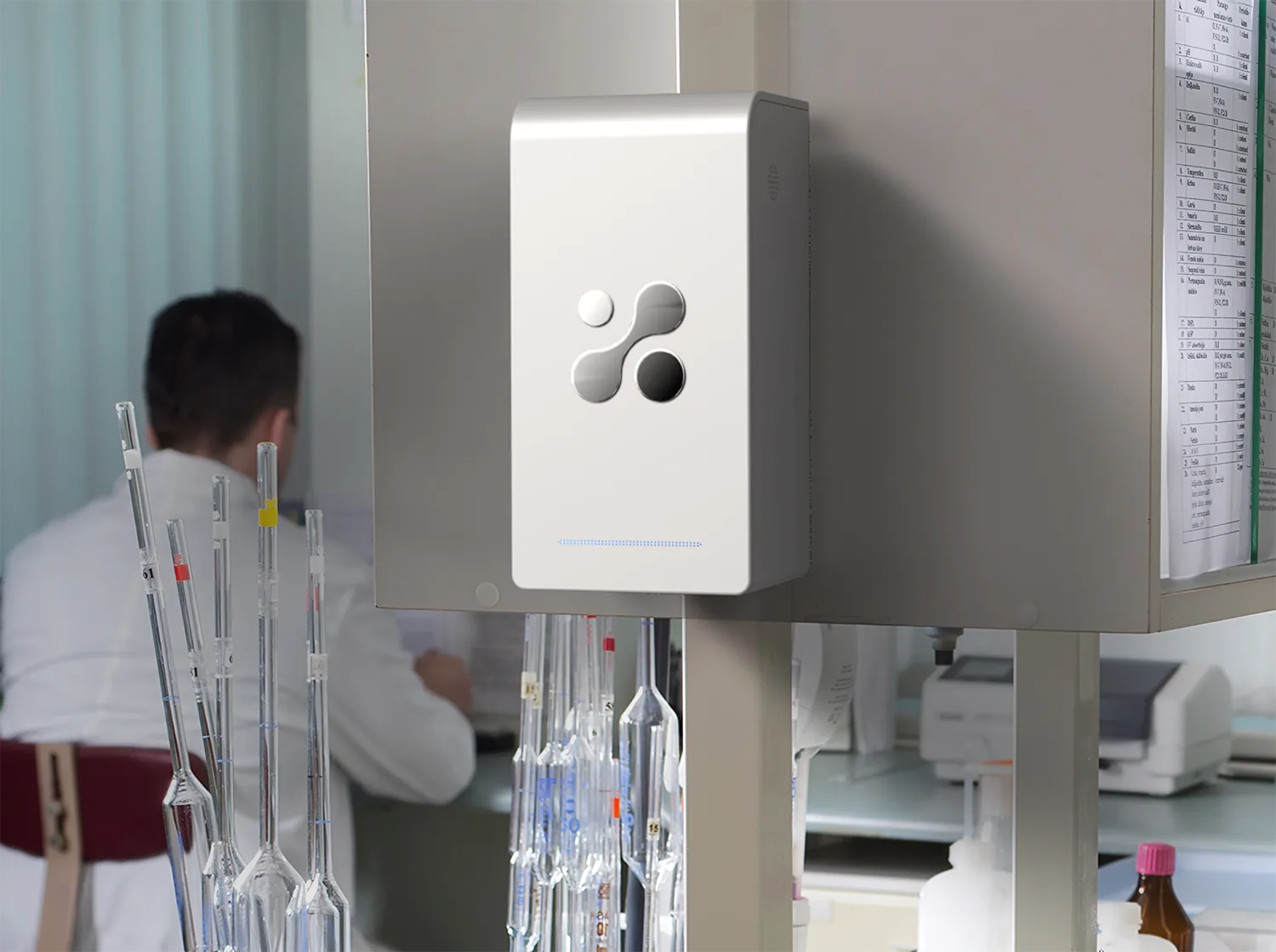
Aethair PRO
Industrial monitor for indoor and outdoor sites. Built-in sensors cover the essentials, and hot-swappable gas sensor cartridges and a differential-pressure option add more.
7 built-in parameters (PM2.5, PM10, temperature, humidity …), plus 19 swappable cartridges (H₂S, SO₂, NO₂, CO, O₃, CH₄ and more) in 2 gas sockets, 1 MultiSense socket, and 1 expansion socket
See Aethair PRO
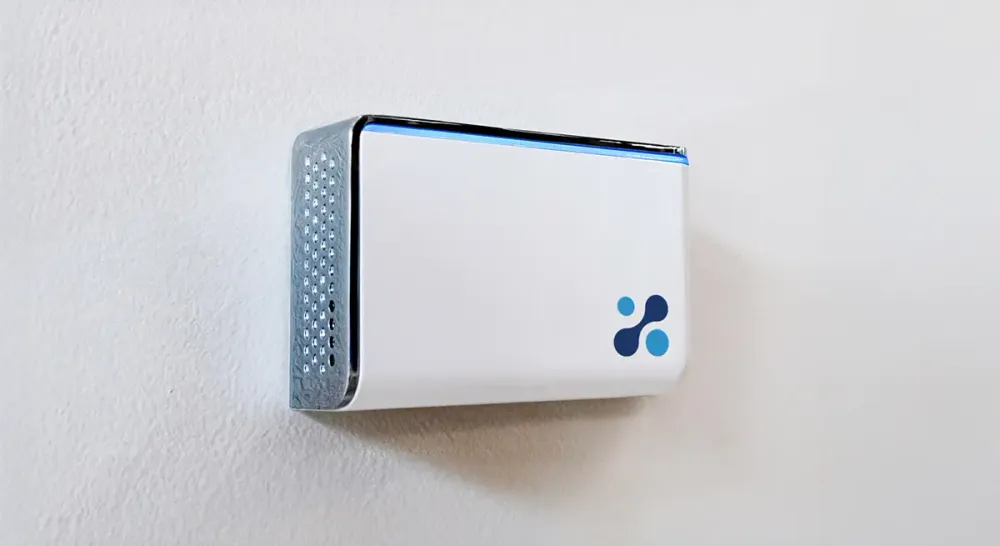
Aethair IAQ
Compact plug-in monitor with every sensor built in, nothing to add. Ideal for straightforward indoor air quality monitoring.
10 built-in parameters: CO₂, PM2.5, PM10, tVOC and more
See Aethair IAQ
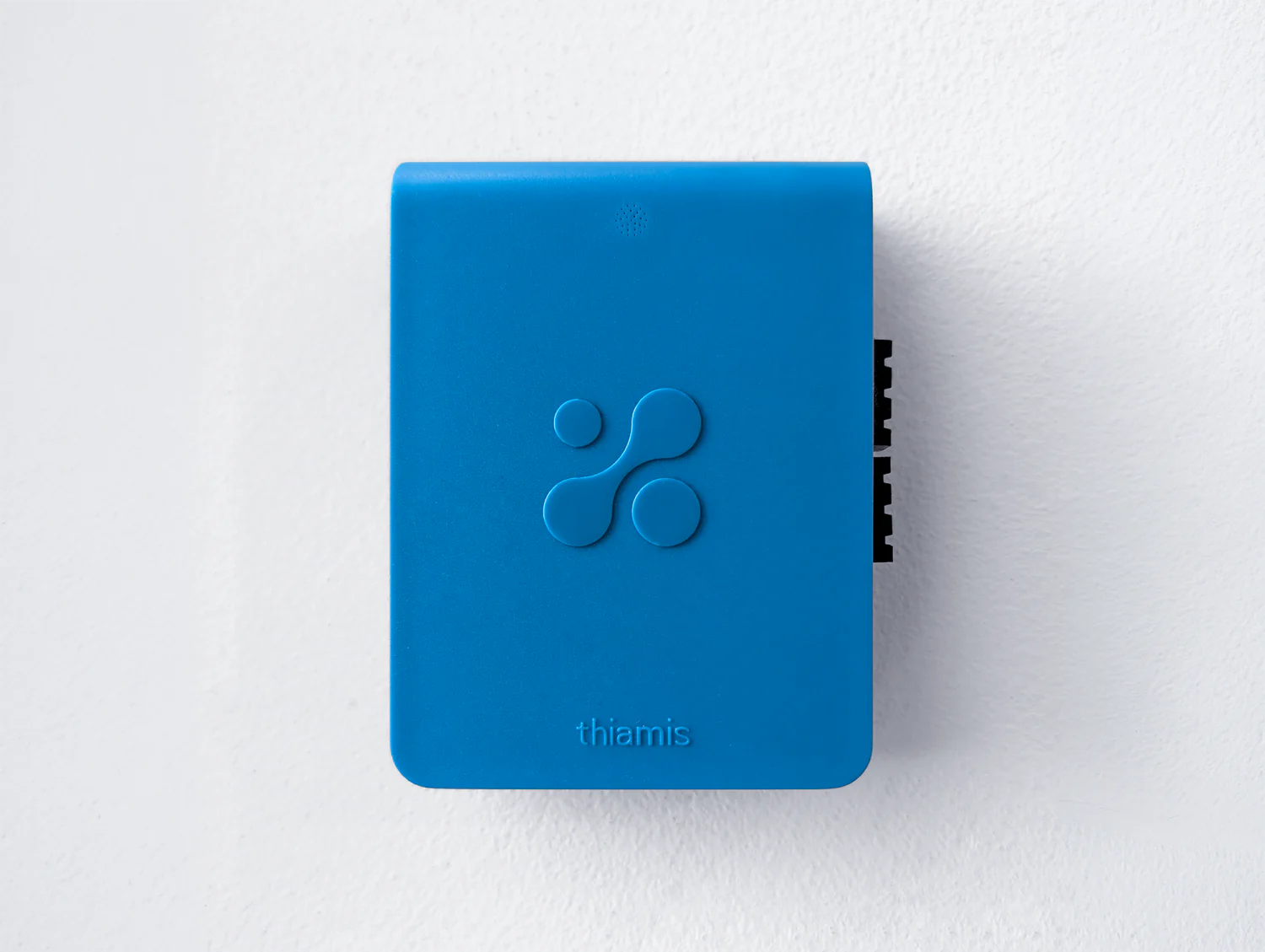
Thiamis
A gateway that connects the third-party instruments you choose to the Aethair Platform.
RS-232, RS-485, SDI-12, and USB · 224 device models from 35 integrations
See Thiamis
Where it runs
Monitoring That Protects What Matters, Room by Room
The same platform adapts to each clinical setting, carrying the parameters that space actually needs.
Hospitals and clinics
Wards, consulting rooms, and waiting areas on the indoor panel, with CO₂ as the ventilation check in occupied rooms.
Surgical centers
Operating rooms held at positive pressure: differential pressure against the corridor, with temperature and humidity, and an alarm the moment the cascade reverses.
IVF labs and culture rooms
Total VOCs, formaldehyde, and particulates, the contaminants embryo culture is most sensitive to, logged around the clock.
Cryopreservation and storage
An oxygen cartridge on Aethair PRO watches for the O₂ displacement a liquid-nitrogen leak causes.
Pharmacies and cleanrooms
Pressure direction, temperature, and humidity, monitored continuously. Where cleanliness classes apply, a dedicated airborne particle counter (such as a Particles Plus unit) connects through Thiamis.

What you get
Reports in Seconds, Ready for the Surveyor
Aethair Reports turns the readings into a clear, time-stamped document without manual data review: the trends, the exceedances, and the rooms that need attention. A CMS-2567 healthcare template built on ASHRAE 170 checks humidity, temperature, pressure, and air quality for the survey, and custom limits cover an internal infection-control target. Run a report on demand or schedule it to the compliance officer each month.
Between reports, every reading lands in Environet, where thresholds raise alerts by email, SMS, or webhook the moment a room drifts, and the building automation system or your own applications can read live and historical data as JSON or CSV through the Environet API. See a sample report.
Dashboards
Air Quality You Can See
Facilities can share live air quality through dashboards in waiting areas, on wall displays, behind a scannable QR code, or through a secure link for internal teams. Sharing is entirely optional: data can be public, kept private, or limited to internal visibility.

On a laptop
A secure link for internal teams, facilities, and infection control.
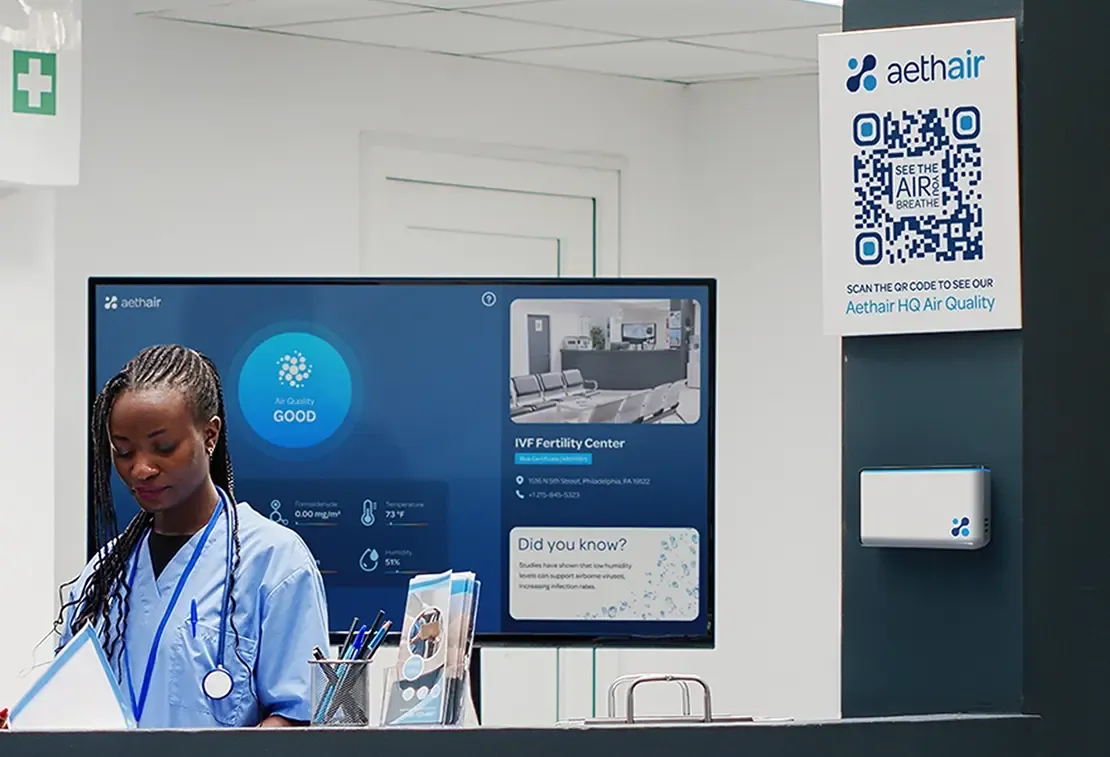
At reception
Live status on a wall display in a waiting area, with a QR code beside it.
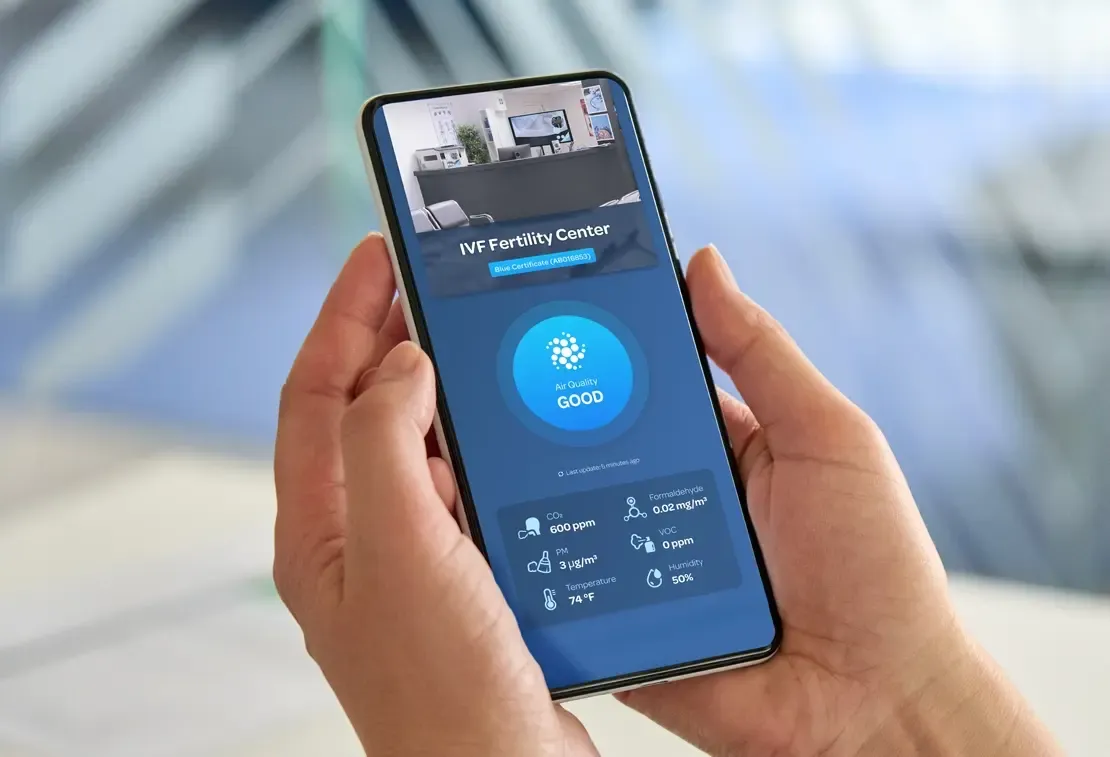
On a phone
The same readings for patients, staff, or visitors who scan the code.
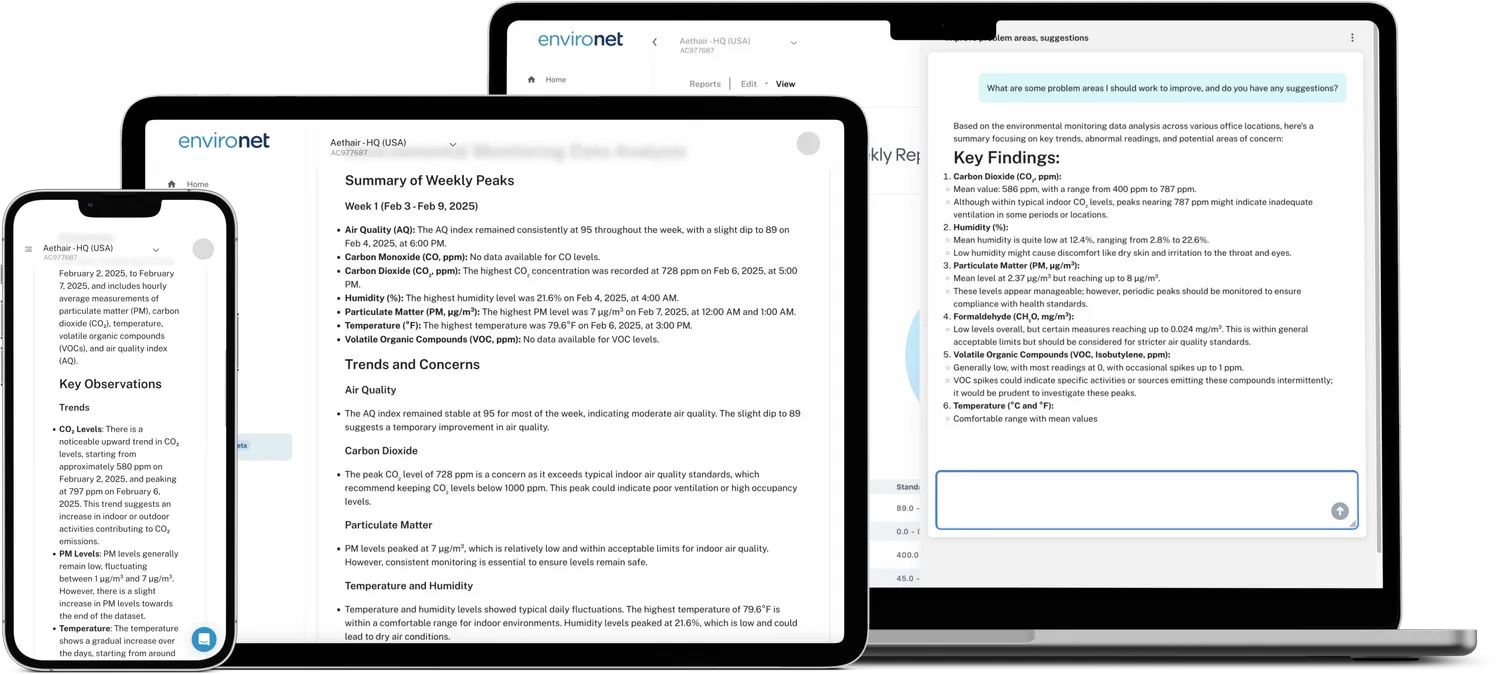
Ask the data
Noesis: AI Analysis for Clinical Teams
Noesis, the AI analyst in Environet, turns healthcare and IVF air quality data into a tool for decisions. Analyze live or historical conditions, generate a custom report or review an existing one, and ask questions in plain language, such as whether the lab held its conditions last week or which rooms show a trend. It takes the manual review off staff and administrators; the judgment stays with them.
By sector
Related Solutions
Controlled environments outside the hospital run on the same platform, with a different panel, standard, and reporting template.
Cleanrooms, labs, and manufacturing
Particle counts, pressure cascades, and temperature and humidity for controlled environments outside the hospital.
Commercial buildings
The indoor panel for offices and workplaces, documented against WELL v2 or your own targets.
HVAC and building management
Filter and duct pressure, demand-controlled ventilation, and setpoint verification for the plant behind the rooms.
Article Library
Reading for Healthcare Facilities
Guides to the standards and practices behind air quality monitoring in clinical spaces.
ASHRAE 170 Requirements and Which Edition Applies to You
ASHRAE 170 requirements explained: what the standard sets, which edition your facility is held to, what changed in 2025, and how each value gets verified.
Hospital Air Quality Monitoring: Standards by Space
Hospital air quality standards from ASHRAE 170 and The Joint Commission explained, plus what to measure in operating rooms, isolation rooms, and labs.
Commercial Building IAQ Monitoring: ASHRAE 62.1 & WELL
Indoor air quality monitoring for commercial buildings: what to measure, which standards apply, and how property managers build a program tenants trust.
IAQ Monitoring Parameters: PM2.5, CO2, VOCs & Formaldehyde
Indoor air quality monitoring parameters explained: PM2.5, CO2, VOCs, and formaldehyde, plus the sensors, thresholds, and OSHA, ASHRAE 62.1, and WELL limits.
Aethair IAQ vs Kaiterra Sensedge Mini: IAQ Monitors Compared
Aethair IAQ vs Kaiterra Sensedge Mini compared on connectivity, sensors, accuracy, and platform, and how to choose the right commercial IAQ monitor.
How to Choose an Air Quality Monitor: PRO, IAQ, or Thiamis
Compare Aethair PRO, IAQ, and Thiamis to match the right device to your site, from commercial interiors to industrial and fenceline monitoring.
Questions
Hospital & Healthcare Air Quality Monitoring FAQ
What is hospital air quality monitoring?
Hospital air quality monitoring is the continuous measurement of pollutants and environmental conditions across clinical spaces, including operating rooms, patient wards, IVF labs, cleanrooms, and pharmacies. It supports patient safety and surgical sterility, and it produces the record that healthcare ventilation and contamination requirements ask for.
What is ASHRAE Standard 170 and how does Aethair help facilities comply?
ANSI/ASHRAE/ASHE Standard 170 is the standard for ventilation of health care facilities. For each space type it sets a pressure relationship to adjacent areas, minimum air changes, a design temperature range, a relative humidity limit, and supply filtration; it sets no indoor concentration limits for CO₂, particulates, or VOCs. Aethair PRO and Aethair IAQ record temperature and humidity continuously, Aethair PRO adds room-to-room differential pressure through its expansion-socket cartridge, and Aethair Reports has a CMS-2567 healthcare template built on ASHRAE 170 that checks the readings for the surveyor.
How does Aethair support IVF lab air quality?
IVF lab outcomes are sensitive to VOCs, particulates, pressure, and environmental drift. Aethair IAQ measures total VOCs, formaldehyde, particulates, CO₂, temperature, and humidity continuously, so a contamination event shows up while it is happening, and Aethair Reports documents conditions for clinical audits and accreditation.
Does Aethair IAQ work in operating rooms and cleanrooms?
Aethair IAQ covers the indoor panel (particulates, CO₂, VOCs, formaldehyde, temperature, humidity, and barometric pressure) in patient and clinical areas without a pressure requirement. It does not measure room-to-room differential pressure, so an operating room, isolation room, or pharmacy cleanroom that must hold a pressure relationship runs Aethair PRO with its differential-pressure cartridge. Both report into Environet.
How does healthcare air quality monitoring support patient safety?
Continuous monitoring catches HVAC failures, ventilation drift, pressure reversals, and filtration problems in real time, before they affect a patient. Staff receive alerts when a reading crosses its threshold, and Noesis surfaces trends and anomalies across the facility in answer to plain-language questions.
What air quality parameters should a hospital monitor?
At minimum, particulate matter (PM2.5, and often PM1/PM10), CO₂, temperature, and relative humidity, plus room-to-room differential pressure in any space with a defined pressure relationship. Operating rooms, IVF laboratories, and pharmacy cleanrooms add VOCs, formaldehyde, and airborne particle counts. Which parameters apply depends on the room, so a clinical space is equipped for its own ventilation and contamination requirements rather than to a single template.
Why does differential pressure matter in a hospital?
Pressure relationships are the mechanism that keeps contaminants where they belong. Positive pressure keeps infiltrating air out of operating rooms and rooms that protect immunocompromised patients, while negative pressure contains airborne infection inside isolation rooms. Continuous differential-pressure monitoring confirms each critical room is holding its designed cascade and alarms the instant a door, fan, or filter fault reverses it, long before staff would notice.
Can one device cover both a ward and a cleanroom?
The same platform covers both, but they are configured differently. A ward or clinic uses the core indoor panel; a surgical suite, IVF laboratory, or pharmacy cleanroom adds pressurization and, where classification applies, particle counting. Deploying one flexible monitor family across the estate keeps the data, alerting, and reporting consistent while letting each space carry the parameters it actually needs.
How does continuous monitoring support accreditation?
Continuous, time-stamped, and calibrated measurement produces the documented record that clinical accreditation and audits ask for: evidence that each space stayed within its specified temperature, humidity, pressure, and air-quality bands. Automated threshold alerts catch ventilation drift, filtration faults, and pressure reversals in real time, so problems are corrected before they affect a patient rather than discovered after the fact.
Put Your Clinical Spaces on the Record
Schedule a ConsultationSee a sample report Aethair PRO Aethair IAQ Build a Configuration
A 30-minute call: you tell us about your application, then we demo the solution for it.
Used by teams at