
Aethair solutions
Commercial Indoor Air Quality Monitoring
Real-Time IAQ Monitoring for Offices, Workplaces, and Commercial Buildings
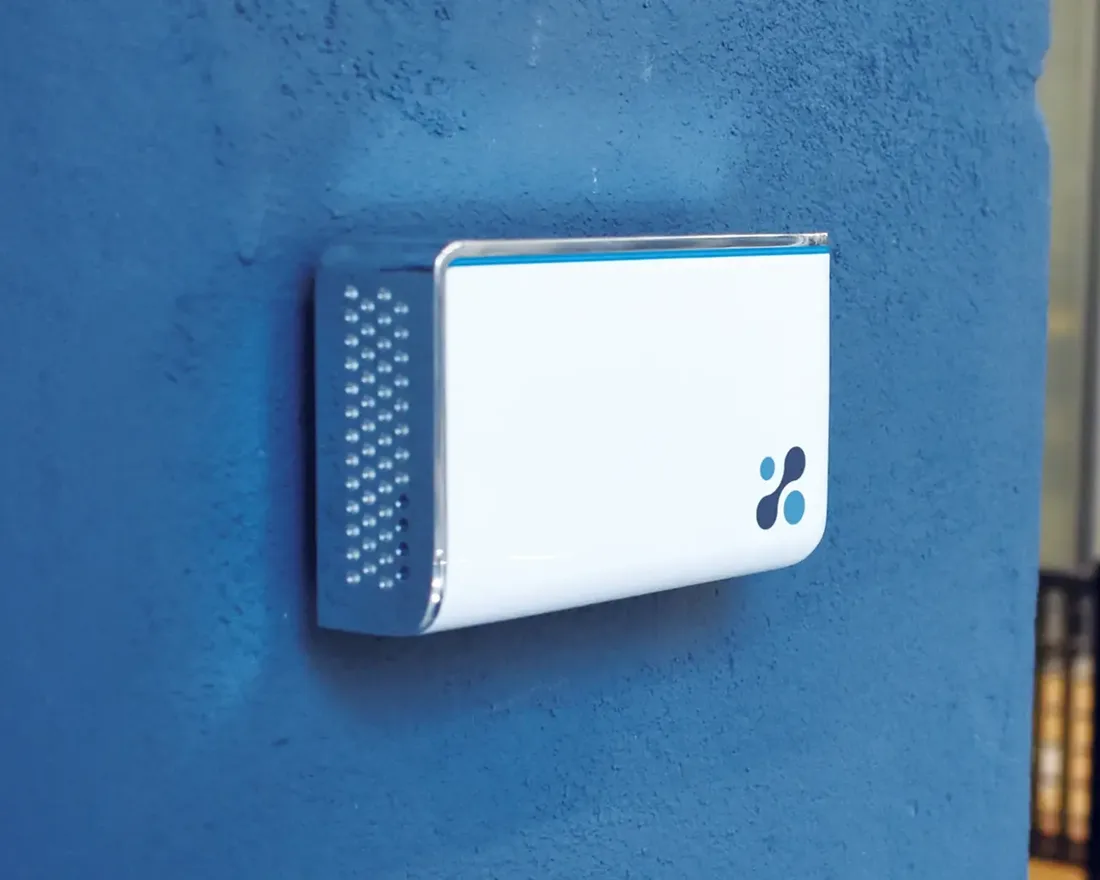
Why it matters
Why Offices and Workplaces Monitor Air Quality
Poor indoor air quality drives health complaints, lost productivity, tenant disputes, and liability, and it undermines the building, workplace, and ESG standards a commercial operator is measured against. Continuous monitoring turns each of those from an argument into a record.
- Compliance monitoring: evidence against WELL v2, LEED, ASHRAE 62.1, OSHA, and the other standards that set indoor limits.
- Occupant health and safety: pollutants seen in real time, on every floor of every building.
- HVAC and ventilation faults: failures, under-ventilation, and unusual events surfaced before they become complaints.
- ESG reporting: audit-ready indoor air quality data for sustainability disclosures.
What to measure
The Indoor Panel and the Limits That Apply
Five parameters carry an indoor program; the rest are added for a specific building or certification. Every limit below is the published value from the standard that sets it.
The core indoor panel is PM2.5 (fine particles from outdoor air, cooking, and combustion), CO₂ (the proxy for ventilation adequacy), total VOCs (chemical load from furnishings, cleaning, and processes), and temperature and humidity (comfort, and drivers of both mold risk and pollutant off-gassing). Many programs also add formaldehyde (a carcinogen common in newly built and furnished spaces), PM10, and radon in ground-floor and basement areas with geological risk. Together these cover the parameters that healthy-building standards specify and that occupants actually notice.
Indoor PM2.5 is driven by a mix of infiltration from outdoor air and internal sources such as cooking, printing, candles, and occupant activity, which means indoor levels can be lower than outside on a polluted day or far higher during a cooking peak. Monitoring PM2.5 inside offices, schools, and homes reveals both the baseline the ventilation and filtration achieve and the transient spikes occupants are actually exposed to, and it is a headline parameter in healthy-building certifications like WELL.
- LEED v5 15 µg/m³: 3 points at or below
- LEED v5 12 µg/m³: 4 points at or below; also the one-time test limit
- RESET Air 35 µg/m³: below
- RESET Air 12 µg/m³: below
CO₂ is the anchor of any indoor air quality program because it is the clearest available signal of whether a space is being ventilated in step with how many people occupy it. In offices and classrooms, watching CO₂ against occupancy exposes under-ventilated rooms before occupants complain of stuffiness or lost concentration, and it is the parameter most healthy-building and classroom-ventilation initiatives lead with.
- WELL v2 900 ppm: or no more than 500 ppm above outdoor; one of four ways to meet the precondition
- WELL v2 750 ppm: or no more than 350 ppm above outdoor
- UBA CO₂ 1000 ppm: < 1000 ppm: hygienically acceptable
- UBA CO₂ 2000 ppm: > 2000 ppm: hygienically unacceptable
- LEED v5 1000 ppm: 3 points at or below
- LEED v5 800 ppm: 4 points at or below
- RESET Air 1000 ppm: below
- RESET Air 600 ppm: below
Total VOCs capture the chemical load an indoor space carries from furnishings, cleaning products, print and process equipment, and new building materials. Tracking TVOC indoors flags off-gassing events and process emissions as a rising trend against the room's own baseline, prompting investigation and ventilation before the chemical burden affects comfort or health. It is a core parameter alongside PM2.5 and CO₂ in the indoor panel.
- WELL v2 500 µg/m³: continuous TVOC monitoring, an alternative to laboratory testing of benzene, formaldehyde, and toluene
- LEED v5 500 µg/m³: compare individual VOCs with health-based limits and take corrective action
- RESET Air 500 µg/m³: below (220 ppb)
- RESET Air 400 µg/m³: below (176 ppb)
Air temperature is the most immediate driver of occupant comfort and complaints in any building, and it interacts with humidity, ventilation, and pollutant behavior throughout an indoor space. Continuous temperature monitoring in each occupied zone underpins comfort management and healthy-building programs, and gives context to the CO₂, particulate, and VOC readings measured alongside it.
Air Temperature: sensors, units, and every standardRelative humidity shapes both comfort and health indoors: too low dries airways and raises static and infection risk, while too high drives mold, dust mites, and condensation. Continuous indoor humidity monitoring keeps a building inside the comfortable, healthy mid-range and provides the context that explains mold risk and pollutant off-gassing in the same space.
Relative Humidity: sensors, units, and every standardInhalable ('thoracic') particulate ≤10 µm; includes coarse dust that deposits in the upper airways.
- LEED v5 50 µg/m³: or ISO Class 8 per ISO 14644-1
Fine particulate matter ≤1 µm aerodynamic diameter, the finest fraction, which reaches the deep alveolar regions of the lung.
PM1: sensors, units, and every standardCarbon monoxide: a toxic, odorless combustion gas that binds to hemoglobin.
- LEED v5 9 ppm: and no more than 2 ppm above outdoor
Ozone: a secondary photochemical pollutant and respiratory irritant, and an occupational hazard near generators.
- WHO 2021 100 µg/m³: 99th percentile (3–4 exceedance days a year)
- WHO 2021 60 µg/m³: mean of the daily maximum 8-hour values over the six consecutive months with the highest ozone
- CARB Air Cleaner 0.05 ppm: tested per section 94805; devices sold in California must be certified
Nitrogen dioxide: a criteria pollutant, respiratory irritant, and marker of traffic combustion.
- LEED v5 21 ppb: 40 µg/m³
Barometric / atmospheric pressure.
Barometric Pressure: sensors, units, and every standardRadon gas activity concentration.
Radon: sensors, units, and every standardFormaldehyde (CH₂O/HCHO), a colorless carcinogenic VOC emitted by pressed-wood products, insulation, furnishings, and combustion; a key indoor air quality parameter.
- WELL v2 50 µg/m³: verified by laboratory testing of occupiable spaces
- WHO indoor 2010 0.1 mg/m³: formaldehyde guideline value
- LEED v5 16 ppb: 20 µg/m³
Methods and guidance:
The setup
How an Indoor Monitoring Setup Works
One monitor represents one ventilation zone, so the count follows the floor plan rather than the building.
Because all of the core indoor parameters can be measured by a single compact monitor, indoor air quality does not usually require assembling multiple instruments. A fixed monitor is placed in the occupied breathing zone of each ventilation zone, away from doors, windows, and supply diffusers that would give unrepresentative readings. It logs continuously, feeding dashboards, alerts, and, where relevant, the building management system for demand-controlled ventilation. The recommended configuration below is a single indoor monitor covering the core parameters, formaldehyde included. To add radon or extra parameters for a specific certification or concern, use Build a Configuration.
Each monitor needs only a power outlet. It reports over its own 4G LTE connection, so it doesn't need a site network, and readings are cached on the device during a network outage. Devices ship calibrated, so deployment is simple: mount the monitor, power it on, and readings appear in Environet. From there, the data is yours, live and historical, as JSON or CSV through the Environet API.
Recommended
best match-

Aethair IAQ built-in sensors
Compact plug-in monitor with every sensor built in, nothing to add. Ideal for straightforward indoor air quality monitoring.
Built-inCarbon Dioxide (CO₂)Relative HumidityPM2.5Air TemperatureVOC (Total)Also measures 8 more
Formaldehyde (CH₂O)Dew PointHeat IndexParticle Count (by size)PM1PM10Total PM / Mass Conc.Barometric Pressure
Alternative
Aethair PRO-

Industrial monitor for indoor and outdoor sites. Built-in sensors cover the essentials, and hot-swappable gas sensor cartridges and a differential-pressure option add more.
Built-inRelative HumidityPM2.5Air TemperatureGas 1

Aethair CO₂ (dual NDIR)
Carbon Dioxide (CO₂)Dual-thermopile NDIR (non-dispersive infrared) sensing measures CO₂ with no chemical consumables, for…
Also fits: Aethair CO₂ (self-calibrating NDIR)
Gas 2

Aethair VOC (ppm PID)
VOC (Total)A 10.6 eV photoionization detector (PID) ionizes volatile organic compounds for direct ppm readings across a…
Also fits: Aethair VOC (ppb PID), Aethair MultiGas+, Aethair VOC (ppb PID, wide range)
MultiSense
Free: a MultiSense, stock or built to order
Expansion
Free: differential pressure
Also measures 10 more
Dew PointHeat IndexIlluminance / LightParticle Count (by size)PM1PM10Total PM / Mass Conc.Barometric PressureEquivalent Continuous Level (Leq)Sound Pressure Level (SPL)
Which monitor
Aethair IAQ for Occupied Spaces, Aethair PRO for Specific Gases
Aethair IAQ is the indoor monitor: nine parameters from internal sensors, calibrated before shipping and supplied with a certificate. Aethair PRO is for a building that also watches a perimeter, a plant room, or a specific gas, and Thiamis brings instruments you already own into the same account.
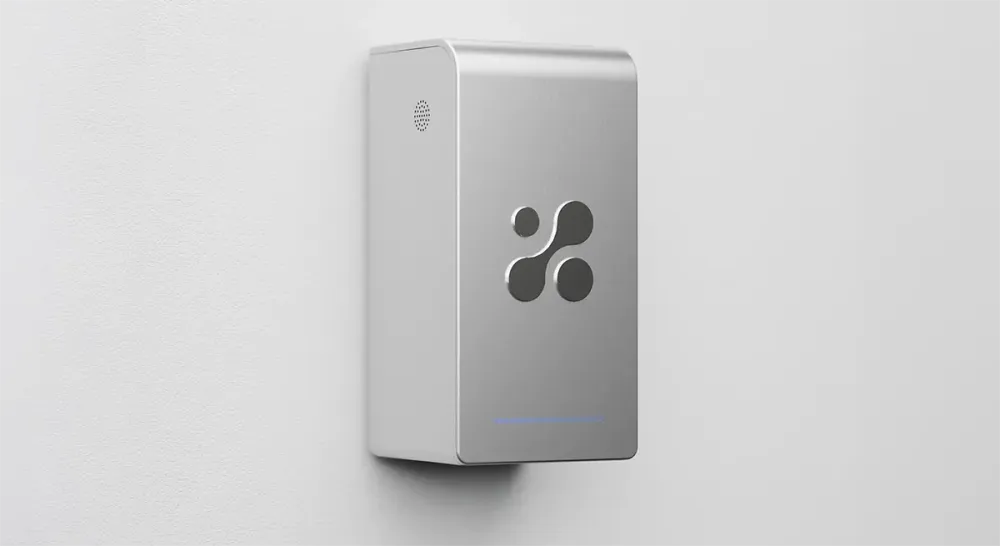
Aethair PRO
Industrial monitor for indoor and outdoor sites. Built-in sensors cover the essentials, and hot-swappable gas sensor cartridges and a differential-pressure option add more.
6 built-in parameters (PM2.5, PM10, temperature, humidity …), plus 19 swappable cartridges (H₂S, SO₂, NO₂, CO, O₃, CH₄ and more) in 2 gas sockets, 1 MultiSense socket, and 1 expansion socket
See Aethair PRO
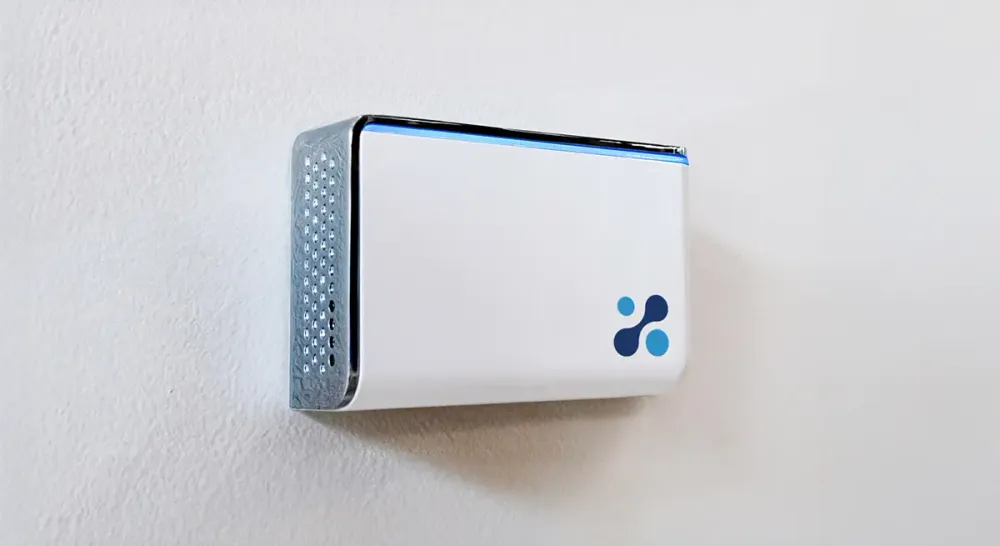
Aethair IAQ
Compact plug-in monitor with every sensor built in, nothing to add. Ideal for straightforward indoor air quality monitoring.
9 built-in parameters: CO₂, PM2.5, PM10, tVOC and more
See Aethair IAQ
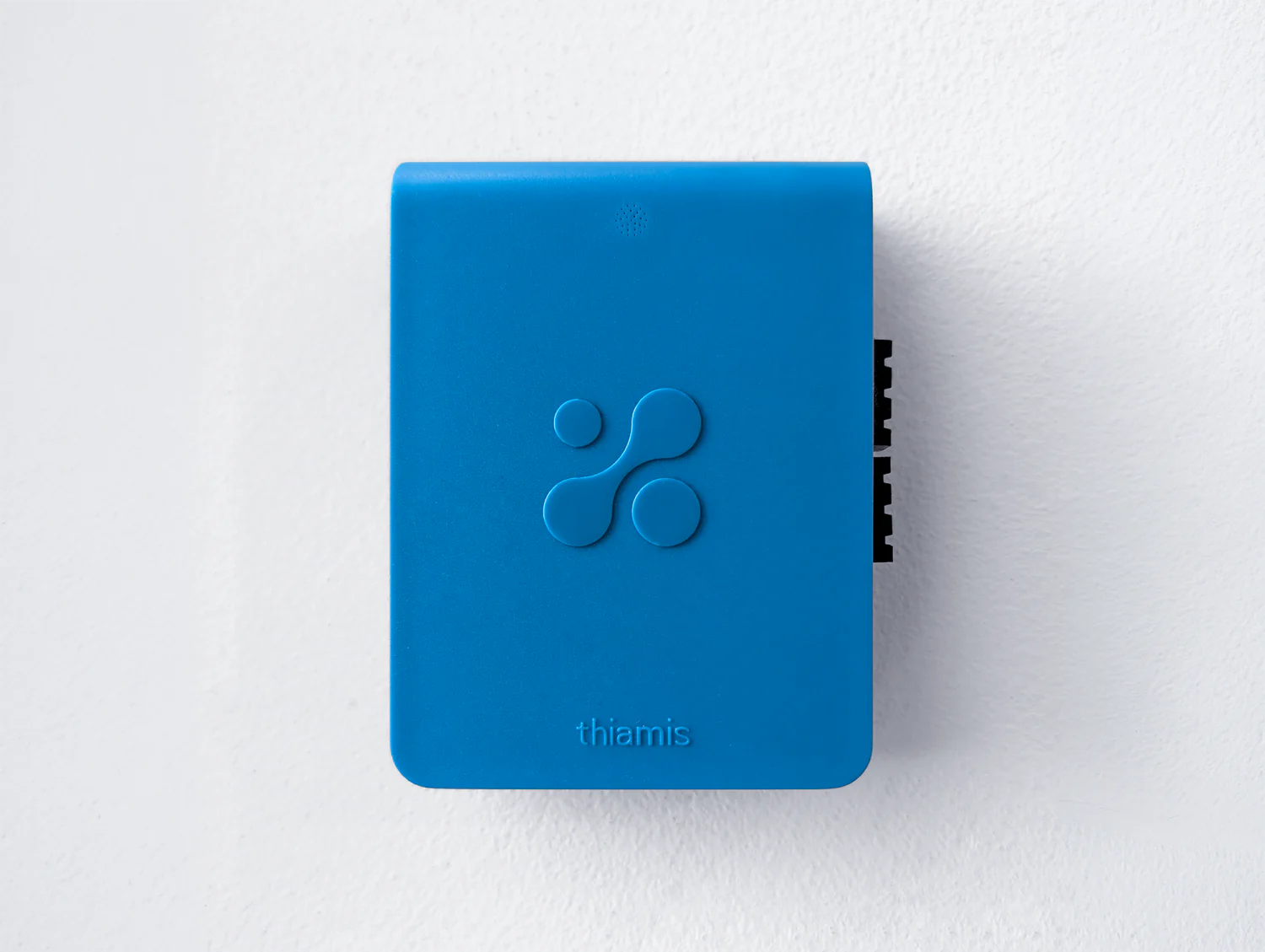
Thiamis
A gateway that connects the third-party instruments you choose to the Aethair Platform.
RS-232, RS-485, SDI-12, and USB · 224 device models from 35 integrations
See Thiamis
What you get
Live Readings, Alerts, and the Report That Proves It
Every reading lands in Environet, where thresholds raise alerts by email, SMS, or webhook, and dashboards put live status on a screen or behind a QR code. The document a building actually files is the report, generated from the same readings against Aethair Blue, WELL v2, or your own limits, on demand or on a schedule. These are its three parts. See a sample report.
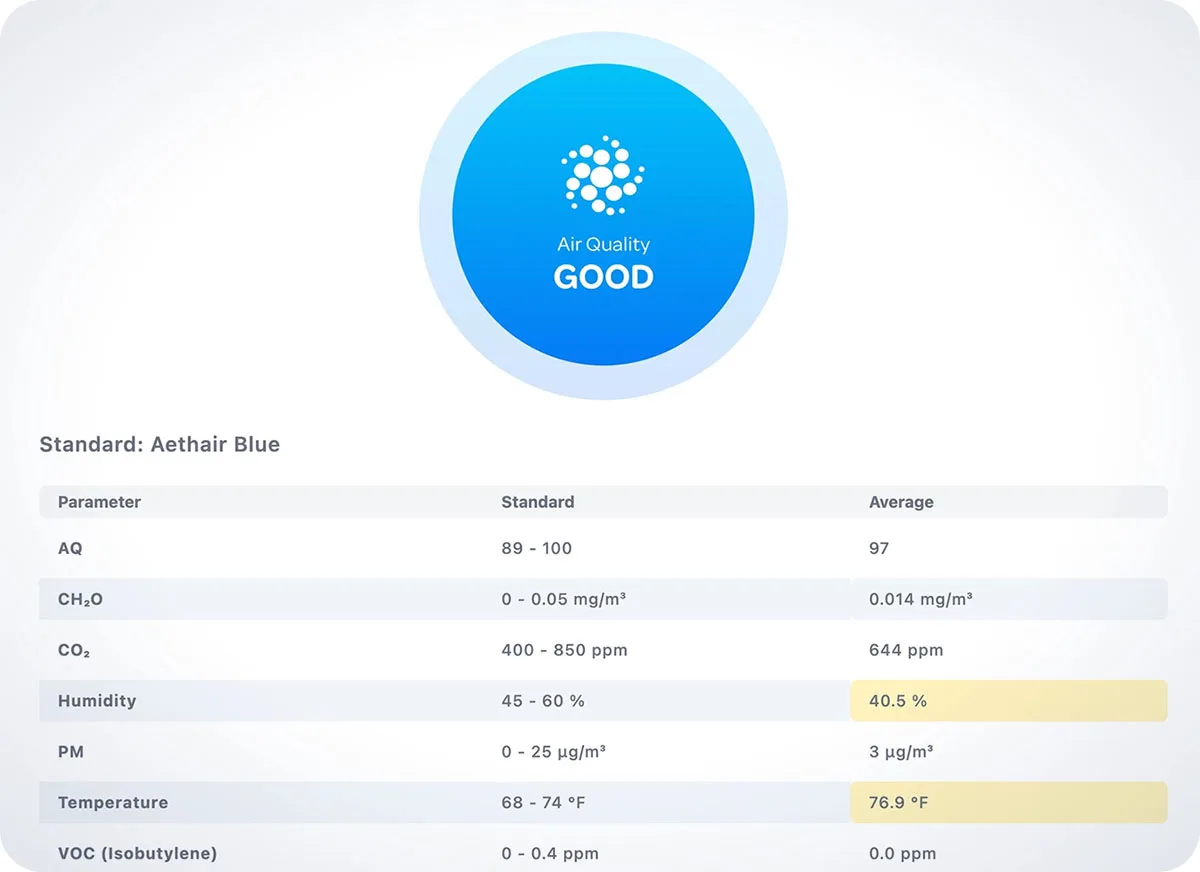
Air quality overview
The period at a glance: the status, and every parameter's average next to the standard's range, with anything outside it flagged.
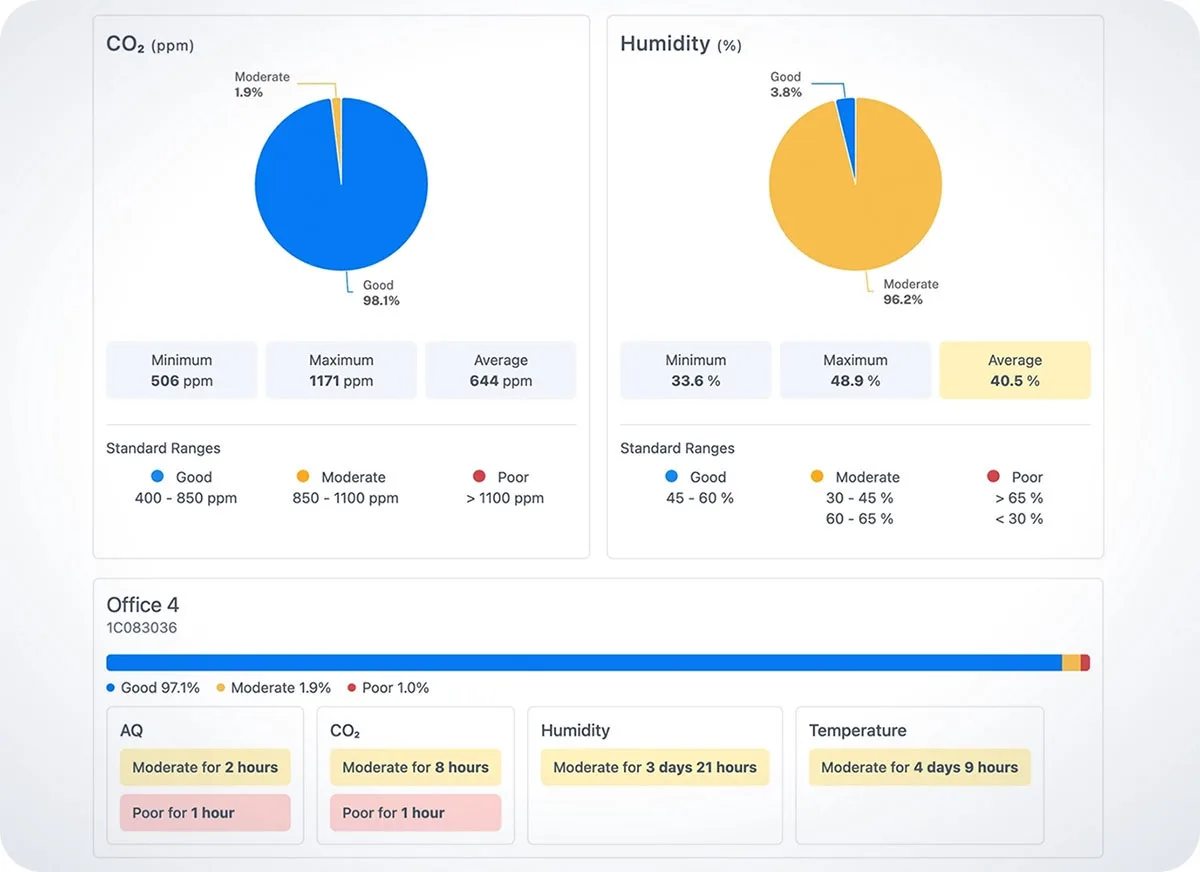
Parameter and device summaries
How much of the period each parameter spent in range, with minimum, maximum, and average, then the same per device, with its status timeline and alerts.
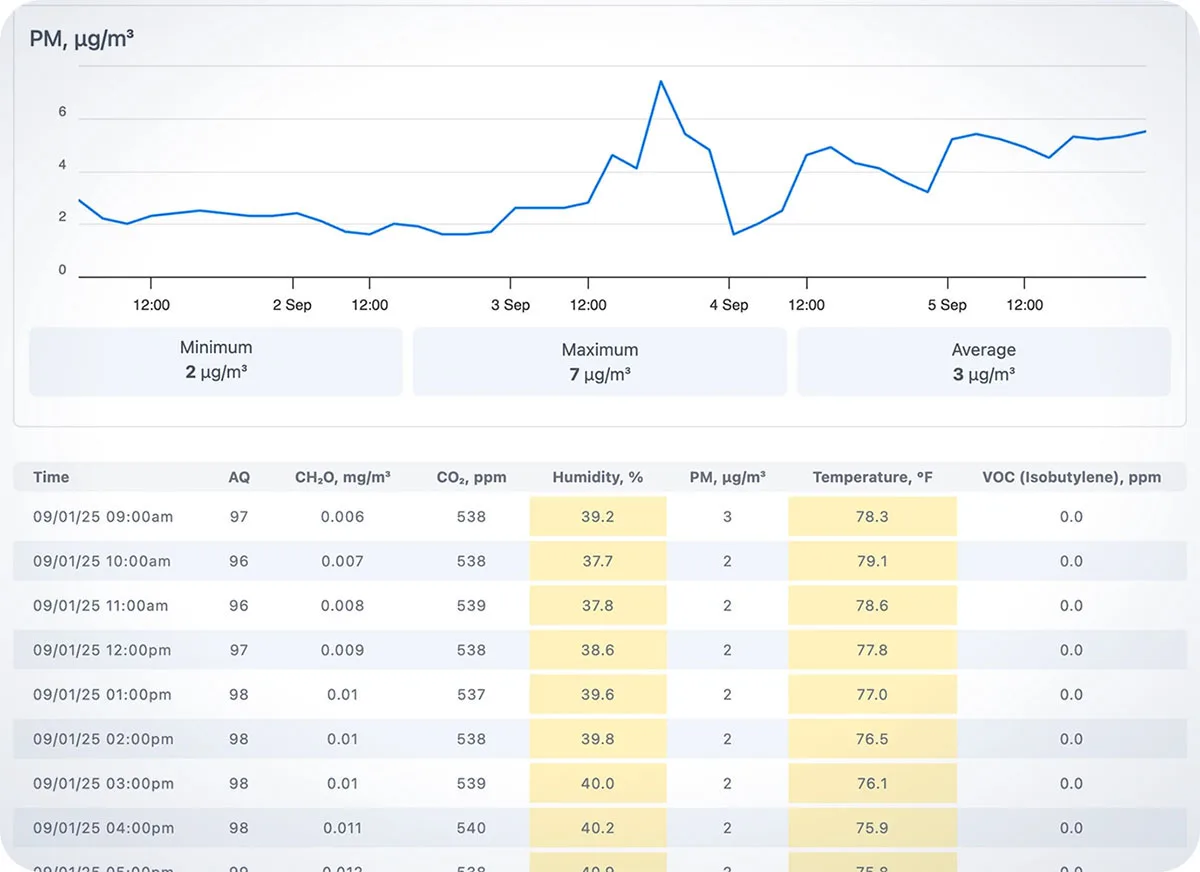
Extended analysis
Per-device graphs and the data table behind them, for audits, submissions, and retention.
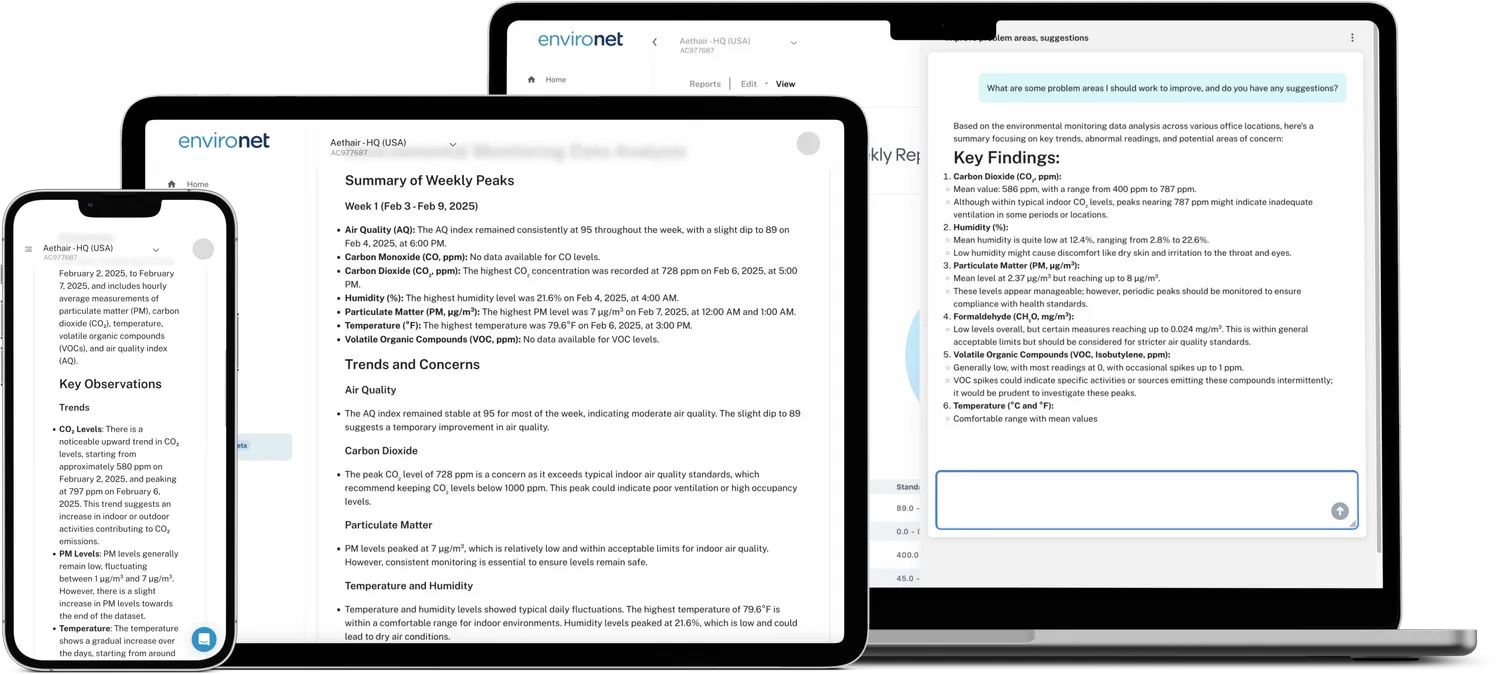
Ask the data
Noesis Reads the Building So You Don't Have To
A month of readings from a dozen floors is more data than anyone reviews line by line. Noesis, the AI analyst in Environet, does that first review: it finds the exceedances, trends, and anomalies, and answers plain-language questions: which floor peaked, when, and what might explain the pattern, like poor ventilation or high occupancy.
- Weekly summaries: each parameter's peak with its time, and the trends worth a closer look.
- Questions in plain language: “Where should we improve ventilation first?” answered from your own readings.
- Less manual review: hours of spreadsheet work before an audit or a tenant meeting become a few clicks.

Proof
Billy Penn Studios, a 180,000 sq ft Adaptive-Reuse Complex
Billy Penn Studios is an adaptive reuse of early-1900s industrial buildings in Olde Kensington, Philadelphia, now leased as offices, retail, co-working, and event space. Aethair IAQ monitors the high-traffic areas from the entrance lobby through the hallways and event spaces, and QR codes and display screens around the building show anyone the live readings. It is an Aethair Blue Certified building.
“Given today's climate, with everyone's concern regarding air quality and filtration, I think that Aethair is going to provide a level of comfort to everyone who enters the building, as well as our tenants.”Toby Biddle, building owner
Read the Billy Penn Studios case study.
The sensors in Aethair IAQ were field-evaluated by South Coast AQMD's AQ-SPEC program, which reported about 100 % data recovery, low unit-to-unit variability, and temperature and humidity correlations above R² 0.94 against reference instruments. For particulates, PM1 reached R² 0.91 and PM2.5 0.74–0.78 as 24-hour averages against a FEM monitor, while PM10 did not correlate.
By sector
Indoor Air Quality Monitoring by Sector
Indoor air quality looks different in a school than in a hospital. Each of these uses the same platform with a different set of parameters, standard, and reporting template.
Schools and campuses
Classroom CO₂ as the ventilation indicator, across a district or a campus, with the readings on display for staff and students.
Hospitals and clinical spaces
Wards, pharmacies, and laboratories, where differential pressure and ASHRAE 170 join the indoor panel.
HVAC and building management
Demand-controlled ventilation, filter and duct pressure, and setpoint verification for the building system itself.
Article Library
Reading for Commercial IAQ Programs
Guides to the standards and practices behind indoor air quality monitoring in commercial buildings.
Commercial Building IAQ Monitoring: ASHRAE 62.1 & WELL
Indoor air quality monitoring for commercial buildings: what to measure, which standards apply, and how property managers build a program tenants trust.
How Building Certifications Use Air Quality Monitoring
How WELL and LEED v5 incorporate air quality monitoring, why both frameworks are moving toward continuous performance, and what that means for building teams.
WELL Building Standard Air Quality: CO2 & PM2.5 Limits 2026
WELL v2 air quality limits: PM2.5 at 15 µg/m³, formaldehyde at 50 µg/m³, CO2 at 900 ppm for ventilation monitoring, plus the monitoring WELL verifies.
IAQ Monitoring Parameters: PM2.5, CO2, VOCs & Formaldehyde
Indoor air quality monitoring parameters explained: PM2.5, CO2, VOCs, and formaldehyde, plus the sensors, thresholds, and OSHA, ASHRAE 62.1, and WELL limits.
Workplace Air Quality Monitoring for Offices and Employers
How to monitor workplace air quality in offices, what to measure for employee health and focus, and how continuous connected monitoring documents the result.
Indoor Air Quality in Schools: Standards & Monitoring 2026
Indoor air quality in schools: which standards apply, what to monitor, and how CO2 and ventilation affect student attendance, health, and test scores.
Questions
Commercial Indoor Air Quality Monitoring FAQ
What is indoor air quality monitoring?
Indoor air quality monitoring is the continuous measurement of pollutants and conditions inside occupied spaces: PM1, PM2.5, PM10, CO₂, VOCs, formaldehyde, temperature, humidity, and pressure. A commercial monitor gives real-time visibility of ventilation performance, HVAC behavior, and occupant exposure, which is what compliance, ESG reporting, and tenant questions all need.
What does a commercial IAQ monitor measure?
Aethair IAQ measures nine parameters: particulate matter (PM1, PM2.5, PM10), carbon dioxide, total VOCs, formaldehyde, temperature, humidity, and barometric pressure: the pollutants and conditions that matter most to occupant health and to building compliance. Aethair PRO covers the same indoor panel and adds gas sensor cartridges for anything beyond it.
How does office air quality monitoring support WELL and ASHRAE 62.1 compliance?
WELL v2 and ASHRAE Standard 62.1 both ask for evidence that ventilation and indoor air quality meet defined thresholds. WELL v2 sets PM2.5 at 15 µg/m³ and formaldehyde at 50 µg/m³, and accepts sensor data showing CO₂ at or below 900 ppm as one way to meet its ventilation precondition. Continuous monitoring produces time-stamped, calibrated data showing whether the building met them between on-site performance tests, and Aethair Reports has a WELL v2 template that applies those limits to the readings. Each parameter and its reference thresholds are set out in our guide to indoor air quality monitoring parameters.
Can indoor air quality data support ESG reporting?
Yes. Indoor air quality data is increasingly expected in real-estate ESG disclosures, such as GRESB, which scores indoor environmental quality. The readings are continuous and audit-ready, and a report can be written against an internal ESG target as a custom standard rather than assembled by hand.
How does indoor air quality monitoring differ from outdoor monitoring?
Indoor monitoring measures the spaces people occupy, where ventilation, furnishings, occupancy, and HVAC operation drive the result. Outdoor monitoring measures ambient conditions. The two meet during events such as wildfire smoke, when outdoor pollution infiltrates the building, which is exactly when indoor readings tell you what people were actually exposed to.
What is the difference between Aethair IAQ and Aethair PRO?
Aethair IAQ is built for occupied indoor spaces and measures the nine indoor parameters from internal sensors. Aethair PRO is the industrial monitor: the same particulate and climate sensors plus hot-swappable gas sensor cartridges, rated for outdoor, perimeter, and cabin deployments. A building that also monitors a perimeter or a plant room runs both, in one account.
Can a building run Aethair alongside instruments it already owns?
What are the most important indoor air quality parameters?
PM2.5, CO₂, total VOCs, temperature, and humidity form the core: particles for health, CO₂ for ventilation, VOCs for chemical load, and temperature and humidity for comfort and mold risk. Formaldehyde and radon are common additions where new furnishings or ground-level geology make them relevant.
Is CO₂ really an air quality measurement?
CO₂ is not itself harmful at indoor building levels; it is the best practical proxy for ventilation. High CO₂ indicates an under-ventilated space, where other pollutants, odors, and exhaled aerosols are likely accumulating. That is why it anchors the indoor panel despite being harmless in its own right.
Do I need multiple devices for indoor air quality?
Usually not. A single built-in monitor can measure PM2.5, PM10, CO₂, VOCs, and formaldehyde together, unlike an outdoor regulatory station that must combine instruments. Multiple units are used to cover multiple rooms or ventilation zones, not to cover multiple parameters.
How do I set up indoor air quality monitoring?
Deploy a fixed indoor monitor in the breathing zone of each ventilation zone, covering the core panel and feeding dashboards or the building management system. Use the configurator to confirm your configuration and add radon or other parameters your building needs.
Put Your Building's Air on the Record
Schedule a ConsultationSee a sample report See a live dashboard Aethair IAQ Build a Configuration
A 30-minute call: you tell us about your application, then we demo the solution for it.
Used by teams at