
Aethair solutions
HVAC & Building Management
Monitor ventilation and filtration, with data for your BMS
What to measure
What to Measure and the Limits That Apply
The core panel covers the main program. Other parameters are added for a specific site or requirement. Every limit below is the published value from the standard that sets it.
The anchor parameter is CO₂, the proxy for ventilation adequacy that drives demand-controlled ventilation (supplying fresh air in proportion to occupancy rather than on a fixed schedule). Temperature and humidity are the comfort setpoints the system exists to hold, and humidity doubles as a driver of mold risk and condensation. Differential pressure across filters and coils reveals loading and fouling: it signals when a filter needs changing or a fan is straining. PM2.5 and PM10 verify that filtration is actually working and catch particulate breakthrough when a filter fails or is bypassed, while VOCs round out the panel where the concern is chemical load from occupants, furnishings, or processes.
Temperature is the primary controlled variable of any HVAC system, and monitoring it at the zone level verifies that the plant is actually delivering the setpoints occupants expect. Continuous temperature data exposes overheating, overcooling, and control faults, feeds building-management optimization, and underpins the comfort side of a healthy-building strategy.
Air Temperature: sensors, units, and every standardRelative humidity is a core HVAC performance and health parameter, governing comfort, condensation risk on cold surfaces, and the mold that follows poor moisture control. Monitoring humidity per zone verifies that conditioning and ventilation are holding the space in the healthy mid-range and flags the excursions that lead to complaints and building damage.
Relative Humidity: sensors, units, and every standardIn HVAC and building-management applications, CO₂ is not just an air quality indicator but a control signal: demand-controlled ventilation modulates fresh-air intake to actual occupancy using CO₂ as the input, cutting the energy cost of conditioning air nobody needs while protecting indoor air quality. Continuous CO₂ monitoring per zone is what makes that control loop possible and verifiable.
- WELL v2 900 ppm: or no more than 500 ppm above outdoor; one of four ways to meet the precondition
- WELL v2 750 ppm: or no more than 350 ppm above outdoor
- UBA CO₂ 1000 ppm: < 1000 ppm: hygienically acceptable
- UBA CO₂ 2000 ppm: > 2000 ppm: hygienically unacceptable
Differential pressure is the number that tells an HVAC system how its filters and airflow are performing: as filters load, the pressure drop across them rises, and duct and room pressures reveal whether air is moving as designed. Continuous differential-pressure monitoring drives filter-change scheduling and confirms pressure relationships between spaces, a core input to building-management systems.
Differential Pressure: sensors, units, and every standardBarometric / atmospheric pressure.
Barometric Pressure: sensors, units, and every standardTotal volatile organic compounds: a broadband, PID-based indicator of solvent and fuel vapors.
- WELL v2 500 µg/m³: continuous TVOC monitoring, an alternative to laboratory testing of benzene, formaldehyde, and toluene
Fine particulate matter ≤2.5 µm that penetrates deep into the lungs and can enter the bloodstream.
PM2.5: sensors, units, and every standardDew-point temperature; the temperature at which air becomes saturated.
Dew Point: sensors, units, and every standardMethods and guidance:
The setup
How a Monitoring Setup Works
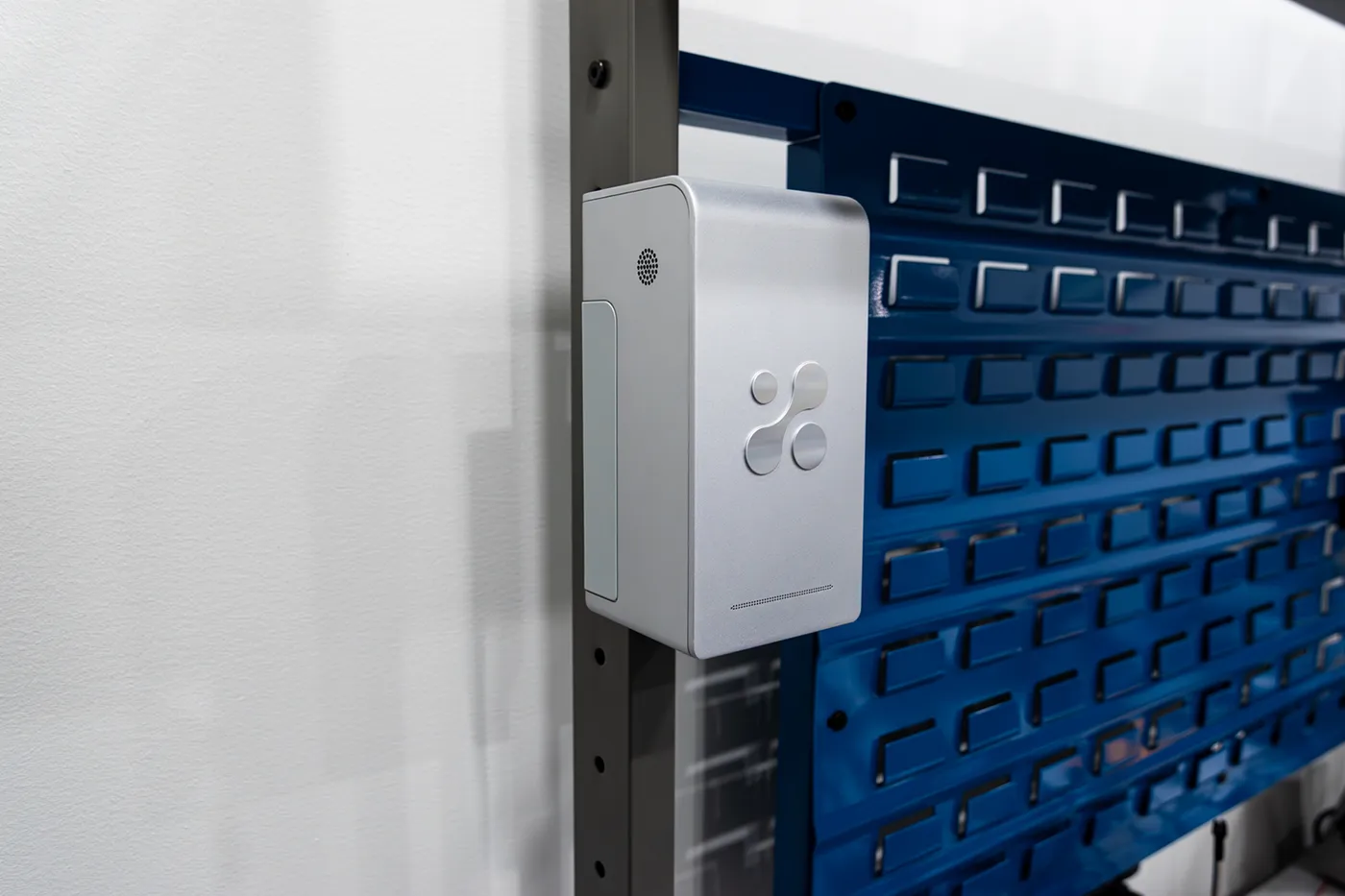
For the occupied-space side, an Aethair monitor sits in each ventilation zone and measures CO₂, particulates, VOCs, temperature, and humidity together in one unit; its readings reach the BMS through the Environet API (live and historical data as JSON or CSV), so demand-controlled ventilation and setpoints can respond to real conditions. For the plant side, differential pressure across filters and coils turns filter changes from a calendar task into a condition-based one. The Aethair PRO's differential-pressure cartridge reads 0–10 kPa, a span that covers a loaded filter bank at hundreds of pascals; it reads positive differentials only, with the higher pressure on its port. Where a duct or coil needs a dedicated professional pressure or flow sensor, a Thiamis gateway connects it into the same dashboards and alerts. Readings are logged continuously and served to the BMS through the same API, so the data that documents indoor conditions can also inform the control loop. The recommended configuration below is one Aethair PRO with CO₂ and differential-pressure cartridges, sited in the occupied zone. There, CO₂ tells the ventilation system how many people it serves, and the differential-pressure cartridge tracks the zone's pressure relationship to adjacent spaces. Use the configurator to add the plant-side sensors for your system.
Recommended
best match-

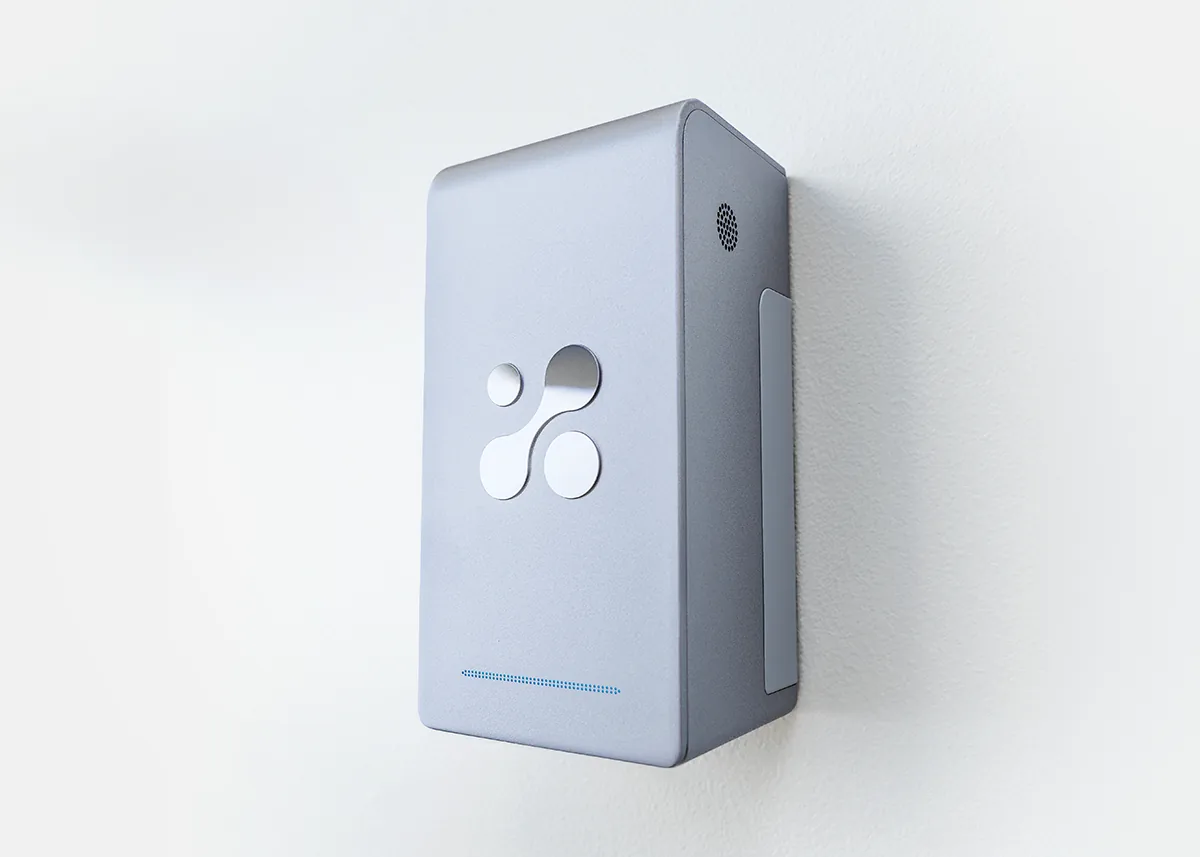
Industrial monitor for indoor and outdoor sites. Built-in sensors cover the essentials, and hot-swappable gas sensor cartridges and a differential-pressure option add more.
Built-inRelative HumidityAir TemperatureGas 1

Aethair CO₂ (dual NDIR)
Carbon Dioxide (CO₂)Dual-thermopile NDIR (non-dispersive infrared) sensing measures CO₂ with no chemical consumables, for…
Also fits: Aethair CO₂ (self-calibrating NDIR)
Gas 2
Free: one more gas sensor cartridge
MultiSense
Free: a MultiSense, stock or built to order
Expansion

Aethair Diff. Pressure
Differential PressureA gauge sensor reads 0–10 kPa, with the higher-pressure side connected to its port.
Also measures 11 more
Dew PointHeat IndexIlluminance / LightParticle Count (by size)PM1PM10PM2.5Total PM / Mass Conc.Barometric PressureEquivalent Continuous Level (Leq)Sound Pressure Level (SPL)
Which monitor
The Monitors in This Configuration
The configuration above is built from these monitors. Every reading lands in the same Environet account, with the same alerts and reports.
What you get
Readings, Alerts, and the Report That Proves It
Every reading goes to the Aethair platform. Here is what a monitoring program gets from it.
Live data and alerts
Every reading in Environet as it happens, with alerts by email, SMS, or webhook at the thresholds you set.
Compliance reports
Scheduled or on-demand reports against the standards above or your own limits, as PDF or a secure link.
Dashboards and AI analysis
Live displays for a site or the public, and Noesis answering questions about the data in plain language.
Your data, through the API
Live and historical readings as JSON or CSV through the Environet API (OpenAPI 3.2), for a building management system, an ERP, or your own applications. The data is yours.
Proof
A Customer Story
Billy Penn Studios IAQ Case Study
How Billy Penn Studios, a 180,000 sq ft Philadelphia adaptive reuse space, uses Aethair IAQ for real-time indoor air quality monitoring in its lobby and common areas.
Article Library
Reading for HVAC & Building Management
ASHRAE 170 Requirements and Which Edition Applies to You
ASHRAE 170 requirements explained: what the standard sets, which edition your facility is held to, what changed in 2025, and how each value gets verified.
Indoor Air Quality in Schools: Standards & Monitoring 2026
Indoor air quality in schools: which standards apply, what to monitor, and how CO2 and ventilation affect student attendance, health, and test scores.
Data Center Air Quality Monitoring, Inside and Out
Data center air quality monitoring for operators: ISO 14644 cleanliness in the white space, construction dust, generator emissions, and perimeter noise.
Related solutions
Related Solutions
Healthcare Air Monitoring
Clinical air quality, pressurization, and patient safety
Indoor Air Quality
Offices, schools, homes, and public buildings
School Air Monitoring
Classroom CO₂, particulates, and campus IAQ
Questions
HVAC & Building Management FAQ
What is demand-controlled ventilation?
Demand-controlled ventilation modulates the supply of fresh air to match how many people are actually in a space, using CO₂ as the occupancy proxy. When CO₂ rises the system brings in more outdoor air; when it falls the system throttles back and saves the energy wasted by ventilating an empty room. It depends on a reliable, well-placed CO₂ measurement in each zone.
Why measure differential pressure across filters?
The pressure drop across a filter rises as it loads with dust, so differential pressure is the most direct indicator of when a filter is genuinely spent. Monitoring it replaces fixed-interval filter changes with condition-based ones. That avoids both the wasted cost of changing a clean filter and the strained fans and poor filtration of a clogged one.
How does monitoring integrate with a BMS?
Through the Environet API. The monitors report to the Aethair Cloud, and the building management system, or the integration layer in front of it, reads their live and historical readings as JSON or CSV (the API is published as an OpenAPI 3.2 specification) to drive ventilation, setpoints, and alarms. CO₂ closes the demand-controlled ventilation loop, pressure flags filter and airflow faults, and particulates confirm filtration performance.
What is the best monitoring setup for HVAC and building management?
An Aethair monitor in each ventilation zone for CO₂, particulates, VOCs, temperature, and humidity, read by the BMS through the Environet API, plus the Aethair PRO's differential-pressure cartridge (0–10 kPa) or a Thiamis-connected pressure sensor on the plant side for filters and ducts. Use the configurator to match the sensors to your air-handling layout.
Put Your Monitoring on the Record
Schedule a callBuild a Configuration All solutions
A 30-minute call: you tell us about your application, then we demo the solution for it.
Used by teams at