
Aethair solutions
Outdoor & Ambient Air Quality Monitoring
Real-Time Outdoor and Ambient Air Quality Monitoring with Aethair PRO and Thiamis
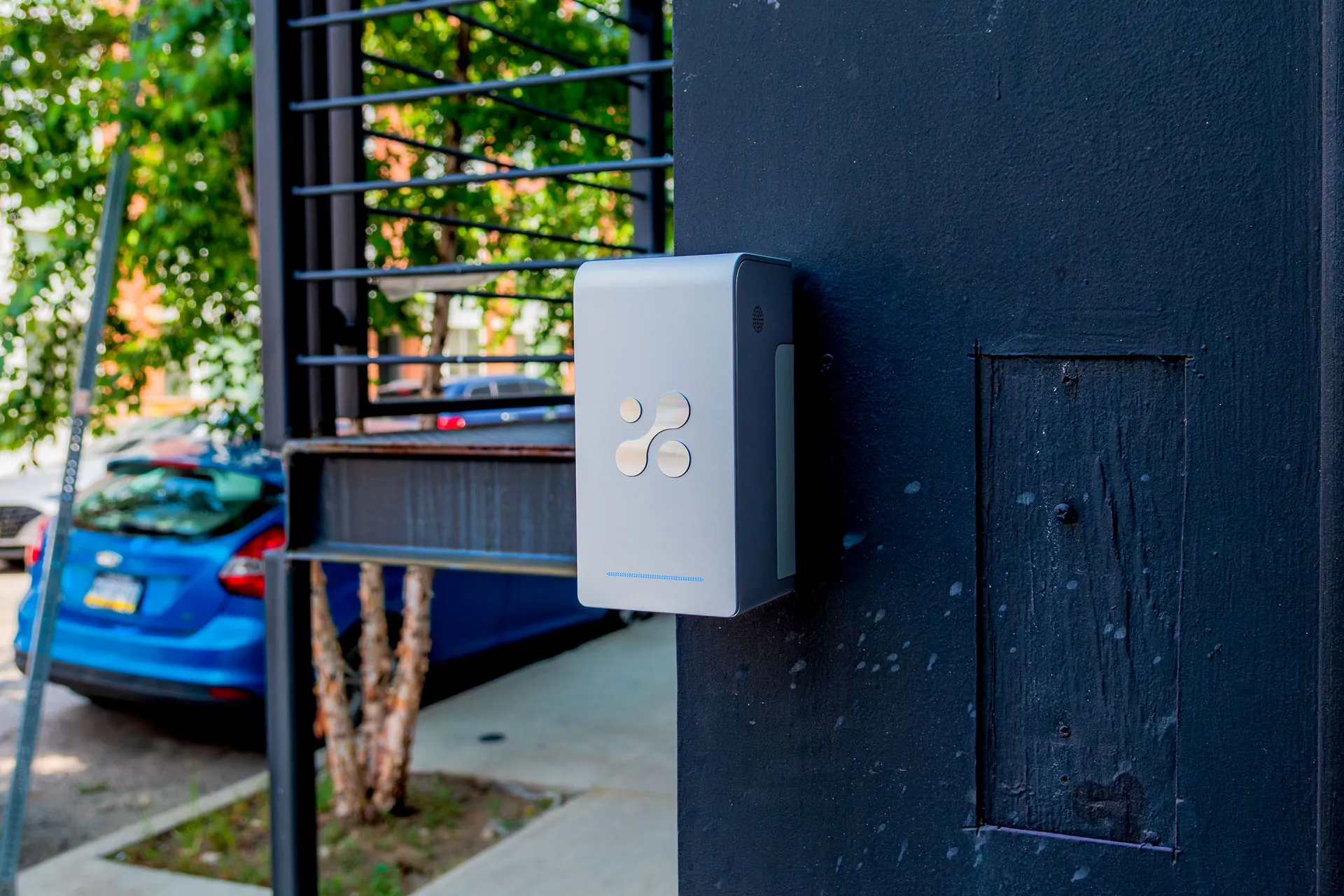
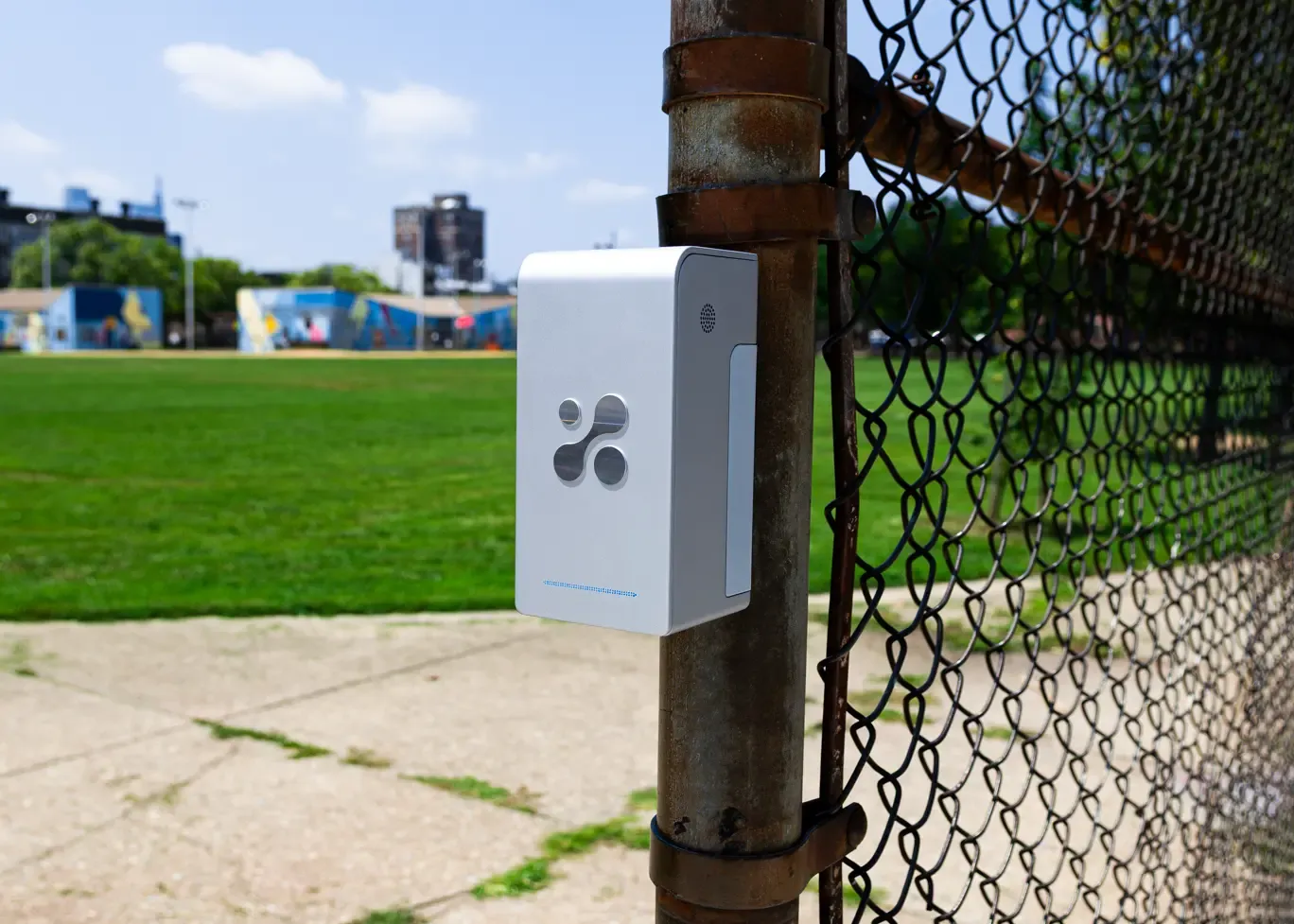
Why it matters
Why Outdoor and Ambient Air Quality Monitoring Matters
Outdoor conditions change constantly with weather, traffic, industry, and events such as wildfires. A single reference station cannot capture what is entering a site or surrounding a community in real time. Continuous outdoor monitoring gives an organization:
- A continuous baseline: the ambient air quality of a site or a community, measured continuously rather than sampled now and then.
- What crosses the boundary: what is entering or leaving a site, read against the wind.
- Every season: measurement that carries on in rain, heat, and cold.
- Outdoor context for buildings: the outdoor reading that indoor and HVAC decisions depend on.
- A defensible record: time-stamped data for compliance programs and ESG disclosures.
What to measure
The Criteria Pollutants and the Limits That Apply
Six readings form the core of an ambient program, and others are added for source attribution or a specific site. Every limit below is the published value from the standard that sets it.
The core is the criteria pollutants a continuous station measures: particulate matter as PM2.5 and PM10, ground-level ozone, nitrogen dioxide, sulfur dioxide, and carbon monoxide. Lead, the sixth EPA criteria pollutant, is collected on filters and analyzed in a laboratory rather than measured continuously. Additions sharpen the picture: black carbon as a combustion and traffic tracer, VOCs for industrial and photochemical context, and meteorology (wind speed and direction above all) for relating concentrations to their sources and for the modeling that fills the gaps between monitors.
PM2.5 is the single most health-consequential pollutant in ambient air monitoring, which is why it anchors regulatory networks and public air-quality indices alike. In a city or roadside station, continuous PM2.5 measurement against the EPA, WHO, and EU values quantifies the population's exposure to fine particles from traffic, combustion, and secondary formation, and drives health alerts on high-pollution days.
- EPA NAAQS 9 µg/m³: 2024 primary
- EU 2024/2881 10 µg/m³: 2030 limit value (previously 25)
- EPA AQI 225.4 µg/m³: Hazardous above; AQI 500 is 325.4 µg/m³
PM10 in ambient monitoring captures the inhalable coarse-and-fine dust burden of an area, from traffic and road dust to construction, industry, and natural sources. As a criteria pollutant with EPA, WHO, and EU limits, continuous PM10 measurement is a standard element of any city, roadside, or regulatory air-quality station, usually reported alongside PM2.5.
- EU 2024/2881 20 µg/m³: 2030 limit value (previously 40)
Ozone is a defining component of photochemical smog and one of the six ambient criteria pollutants, but because it forms downwind in sunlight rather than being emitted directly, it demands its own careful monitoring across a network. Continuous ozone measurement against the 8-hour standards drives summer smog alerts and reveals the regional, afternoon-peaking pattern that distinguishes it from traffic pollutants.
- WHO 2021 100 µg/m³: 99th percentile (3–4 exceedance days a year)
- WHO 2021 60 µg/m³: mean of the daily maximum 8-hour values over the six consecutive months with the highest ozone
Nitrogen dioxide is the ambient pollutant most closely tied to traffic, with concentrations that fall sharply just meters from a busy road. That makes it central to roadside and low-emission-zone monitoring. As a criteria pollutant with EPA, WHO, and EU limits (the WHO cut its annual guideline substantially in 2021), continuous NO₂ measurement quantifies traffic-related exposure and the precursor that feeds ozone and secondary particles.
- EU 2024/2881 20 µg/m³: 2030 limit value (previously 40)
Sulfur dioxide monitoring in ambient air targets the combustion of sulfur-bearing fuels (power generation, shipping, heavy industry, and refining) and the acid deposition and respiratory harm that SO₂ causes. As a criteria pollutant with EPA, WHO, and the EU's new 2030 limits, continuous SO₂ measurement is a standard part of industrial-area and regulatory air-quality stations.
- EU 2024/2881 20 µg/m³: new annual limit value (2030)
- EU 2024/2881 50 µg/m³: 2030 limit value
In ambient air, carbon monoxide is a low-concentration traffic and combustion marker and one of the six criteria pollutants, distinct from the acute life-safety CO hazard of confined spaces. Continuous ambient CO monitoring against the 1-hour and 8-hour standards is a routine element of urban and roadside stations, tracking the community-health signal from vehicle exhaust and combustion.
Carbon Monoxide (CO): sensors, units, and every standardFine particulate matter ≤1 µm aerodynamic diameter, the finest fraction, which reaches the deep alveolar regions of the lung.
PM1: sensors, units, and every standardTotal volatile organic compounds: a broadband, PID-based indicator of solvent and fuel vapors.
VOC (Total): sensors, units, and every standardBlack carbon (soot) from combustion, measured by 880 nm optical absorption.
Black Carbon: sensors, units, and every standardHorizontal wind speed.
Wind Speed: sensors, units, and every standardHorizontal wind direction (0–360°).
Wind Direction: sensors, units, and every standardAmbient air (dry-bulb) temperature.
Air Temperature: sensors, units, and every standardRelative humidity of air.
Relative Humidity: sensors, units, and every standardMethods and guidance:
The setup
How an Ambient Station Is Built
One monitor can be the whole station. The configuration below shows which cartridge goes in which socket.
A conventional ambient station combines separate instruments: a particulate monitor for PM2.5 and PM10, an ozone analyzer, a multi-gas unit for CO, NO₂, and SO₂, and a weather station. Aethair PRO carries the particulate sensor built in and the gases on gas sensor cartridges in one enclosure, so the recommended configuration below can be a single monitor, with wind added through Thiamis. Lead is still determined by filter sampling and laboratory analysis. To scale the station up or down, from a compact PM-and-meteorology node for a network to a full multi-pollutant station, use Build a Configuration. Regulatory compliance still relies on FRM/FEM reference instruments in quality-assured, carefully sited enclosures. Lower-cost sensor networks extend that coverage and are co-located with reference instruments for correction.
Aethair PRO's gas sensor cartridges cover 12 gases in all, and a station takes the ones its site needs. Beyond them, Thiamis connects ammonia (NH₃) monitors, weather stations, radon monitors, and water-quality and water-level probes, so an outdoor program can bring its environmental readings into one account.
Each station reports over its own 4G LTE, so it doesn't need a site network, and the optional Solar Panel Bracket powers it where there's no grid power. Devices ship calibrated, so deployment is simple: mount the monitor, power it on, and readings appear in Environet. From there, the data is yours, live and historical, as JSON or CSV through the Environet API.
Recommended
best match-

Industrial monitor for indoor and outdoor sites. Built-in sensors cover the essentials, and hot-swappable gas sensor cartridges and a differential-pressure option add more.
Built-inPM10PM2.5Gas 1

Aethair O₃+NO₂
Nitrogen Dioxide (NO₂)Ozone (O₃)Four-electrode electrochemical sensing measures oxidizing gases (ozone plus nitrogen dioxide) and reports one…
Gas 2

Aethair CO (electrochemical)
Carbon Monoxide (CO)An amperometric electrochemical CO cell with a solid, non-aqueous electrolyte (the long-life, low-power…
Also fits: Aethair MultiGas+, Aethair CO (ppb, four-electrode)
MultiSense

Aethair MultiSense
Sulfur Dioxide (SO₂)Simultaneous electrochemical detection of sulfur dioxide, nitrogen dioxide, and formaldehyde at…
Expansion
Free: differential pressure
Also measures 12 more
Dew PointHeat IndexRelative HumidityIlluminance / LightParticle Count (by size)PM1Total PM / Mass Conc.Barometric PressureEquivalent Continuous Level (Leq)Sound Pressure Level (SPL)Air TemperatureFormaldehyde (CH₂O)
Which monitor
Aethair PRO in the Field, Thiamis for the Instruments You Already Run
Two devices cover most outdoor deployments. Aethair PRO is the rugged primary monitor: an aluminum alloy enclosure, 4G LTE, the optional Solar Panel Bracket, and hot-swappable gas sensor cartridges. Thiamis integrates third-party sensors, weather stations, water probes, and gas analyzers, so existing equipment and new devices report together. For the buildings an outdoor network looks after, see indoor air quality monitoring.
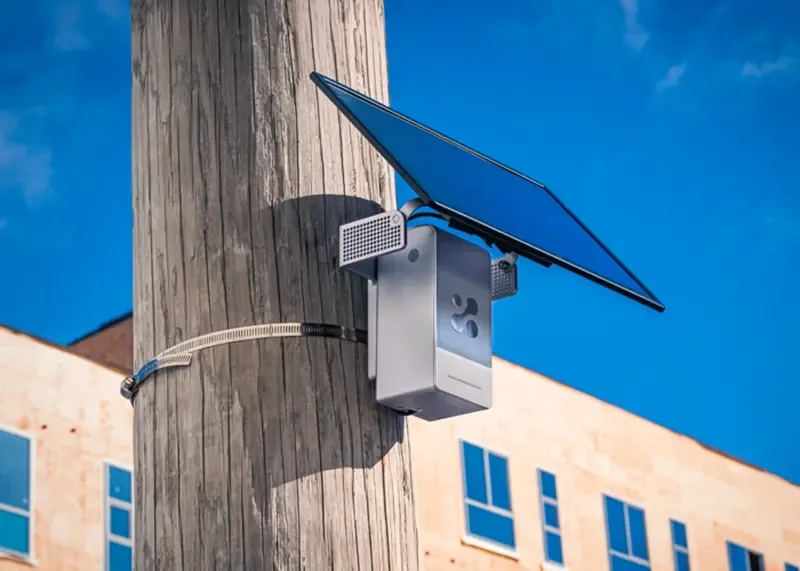
Aethair PRO
Industrial monitor for indoor and outdoor sites. Built-in sensors cover the essentials, and hot-swappable gas sensor cartridges and a differential-pressure option add more.
5 built-in parameters (PM2.5, PM10, temperature, humidity …), plus 19 swappable cartridges (H₂S, SO₂, NO₂, CO, O₃, CH₄ and more) in 2 gas sockets, 1 MultiSense socket, and 1 expansion socket
See Aethair PRO
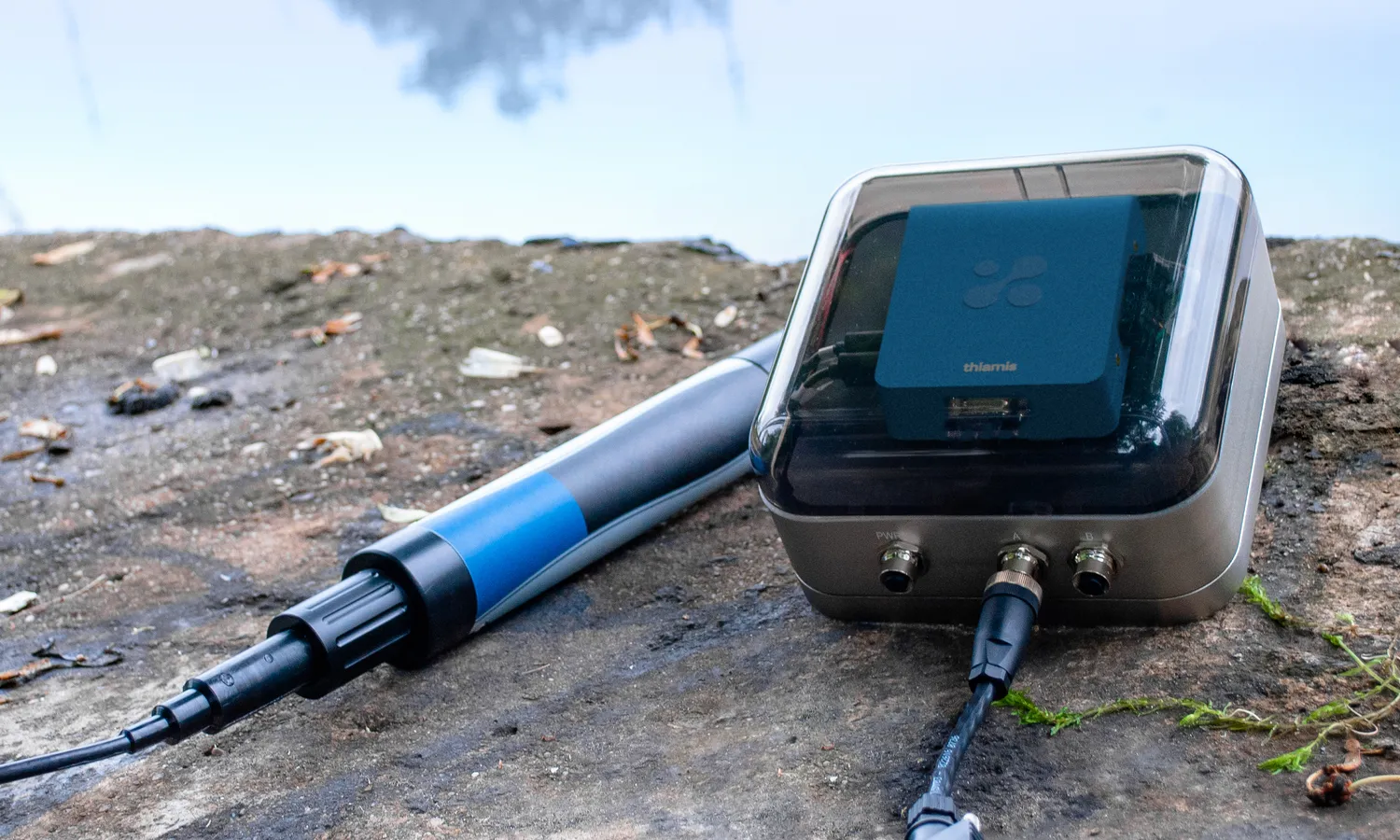
Thiamis
A gateway that connects the third-party instruments you choose to the Aethair Platform.
RS-232, RS-485, SDI-12, and USB · 224 device models from 35 integrations
See Thiamis
What you get
Environmental Intelligence for Outdoor and Ambient Air
Outdoor monitoring is more than a sensor in the field. Aethair connects measurement, analysis, and reporting in one loop: devices capture the readings, Environet and Noesis make sense of them, and alerts and Aethair Reports turn them into action and documentation.
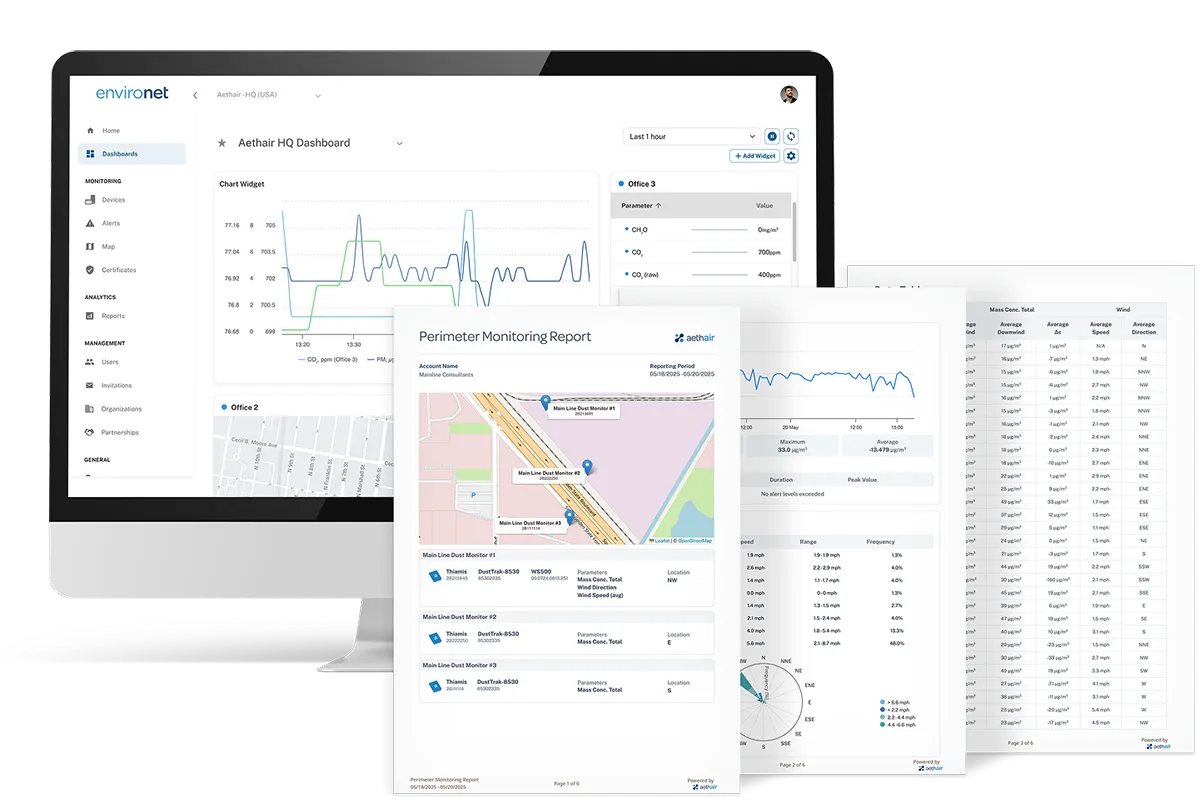
Live readings and alerts
Every station, every weather station, and every connected instrument streams into one record in Environet. Thresholds raise alerts by email, SMS, or webhook the moment a node records an exceedance.
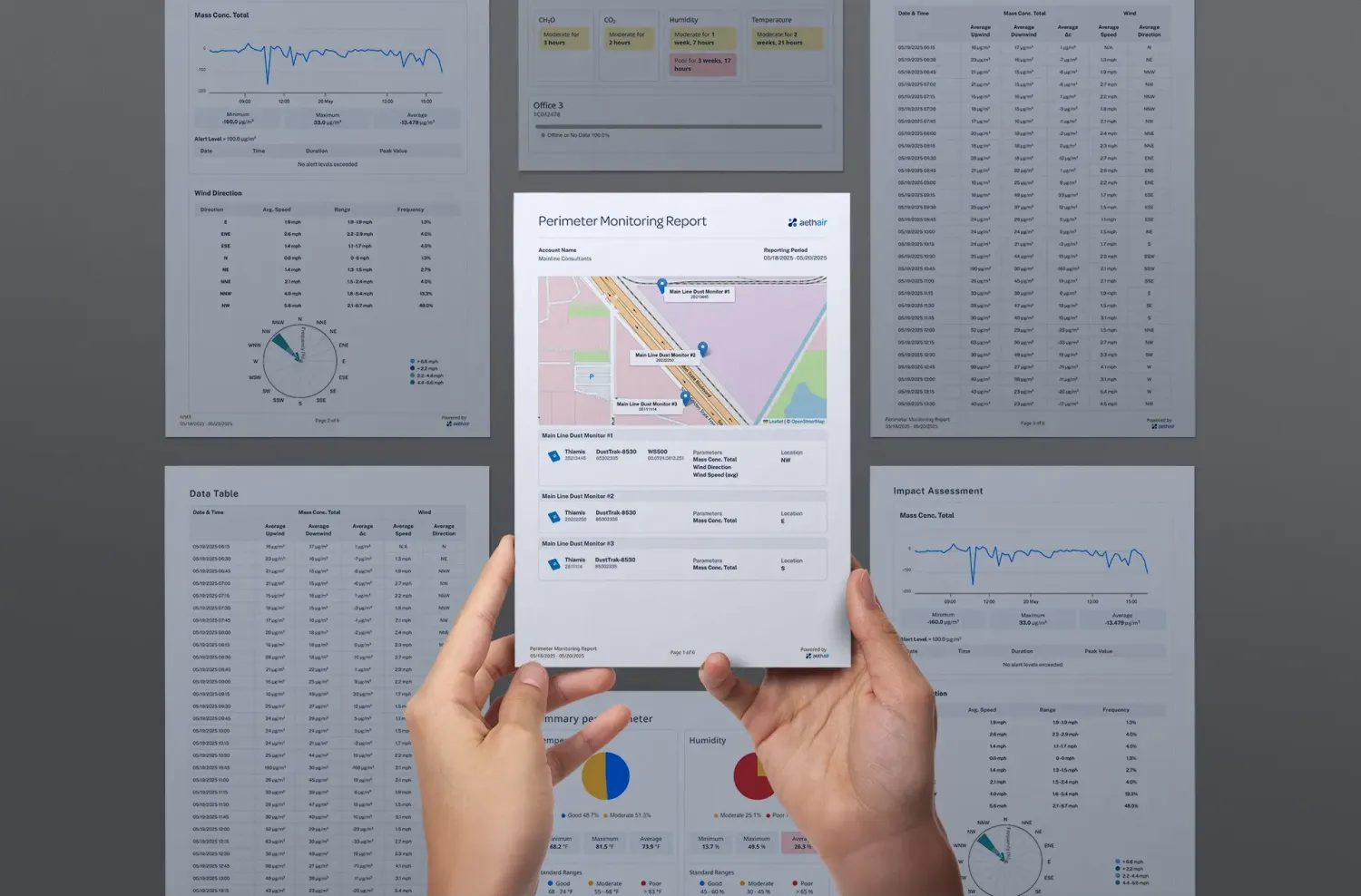
Reports in seconds
Aethair Reports turns the readings into organized documentation for compliance submissions, ESG disclosures, and community updates, with the trends and exceedances called out and every figure traceable from the raw reading to the final page.
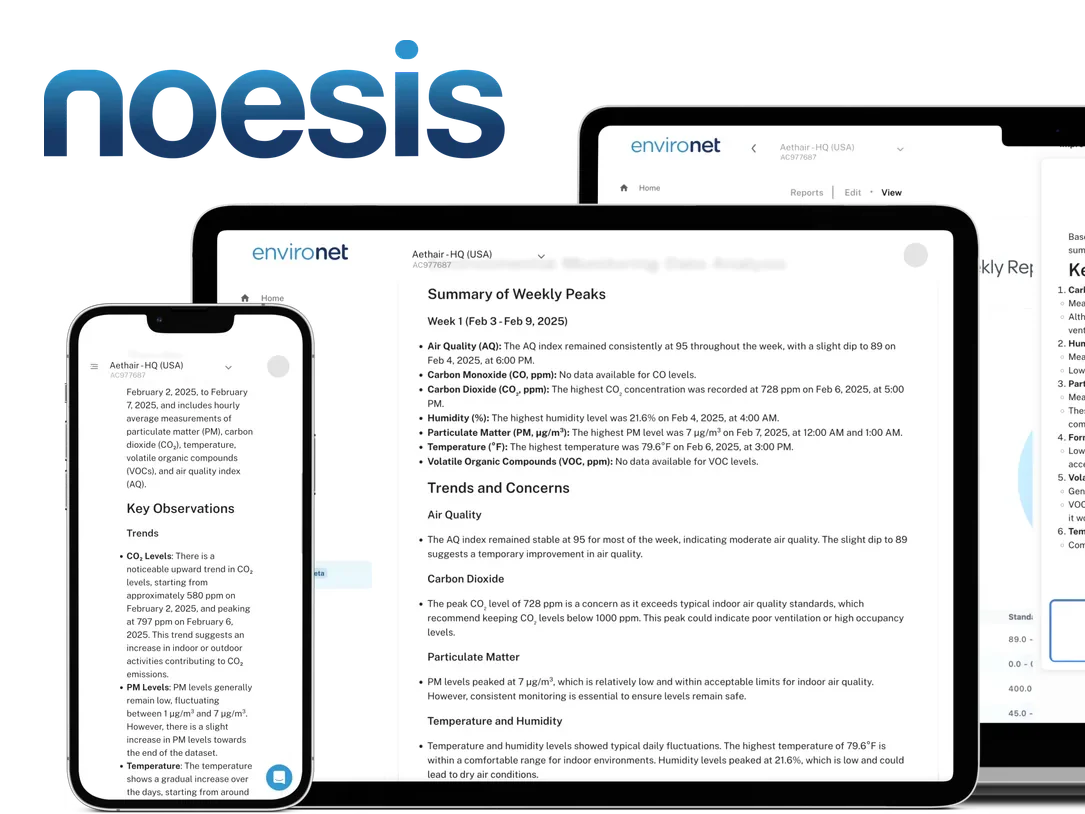
Noesis reads the network
Noesis, the AI analyst in Environet, reviews live or historical data across locations and answers plain-language questions about pollution patterns, likely sources, and exceedances.
Why Aethair
Built for Transparent Reporting
Outdoor and ambient monitoring often supports formal programs and public disclosures: NAAQS context for PM2.5, community air monitoring, fenceline and permit reporting, and ESG and sustainability disclosures. Aethair provides calibrated devices and transparent data lineage, so the data holds up when a regulator, an auditor, or the community reviews it.
Complete monitoring infrastructure
Field devices, secure cloud data management, real-time dashboards, AI analysis, and report generation in one system, instead of several tools stitched together.
Scalable deployment
Start with the locations that matter most and add stations over time without replacing equipment, as budget, regulation, or identified risk areas require.
Calibrated devices
Devices are calibrated and tested before they ship, so a network gives dependable screening data for planning and public transparency. Formal attainment decisions still rest on FRM/FEM reference monitors, and a station can be collocated with one to check it.
Secure, transparent data
Data is encrypted in transit and stored in the Aethair Cloud. Every record is time-stamped, and the data is yours, available live and historical as JSON or CSV through the Environet API for reporting, audits, and open-data portals.
Proof
A Regulator-Run Ozone Network on Thiamis and Environet
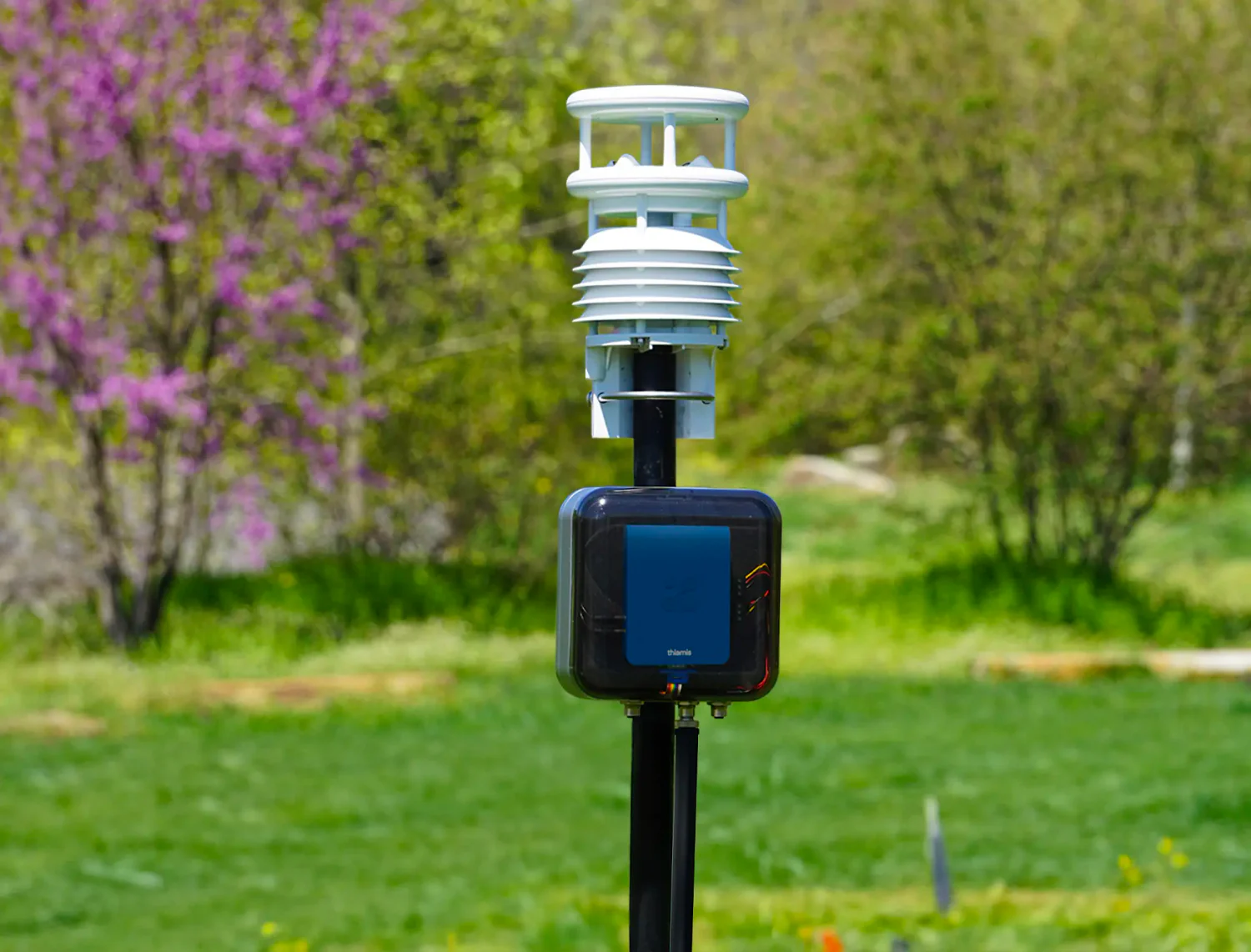
In 2017 South Coast AQMD faced having to relocate its Crestline ozone station in the San Bernardino Mountains. Its AQ-SPEC program and UC Riverside developed three ozone sensing nodes and deployed them for 62 days, July to September 2017, at candidate sites in Lake Arrowhead, Skyforest, and Running Springs. Each node logged through a Thiamis 1000, which averaged the 10-second ozone readings to one-minute values and sent them over cellular or Wi-Fi to Environet; its real-time clock and 8 GB of memory kept it recording when the connection was intermittent or unavailable.
Co-located with the reference station after deployment, the nodes agreed with it at R² above 0.98, with a mean absolute error under 2 ppb on hourly means. The study was published in Sensors (2020).
By application
Explore Outdoor Monitoring Solutions
Outdoor monitoring spans many environments. Each of these is the same platform with the panel, action levels, and reports built for it.
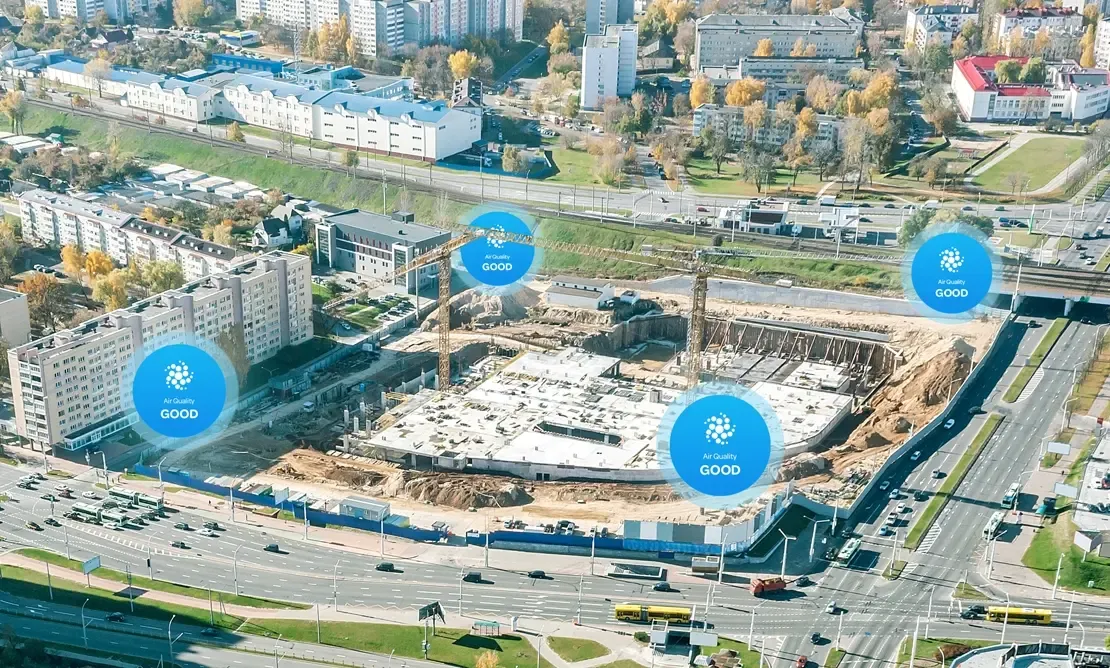
Perimeter and fenceline
Construction, demolition, and industrial boundaries, with upwind–downwind comparison and action levels.

City-wide networks
Dense networks across neighborhoods, corridors, and schools, managed as one system.
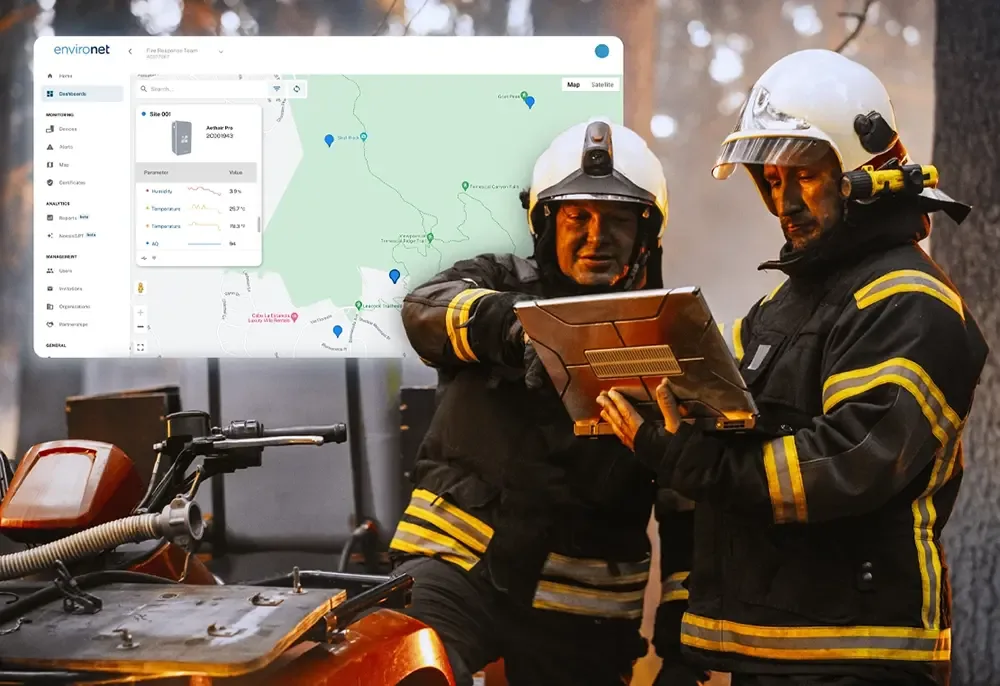
Wildfire smoke
Regional smoke networks on a live map, for agencies, schools, and emergency response.
Article Library
Reading for Outdoor Monitoring Programs
Guides to the standards and practices behind ambient air quality monitoring.
Ambient Air Quality Monitoring: What Nonattainment Changes
Ambient air quality monitoring explained: how PM2.5 attainment is measured, what a nonattainment designation triggers, and what site-level monitoring adds.
Ozone Exposure Limits and Monitoring: OSHA and NAAQS
OSHA's ozone PEL is 0.1 ppm as an 8-hour TWA. How NIOSH, ACGIH, and the 70 ppb NAAQS compare, and why ozone needs short-interval monitoring.
Types of Air Quality Monitors: Indoor, Outdoor, and Combined
Learn the three types of air quality monitors (indoor, outdoor, and combined), what each one measures, and when to use each one.
PM2.5 Exposure Limits & Monitoring: OSHA and NAAQS Standards
What are the OSHA and NAAQS exposure limits for PM2.5? Fine particulate thresholds explained, plus how continuous monitoring keeps workplaces compliant.
Air Quality Near Data Centers: What Communities Should Know
Air quality near data centers: construction dust, diesel generator emissions, and noise, and how communities get independent monitoring data.
Questions
Outdoor & Ambient Air Quality Monitoring FAQ
What is outdoor air quality monitoring?
Outdoor air quality monitoring is the continuous measurement of pollutants in the open air around a site, facility, or community. It captures particulate matter and gases in real time rather than through periodic sampling, so teams can see how conditions change with weather, traffic, industry, and events such as wildfires. Aethair delivers it with Aethair PRO, the Environet platform, and Noesis AI analysis.
What is the difference between outdoor and ambient air quality monitoring?
The terms are often used interchangeably. Ambient air quality monitoring is the technical term for measuring pollutant concentrations in the general outdoor air, the air covered by standards such as the NAAQS. Outdoor air quality monitoring is the more common phrasing for the same activity. Both describe continuous measurement of particulate matter and gases in the open air, as opposed to indoor air quality monitoring inside occupied buildings.
How do ambient air monitoring networks work?
A network places several connected monitors around a site, city, or region so readings can be compared across locations and against wind and weather. Each Aethair PRO streams its data over 4G LTE into Environet, where the network is managed as one system: shared dashboards, alerts when any node records an exceedance, and reports that draw on every station. Networks scale from a handful of perimeter units to city-wide deployments.
What does an outdoor air quality monitor measure?
Particulate matter (PM1, PM2.5, PM10) and gases such as ozone, NO₂, SO₂, CO, and VOCs, alongside weather context: temperature, humidity, pressure, and wind, with wind added through a weather station on Thiamis. Aethair PRO measures the particulate fractions and the climate readings with built-in sensors and takes the gases as cartridges, so the parameter set is configured to what a site requires.
How is outdoor air quality monitoring different from indoor monitoring?
Outdoor monitoring measures ambient conditions in the open air and has to withstand the weather; indoor monitoring measures the spaces people occupy, against standards such as ASHRAE 62.1 and WELL. The two are connected, because outdoor air affects what enters a building, and many organizations pair outdoor monitoring with indoor air quality monitoring for the full picture.
Can Aethair integrate existing outdoor sensors and weather stations?
Yes. Thiamis connects compatible third-party field instruments (weather stations, reference particulate monitors, gas analyzers, water probes), so existing equipment and new devices are managed and reported together in the same Environet record as the Aethair data.
How are outdoor air quality monitors powered and connected?
Aethair PRO reports over its own 4G LTE connection, so it needs no local network, and the optional Solar Panel Bracket powers it where there is no grid power. Together they allow continuous monitoring in remote or infrastructure-limited locations.
What are the criteria pollutants an ambient station measures?
The EPA NAAQS set limits for six criteria pollutants: particulate matter, ground-level ozone, nitrogen dioxide, sulfur dioxide, carbon monoxide, and lead. A continuous station reads the first five in real time, with particulate matter as PM2.5 and PM10; lead is collected on filters and analyzed in a laboratory. The EU directive regulates the same pollutants and adds others, such as benzene. A general station targets the continuous set, usually with wind and weather for source attribution.
Can low-cost sensor networks replace reference stations?
They complement rather than replace them. Reference and reference-equivalent instruments remain the basis for regulatory compliance; dense low-cost networks add the spatial resolution needed to map hotspots and inform the public, and are most reliable when co-located with a reference monitor and corrected. Most modern programs use both tiers together.
Why is meteorology part of an air quality station?
Wind speed and direction, temperature, and solar radiation govern how pollution disperses, where it travels, and (for secondary pollutants like ozone) how it forms. Without meteorology, concentrations cannot be reliably attributed to sources, and the models that interpolate between monitors have nothing to work with.
How do I build an ambient air quality station?
Cover particulate matter and the criteria gases (with separate instruments or one Aethair PRO carrying gas sensor cartridges), plus wind data. Use reference-grade instruments for compliance and lower-cost sensors for network coverage. Use the configurator to assemble and scale the configuration for your site or network.
Plan Your Outdoor Monitoring Deployment
Schedule a MeetingSee a sample report Aethair PRO Thiamis Build a Configuration
A 30-minute call: you tell us about your application, then we demo the solution for it.
Used by teams at