
Aethair solutions
Landfill, Biogas & Odor
Methane, H₂S, and odor complaint response
Why it matters
Why Landfill, Biogas, and Odor Sites Monitor Air
Landfills and biogas facilities generate large volumes of gas as organic material breaks down, and managing that gas is both a safety obligation and a duty to neighbors. Methane is flammable and a powerful greenhouse gas, so uncontrolled surface emissions represent a hazard, a lost energy resource, and a climate liability. At the same time, the hydrogen sulfide and ammonia in landfill and digester gas are the compounds behind the odor complaints that can define a site's relationship with its community. Monitoring exists to find leaks and surface emissions, to control odor at the boundary, and to provide the evidence that answers a complaint or a regulator.
Odor disputes in particular turn on being able to show what was in the air and where it came from, which makes continuous, wind-referenced monitoring the difference between managing a complaint and merely absorbing it.
What to measure
What to Measure and the Limits That Apply
The core panel covers the main program. Other parameters are added for a specific site or requirement. Every limit below is the published value from the standard that sets it.
Methane (CH₄) is the primary target for both safety and emissions, measured across the surface and around the perimeter to find leaks and cap failures. Hydrogen sulfide (H₂S) and ammonia (NH₃) are the principal odor compounds, the ones neighbors actually smell, so they anchor any odor program. Carbon dioxide (CO₂) accompanies methane as a marker of active decomposition and gas migration. Wind speed and direction are essential for odor work: they trace a detected compound back toward its source on the site and forward toward the receptors likely to be affected. VOCs may be added where the waste stream or digester feedstock warrants.
Methane is the energy product and the primary hazard of landfill gas and anaerobic digestion, flammable in confined build-ups and a potent greenhouse gas when it escapes. Continuous methane monitoring at the surface, perimeter, and gas-collection system manages explosion risk, verifies capture efficiency, and supports the emissions obligations landfill and biogas operators carry.
- EPA 258.23 25 %LEL: excluding gas control or recovery components
- EPA 258.23 100 %LEL: the lower explosive limit itself
Landfills and anaerobic digesters generate hydrogen sulfide as organic matter decays, making H₂S both a toxic-gas safety hazard and the primary driver of odor complaints around these sites. Continuous H₂S monitoring, in the breathing zone for worker safety and at the boundary with wind data for odor, is central to landfill-gas and biogas management.
- OSHA confined space 10 ppm: not set by 1910.146, which defers to the OSHA limit (a 20 ppm ceiling); 10 ppm is a common gas-detector alarm setpoint
Landfill and biogas sites generate carbon dioxide alongside methane as organic matter decomposes, and the CO₂ fraction is a useful indicator of the decomposition and gas-collection process. Monitoring CO₂ at landfill and anaerobic-digestion facilities supports gas-management, safety, and emissions work, usually paired with methane and hydrogen sulfide for a full landfill-gas picture.
Carbon Dioxide (CO₂): sensors, units, and every standardAmmonia; a toxic, pungent gas from agriculture, refrigeration, and wastewater.
Ammonia (NH₃): sensors, units, and every standardTotal volatile organic compounds: a broadband, PID-based indicator of solvent and fuel vapors.
VOC (Total): sensors, units, and every standardSulfur dioxide: a criteria pollutant from fossil-fuel combustion that irritates the respiratory system.
Sulfur Dioxide (SO₂): sensors, units, and every standardHorizontal wind direction (0–360°).
Wind Direction: sensors, units, and every standardHorizontal wind speed.
Wind Speed: sensors, units, and every standard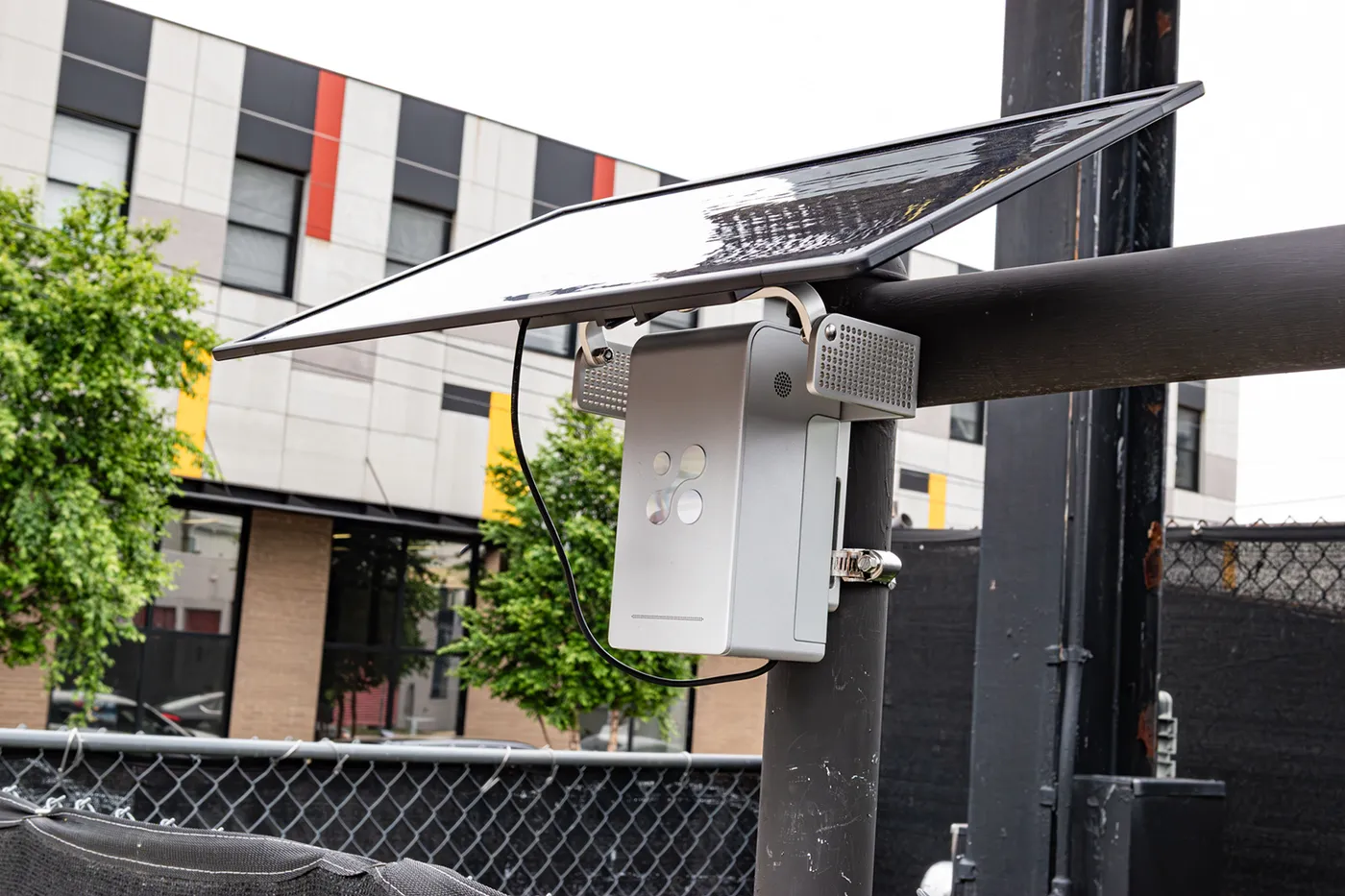
The setup
How a Monitoring Setup Works
An Aethair PRO measures methane, hydrogen sulfide, and carbon dioxide with its gas sensor cartridges, which makes it a strong perimeter and surface-monitoring node for the core landfill gases that logs continuously and alerts on a rise. Ammonia sits outside that cartridge set, so a Thiamis gateway connects an instrument that measures it, such as a RAE Systems multi-gas detector with an ammonia sensor (and, where needed, a professional surface-emission or specialist gas analyzer) into the same dashboards. Wind data, from a weather station on a Thiamis, is what makes odor attribution possible: it pairs every H₂S or ammonia reading with the direction it came from. Nodes are sited along the boundary facing the nearest homes and at known emission points across the cap. The recommended configuration below pairs that landfill-gas node (one Aethair PRO for the core gases) with a weather station on a Thiamis for wind. The second tab is the gas node alone. Use the configurator to add ammonia, VOCs, or surface-scanning instruments as the site needs them.
Recommended
best match-

Industrial monitor for indoor and outdoor sites. Built-in sensors cover the essentials, and hot-swappable gas sensor cartridges and a differential-pressure option add more.
Gas 1

Aethair CO₂ (dual NDIR)
Carbon Dioxide (CO₂)Dual-thermopile NDIR (non-dispersive infrared) sensing measures CO₂ with no chemical consumables, for…
Also fits: Aethair CO₂ (self-calibrating NDIR)
Gas 2

Aethair CH₄
Methane (CH₄)Molecular Property Spectrometer (MPS) MEMS sensing, poison-immune and factory-calibrated for life, for…
Also fits: Aethair MultiGas+
MultiSense

Custom MultiSense built to order
Hydrogen Sulfide (H₂S)Built to order for the MultiSense socket with the Aethair H₂S cartridge's sensor (0-50 ppm, 5 ppb resolution).
Expansion
Free: differential pressure
Also measures 13 more
Dew PointHeat IndexRelative HumidityIlluminance / LightParticle Count (by size)PM1PM10PM2.5Total PM / Mass Conc.Barometric PressureEquivalent Continuous Level (Leq)Sound Pressure Level (SPL)Air Temperature -

Thiamis connects 1 instrument
A gateway that connects the third-party instruments you choose to the Aethair Platform.
-
 Wind DirectionWind Speed
R.M. Young ResponseONE weather instruments, with solid-state ultrasonic wind sensing and no moving parts.
Swap for
Also measures 3 more
Relative HumidityBarometric PressureAir Temperature -
Recommended
best match-
Industrial monitor for indoor and outdoor sites. Built-in sensors cover the essentials, and hot-swappable gas sensor cartridges and a differential-pressure option add more.
Gas 1
Aethair CO₂ (dual NDIR)
Carbon Dioxide (CO₂)Dual-thermopile NDIR (non-dispersive infrared) sensing measures CO₂ with no chemical consumables, for…
Also fits: Aethair CO₂ (self-calibrating NDIR)
Gas 2
Aethair CH₄
Methane (CH₄)Molecular Property Spectrometer (MPS) MEMS sensing, poison-immune and factory-calibrated for life, for…
Also fits: Aethair MultiGas+
MultiSense
Custom MultiSense built to order
Hydrogen Sulfide (H₂S)Built to order for the MultiSense socket with the Aethair H₂S cartridge's sensor (0-50 ppm, 5 ppb resolution).
Expansion
Free: differential pressure
Also measures 13 more
Dew PointHeat IndexRelative HumidityIlluminance / LightParticle Count (by size)PM1PM10PM2.5Total PM / Mass Conc.Barometric PressureEquivalent Continuous Level (Leq)Sound Pressure Level (SPL)Air Temperature
Which monitor
The Monitors in This Configuration
The configuration above is built from these monitors. Every reading lands in the same Environet account, with the same alerts and reports.
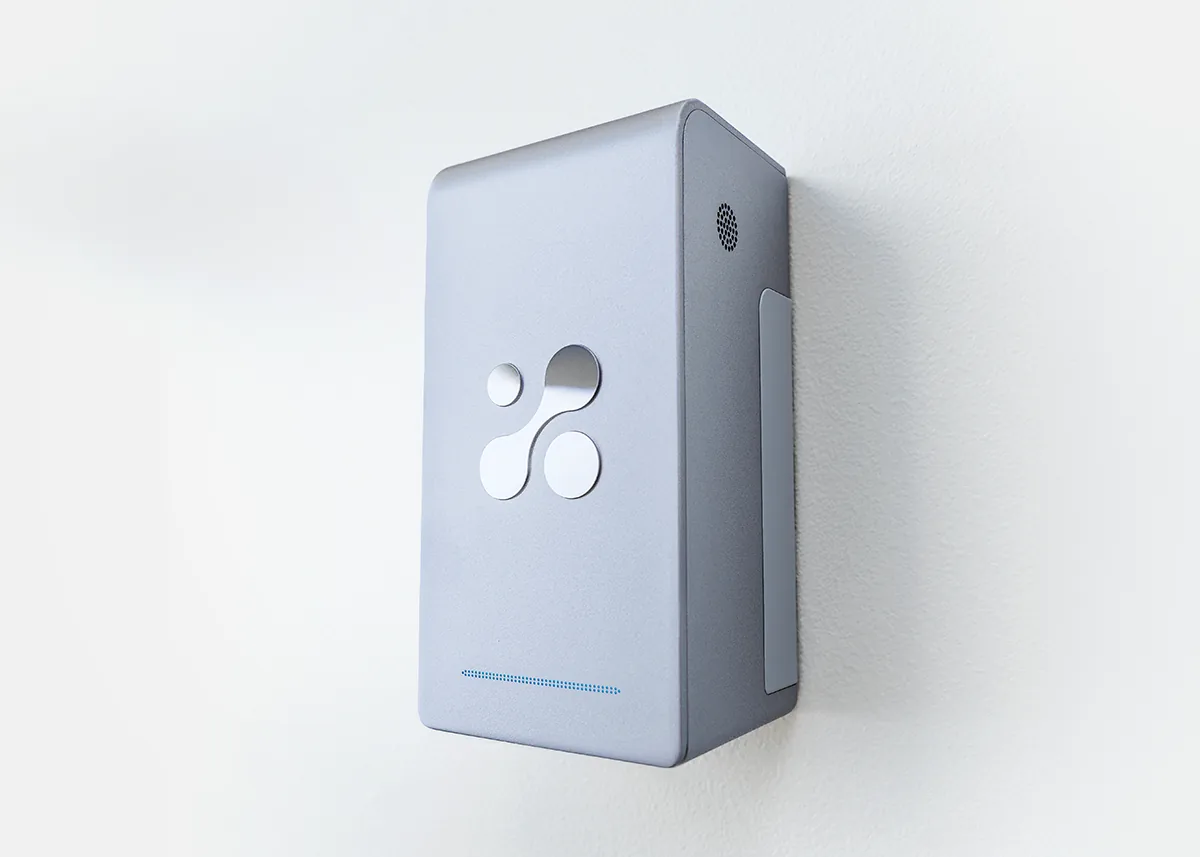
Aethair PRO
Industrial monitor for indoor and outdoor sites. Built-in sensors cover the essentials, and hot-swappable gas sensor cartridges and a differential-pressure option add more.
19 swappable cartridges (H₂S, SO₂, NO₂, CO, O₃, CH₄ and more) in 2 gas sockets, 1 MultiSense socket, and 1 expansion socket
See Aethair PRO
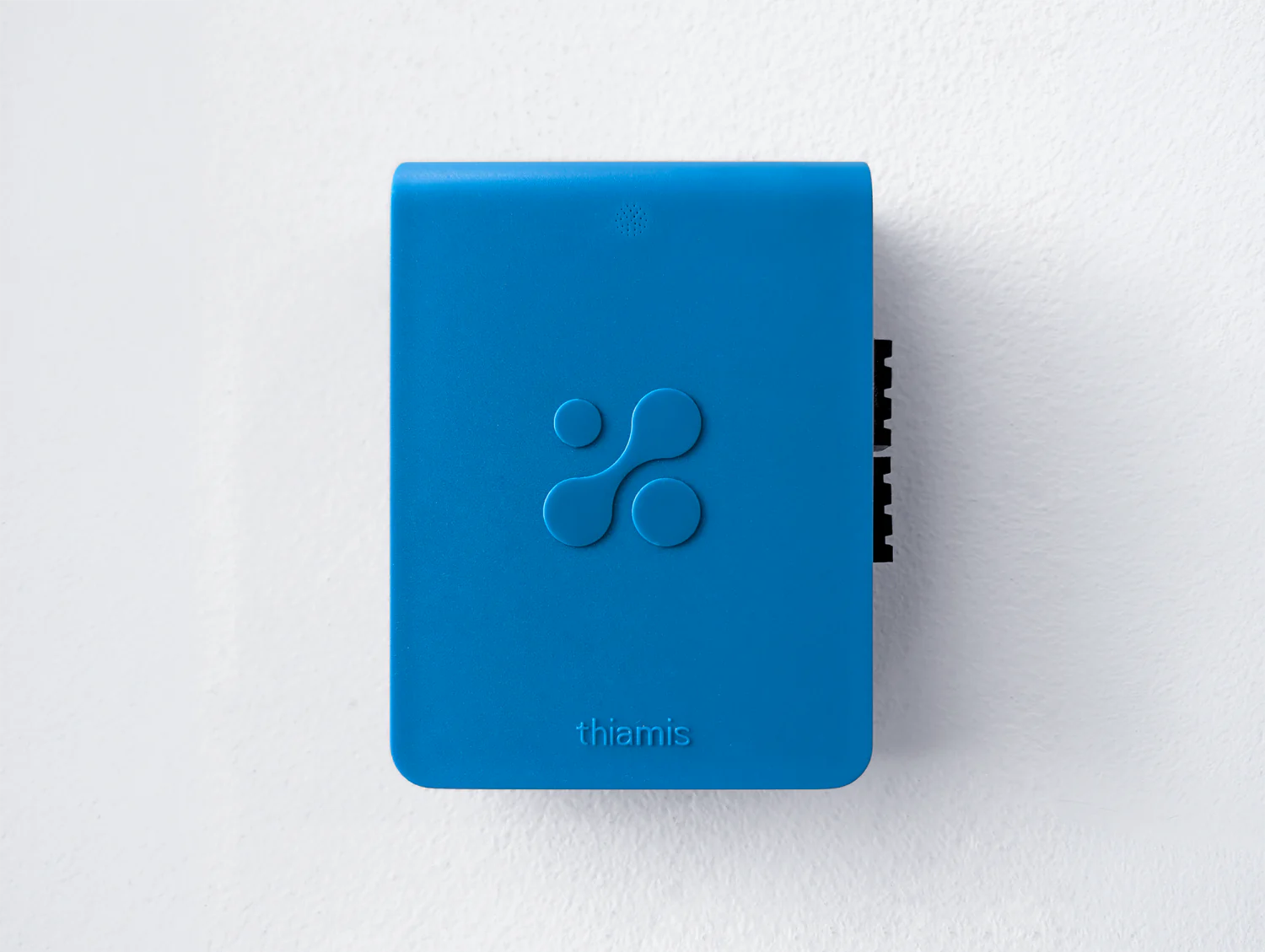
Thiamis
A gateway that connects the third-party instruments you choose to the Aethair Platform.
RS-232, RS-485, SDI-12, and USB · 224 device models from 35 integrations
See Thiamis
What you get
Readings, Alerts, and the Report That Proves It
Every reading goes to the Aethair platform. Here is what a monitoring program gets from it.
Live data and alerts
Every reading in Environet as it happens, with alerts by email, SMS, or webhook at the thresholds you set.
Compliance reports
Scheduled or on-demand reports against the standards above or your own limits, as PDF or a secure link.
Dashboards and AI analysis
Live displays for a site or the public, and Noesis answering questions about the data in plain language.
Your data, through the API
Live and historical readings as JSON or CSV through the Environet API (OpenAPI 3.2), for a building management system, an ERP, or your own applications. The data is yours.
Article Library
Reading for Landfill, Biogas & Odor
OSHA Air Quality Standards 2026: PELs & 29 CFR 1910.1000
OSHA air quality standards for indoor and outdoor work: permissible exposure limits, Table Z-1, 29 CFR 1910.1000, and the heat and wildfire smoke triggers.
Fenceline Air Quality Monitoring: Equipment and Approaches
Compare fenceline air quality monitoring approaches: standalone stations, pelican-case kits, and connected 4G sensor networks.
Related solutions
Related Solutions
Oil & Gas / Petrochemical
Fence-line VOC, H₂S, and methane leak detection
Occupational Safety & Industrial Hygiene
Worker exposure, confined space, and heat stress
Outdoor Monitoring
Continuous outdoor air quality networks that sit alongside reference monitors
Questions
Landfill, Biogas & Odor FAQ
Which gases cause landfill and biogas odor?
Hydrogen sulfide, with its rotten-egg smell, and ammonia are the compounds most often behind odor complaints, sometimes joined by a range of VOCs from the waste or feedstock. Methane itself is odorless, so an odor program centers on H₂S and ammonia rather than on the methane that dominates the gas by volume.
Why is wind direction critical for odor monitoring?
Odor complaints hinge on attribution: showing that a smell detected at a receptor originated on the site rather than elsewhere. Pairing each gas reading with wind speed and direction lets you trace the compound back to its source and forward to the affected neighbors, which is what makes the monitoring defensible.
Can one device measure methane and odor gases together?
An Aethair PRO covers methane, hydrogen sulfide, and carbon dioxide from its cartridges in a single node. Ammonia needs a dedicated sensor connected through a Thiamis gateway, so a full landfill and odor setup usually combines the multi-gas node with a Thiamis-connected ammonia sensor and a weather station.
What methane and H₂S levels apply to a landfill?
In the US, 40 CFR 258.23 holds a municipal solid waste landfill to methane below 25 % of the lower explosive limit (1.25 % by volume) inside facility structures and below the lower explosive limit (5 % by volume) at the property boundary, checked at least quarterly; the landfill air rules add a surface-emission check at 500 ppm above background (EPA Method 21). For odor, H₂S can be smelled at a few parts per billion, far below the workplace limits on this page, so community programs compare against ambient benchmarks such as California's 1-hour standard of 30 ppb.
What is the best monitoring setup for landfill and biogas?
An Aethair PRO node for methane, H₂S, and CO₂, a Thiamis-connected ammonia sensor for odor, and a Thiamis weather station for wind-based attribution, placed along the boundary and at surface emission points. Use the configurator to add VOCs or surface-scanning instruments for your site.
Put Your Monitoring on the Record
Schedule a callBuild a Configuration All solutions
A 30-minute call: you tell us about your application, then we demo the solution for it.