
Aethair solutions
Oil & Gas / Petrochemical
Fence-line VOC, H₂S, and methane leak detection
Why it matters
Why Oil, Gas, and Petrochemical Sites Monitor Air
Refineries, gas plants, tank farms, and petrochemical works handle volatile, flammable, and toxic substances at scale, and the same emissions that threaten worker safety also draw regulatory and community scrutiny at the fence line. Leaks of hydrocarbon vapor represent lost product, an explosion risk, and a health hazard, while sour operations release hydrogen sulfide that is dangerous at low concentrations. Fence-line and process-area monitoring exists to protect people on site, to give early warning of a release before it becomes an incident, and to demonstrate to regulators and neighbors that emissions are being controlled.
Methane is a growing focus in its own right (as a safety hazard, a lost commodity, and a potent greenhouse gas), and operators are increasingly expected to find and fix leaks quickly across sprawling facilities.
What to measure
What to Measure and the Limits That Apply
The core panel covers the main program. Other parameters are added for a specific site or requirement. Every limit below is the published value from the standard that sets it.
At the fence line, total VOCs capture the overall hydrocarbon burden, while benzene and the wider BTEX group are the specific carcinogenic components that draw the tightest scrutiny. Hydrogen sulfide (H₂S) is the priority around sour gas and crude because it is acutely toxic at low levels. Methane (CH₄) is tracked for leak detection, and combustible-gas (LEL) measurement guards against a flammable atmosphere building toward its lower explosive limit. Wind speed and direction are indispensable throughout: plume direction determines whether a reading points back to a source on site and where a release is heading. Sites may add SO₂, NO₂, and CO from combustion and flaring.
Fugitive VOC emissions are the signature air-quality concern of oil and gas operations, from wellheads and tank batteries to refineries, and they include hazardous species such as benzene. Fence-line VOC monitoring, typically with photoionization detectors and wind data, detects leaks and process releases, quantifies community exposure, and provides the evidence behind leak-detection-and-repair and regulatory programs.
- SCAQMD 1180 730 ppb: total VOCs as non-methane hydrocarbons
Hydrogen sulfide is the defining acute hazard of sour oil and gas operations, toxic at low concentrations and treacherous because it quickly deadens the sense of smell. Continuous H₂S monitoring around wellheads, separators, tanks, and sour-gas facilities (in the breathing zone and at the fence line with wind data) is a primary life-safety control and a standard element of upstream and midstream gas safety.
Hydrogen Sulfide (H₂S): sensors, units, and every standardMethane is both the principal product and the principal fugitive-emission problem of oil and gas operations, leaking from wells, valves, compressors, and tanks across the supply chain. Continuous methane monitoring at the fence line and around equipment, with wind data, underpins leak detection and repair, safety against explosive build-up, and the emissions reporting that increasingly shapes the sector.
Methane (CH₄): sensors, units, and every standardFlammable hydrocarbon vapors make combustible-gas monitoring essential across oil and gas operations, where a leak building toward the lower explosive limit turns a routine area into an explosion risk. Measuring % LEL around wellheads, tanks, separators, and process equipment, with alarms at a small fraction of the limit, forces ventilation and work stoppage long before any atmosphere can ignite.
Combustible (LEL): sensors, units, and every standardSpeciated volatile organics (benzene, toluene, ethylbenzene, xylenes, and chlorinated VOCs) from gas chromatography.
- Refinery Sector Rule 9 µg/m³: benzene; Δc is the highest minus the lowest 14-day fenceline sample, averaged over 26 periods; above it, root cause analysis and corrective action
- EPA HON 9 µg/m³: benzene; the rule also sets 1,3-butadiene 3, vinyl chloride 3, ethylene dichloride 4, chloroprene 0.8, and ethylene oxide 0.2 µg/m³
- OSHA benzene 1 ppm: benzene
- SCAQMD 1180 8 ppb: benzene; toluene 1,300 ppb and xylenes 5,000 ppb
- OSHA benzene 5 ppm: benzene, 15-minute
- OSHA benzene 0.5 ppm: benzene, 8-hour TWA
Sulfur dioxide: a criteria pollutant from fossil-fuel combustion that irritates the respiratory system.
Sulfur Dioxide (SO₂): sensors, units, and every standardNitrogen dioxide: a criteria pollutant, respiratory irritant, and marker of traffic combustion.
Nitrogen Dioxide (NO₂): sensors, units, and every standardCarbon monoxide: a toxic, odorless combustion gas that binds to hemoglobin.
Carbon Monoxide (CO): sensors, units, and every standardHorizontal wind speed.
Wind Speed: sensors, units, and every standardHorizontal wind direction (0–360°).
Wind Direction: sensors, units, and every standardHydrogen fluoride (HF), a highly toxic and corrosive gas from aluminum smelting, glass etching, and refining.
- OSHA PEL 3 ppm: Table Z-2
Methods and guidance:
The setup
How a Monitoring Setup Works
An Aethair PRO carries gas sensor cartridges for VOCs, H₂S, methane, and combustion gases. It works as a fence-line node for the common hazards, logging continuously and alerting when a concentration rises. Its VOC and methane reading comes from a metal-oxide (MOS) cartridge. This is a sensitive but non-selective indicator that something has changed, rather than a PID or speciated measurement, so any rise it flags is confirmed with a PID or a benzene analyzer. Neither Aethair PRO nor Thiamis lists a hazardous-location rating on its spec sheet, so both go at the fence line and in unclassified areas; inside a classified zone, use certified fixed detection. Speciated benzene and BTEX, or a certified lower-explosive-limit combustible-gas detector, are specialist measurements: a Thiamis gateway connects those professional analyzers and brings their data into the same dashboards and alarms. A weather station on the Thiamis supplies the wind speed and direction that make every gas reading interpretable for plume tracking and source attribution. Nodes are placed around the perimeter and near likely release points, concentrated on the downwind boundary toward the nearest receptors. The recommended configuration below combines a multi-gas node with wind. Use the configurator to add benzene, LEL, or other gases for your site.
Recommended
best match-

Industrial monitor for indoor and outdoor sites. Built-in sensors cover the essentials, and hot-swappable gas sensor cartridges and a differential-pressure option add more.
Gas 1

Aethair MultiGas+
Methane (CH₄)VOC (Total)Metal-oxide semiconductor (MOS) sensing tracks carbon monoxide, methane, and total VOC from a compact…
Gas 2

Aethair H₂S
Hydrogen Sulfide (H₂S)Filtered four-electrode electrochemical sensing resolves H₂S to parts per billion, for wastewater, odor, oil…
MultiSense
Free: a MultiSense, stock or built to order
Expansion
Free: differential pressure
Also measures 14 more
Dew PointHeat IndexRelative HumidityIlluminance / LightParticle Count (by size)PM1PM10PM2.5Total PM / Mass Conc.Barometric PressureEquivalent Continuous Level (Leq)Sound Pressure Level (SPL)Air TemperatureCarbon Monoxide (CO) -

Thiamis connects 1 instrument
A gateway that connects the third-party instruments you choose to the Aethair Platform.
-
 Wind DirectionWind Speed
R.M. Young ResponseONE weather instruments, with solid-state ultrasonic wind sensing and no moving parts.
Swap for
Also measures 3 more
Relative HumidityBarometric PressureAir Temperature -
Recommended
best match-
Thiamis connects 1 instrument
A gateway that connects the third-party instruments you choose to the Aethair Platform.
-
 Methane (CH₄)Hydrogen Sulfide (H₂S)Combustible (LEL)VOC (Total)
RAE Systems (Honeywell) portable gas detectors.
Also measures 8 more
Chlorine (Cl₂)Carbon Monoxide (CO)Carbon Dioxide (CO₂)Ammonia (NH₃)Nitric Oxide (NO)Nitrogen Dioxide (NO₂)Oxygen (O₂)Sulfur Dioxide (SO₂) -
Which monitor
The Monitors in This Configuration
The configuration above is built from these monitors. Every reading lands in the same Environet account, with the same alerts and reports.
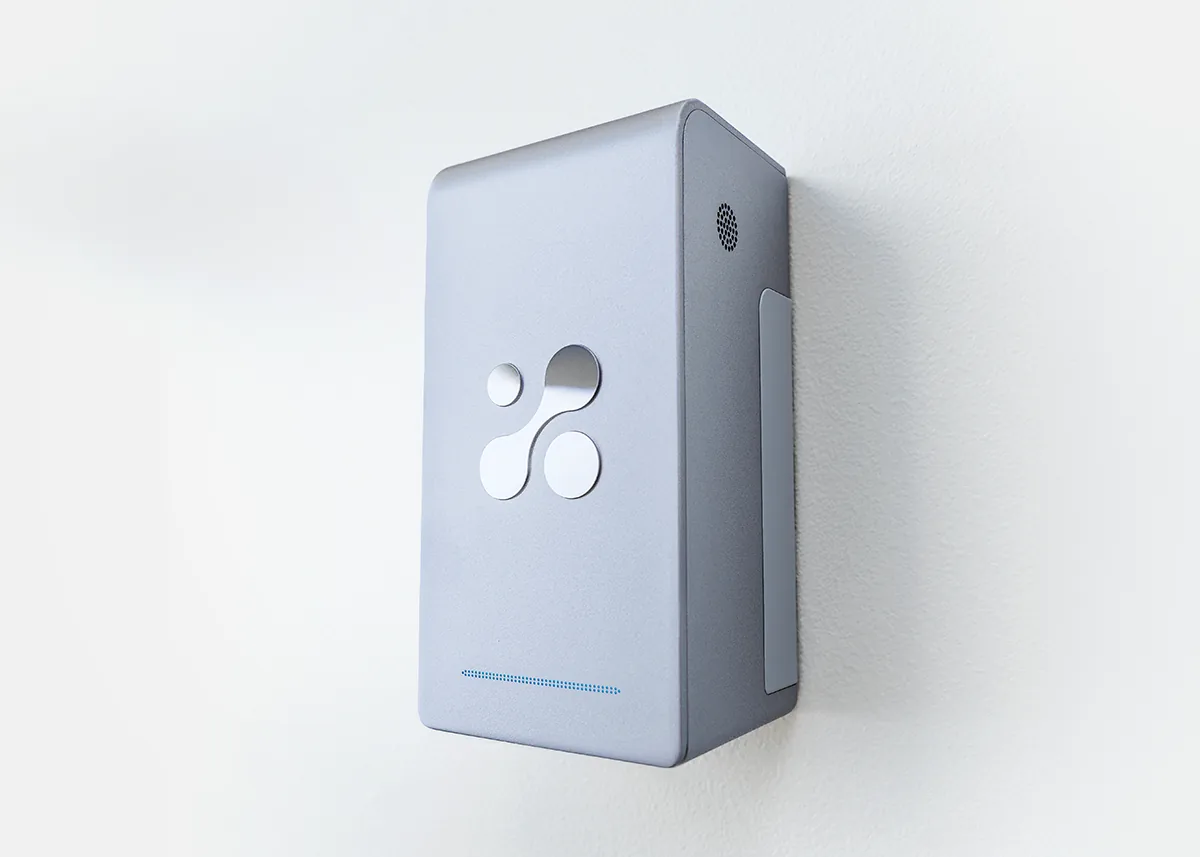
Aethair PRO
Industrial monitor for indoor and outdoor sites. Built-in sensors cover the essentials, and hot-swappable gas sensor cartridges and a differential-pressure option add more.
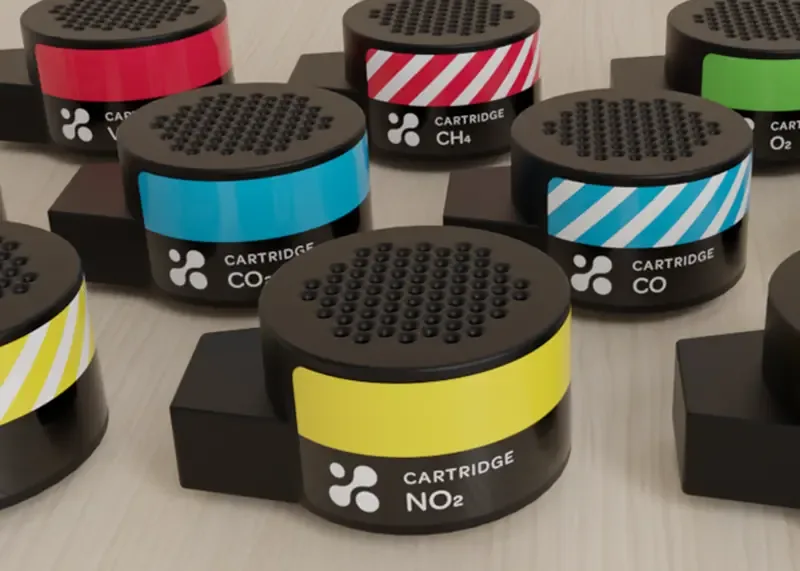
19 swappable cartridges (H₂S, SO₂, NO₂, CO, O₃, CH₄ and more) in 2 gas sockets, 1 MultiSense socket, and 1 expansion socket
See Aethair PRO
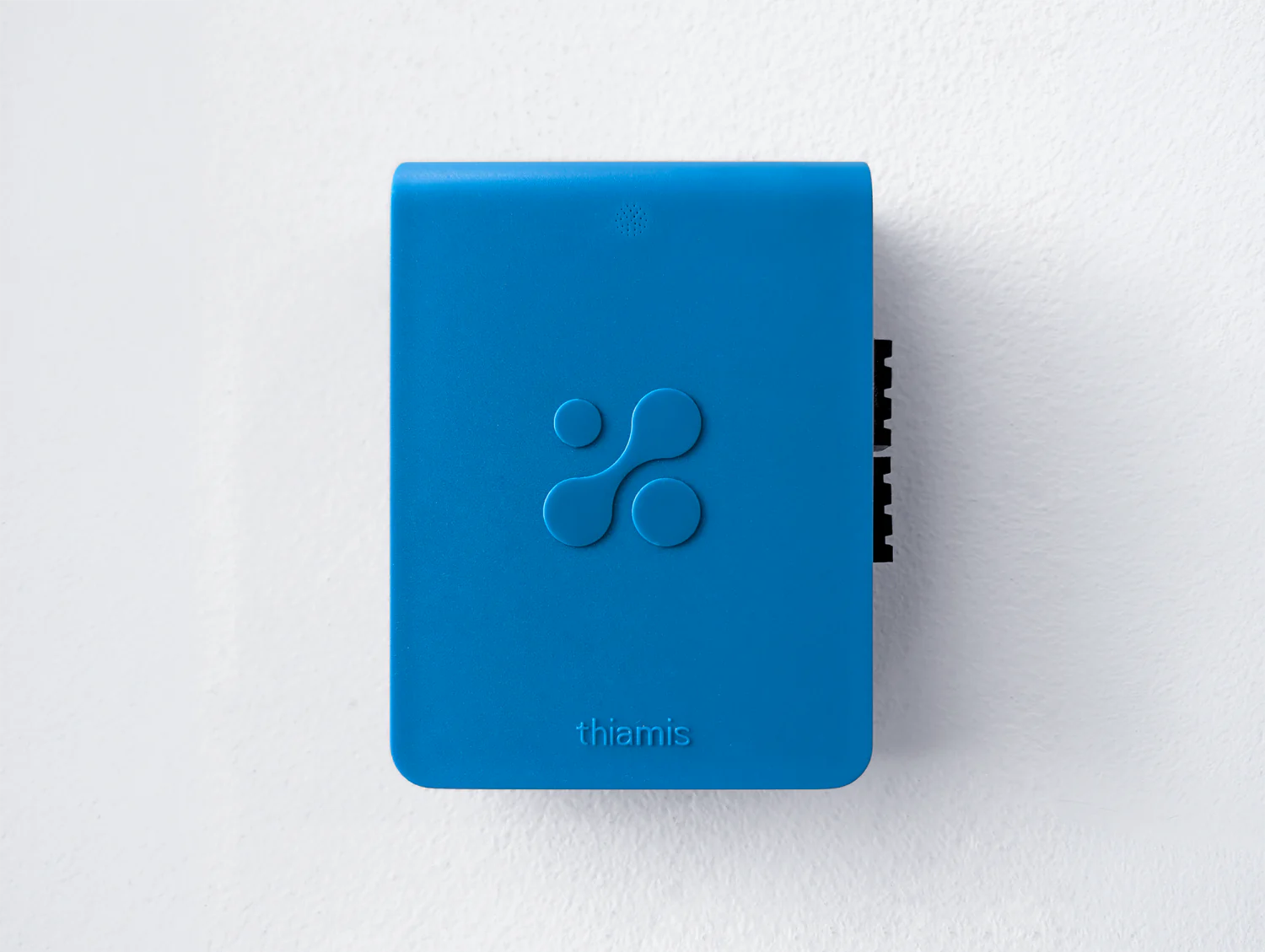
Thiamis
A gateway that connects the third-party instruments you choose to the Aethair Platform.
RS-232, RS-485, SDI-12, and USB · 224 device models from 35 integrations
See Thiamis
What you get
Readings, Alerts, and the Report That Proves It
Every reading goes to the Aethair platform. Here is what a monitoring program gets from it.
Live data and alerts
Every reading in Environet as it happens, with alerts by email, SMS, or webhook at the thresholds you set.
Compliance reports
Scheduled or on-demand reports against the standards above or your own limits, as PDF or a secure link.
Dashboards and AI analysis
Live displays for a site or the public, and Noesis answering questions about the data in plain language.
Your data, through the API
Live and historical readings as JSON or CSV through the Environet API (OpenAPI 3.2), for a building management system, an ERP, or your own applications. The data is yours.
Article Library
Reading for Oil & Gas / Petrochemical
OSHA Air Quality Standards 2026: PELs & 29 CFR 1910.1000
OSHA air quality standards for indoor and outdoor work: permissible exposure limits, Table Z-1, 29 CFR 1910.1000, and the heat and wildfire smoke triggers.
Industrial Perimeter Air Quality Monitoring: Action Levels
What industrial perimeter monitoring requires at fenceline and construction sites: DER-10 CAMP action levels, EPA fenceline rules, and continuous records.
Fenceline Air Quality Monitoring: Equipment and Approaches
Compare fenceline air quality monitoring approaches: standalone stations, pelican-case kits, and connected 4G sensor networks.
Related solutions
Related Solutions
Occupational Safety & Industrial Hygiene
Worker exposure, confined space, and heat stress
Landfill, Biogas & Odor
Methane, H₂S, and odor complaint response
Cabin Air Quality
Respirable dust, gases, and blast monitoring
Questions
Oil & Gas / Petrochemical FAQ
Why monitor benzene separately from total VOCs?
Total VOCs give a useful overall measure of hydrocarbon vapor, but benzene is a specific carcinogen regulated far more tightly than the mixture as a whole. Quantifying it needs a speciated measurement that a general VOC reading cannot provide, which is why fence-line programs single out benzene and the wider BTEX group.
What makes wind data essential on an oil and gas site?
Wind speed and direction determine whether a gas reading can be traced back to a source on the site and predict where a plume will travel. A concentration spike coinciding with wind from a process unit points to an on-site release; without wind, a fence-line reading is difficult to attribute or act on.
What is the difference between LEL and gas concentration monitoring?
Concentration monitoring tracks a specific gas for health or emissions purposes, often at low levels. Lower-explosive-limit (LEL) monitoring instead measures how close a combustible atmosphere is to the point where it could ignite, a safety function. The two are complementary, and flammable environments need both.
What limits apply at a refinery fence line?
US petroleum refineries run fence-line benzene monitoring under 40 CFR 63.658: passive samplers around the boundary, with a corrective-action level of 9 µg/m³ for the annual rolling average of the difference between the highest and lowest reading. The worker limits on this page (OSHA PEL, ACGIH TLV) apply in the breathing zone, not at the fence. The Aethair PRO and Thiamis spec sheets list CE and FCC and no hazardous-location rating, so place them outside classified areas, at the fence line and site boundary.
What is the best monitoring setup for oil and gas?
An Aethair PRO multi-gas node covering VOCs, H₂S, methane, and combustion gases, paired with a Thiamis-connected weather station for plume direction, and Thiamis-connected benzene/BTEX and LEL instruments where those hazards apply. Site nodes around the perimeter and process areas, and use the configurator to build the configuration.
Put Your Monitoring on the Record
Schedule a callBuild a Configuration All solutions
A 30-minute call: you tell us about your application, then we demo the solution for it.